By Charles Pitts

The hills of Greenbrier County, West Virginia, historically the backbone of the American steel and power industries, are being repurposed for a new kind of strategic depth. A $150 million rare earth element (REE) and critical minerals processing hub is currently under development in Rupert, marking a decisive shift in how the United States approaches its chronic dependency on foreign mineral monopolies.
The facility: a collaborative effort between GreenMet, Flash Metals USA, AmForge Corporation, and Greenbrier Smokeless Coal Company: is designed to recover high-value elements from one of Appalachia’s most abundant legacy liabilities: coal slurry and tailings. By applying advanced “Flash Joule Heating” technology to what was once considered industrial waste, the project aims to establish an “Army-grade” recovery pipeline capable of feeding the domestic defense and energy sectors.
The Waste-to-Wealth Transition
For over a century, coal preparation plants across West Virginia have produced millions of tons of coal slurry: a byproduct of washing and processing raw coal. These tailings, often stored in large impoundments or valley fills, contain significant concentrations of rare earth elements that have remained economically out of reach until now.
The Rupert hub is positioned as the “spoke” in a hub-and-spoke critical minerals network. While the initial feedstock will be drawn from Greenbrier Smokeless’s permitted disposal sites, the facility is engineered to take in material from across the state and even international sources. According to GreenMet, the project has already secured roughly $10 billion in additional private capital commitments to support a broader network of mines and processing facilities.
More Read

This transition is not merely an environmental cleanup story; it is a fundamental restructuring of the West Virginia mining sector. By turning legacy liabilities into strategic assets, the state is positioning itself at the center of the 2026 critical minerals and copper deficit conversations, where supply chain security has become the primary metric of industrial success.


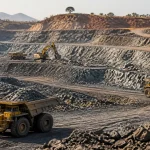
The scale of Appalachian mining infrastructure provides the logistical foundation for the new REE hub.
Flash Joule Heating: The Technological Catalyst
The economic viability of the West Virginia hub rests on a proprietary metallurgical process known as Flash Joule Heating (FJH). Originally developed at Rice University and industrialized by Flash Metals USA, FJH represents a departure from traditional chemical-intensive refining.
More Read
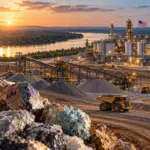
The process involves subjecting source material: such as coal slurry, tailings, or even electronic waste: to an ultra-fast, high-voltage electrical pulse. This pulse heats the material to extreme temperatures in seconds, effectively “liberating” the rare earth oxides from their host rock.
Key advantages of FJH include:
- Cost Efficiency: Developers estimate the process can treat a ton of material for approximately $30 in electricity costs.
- Environmental Footprint: Unlike traditional solvent extraction, FJH reduces the reliance on toxic acids and generates significantly less waste.
- Speed: Refining that typically takes days in a chemical bath can be completed in seconds.
This technological leap is what enables the recovery of “Army-grade” materials. In the context of national defense, “Army-grade” refers to the high purity and specific isotopic consistency required for permanent magnets used in precision-guided munitions, F-35 fighter jet components, and advanced sonar systems.
Breaking the Magnet Monopoly
Currently, the United States relies on China for an estimated 85% to 90% of its rare earth supply. This monopoly extends beyond the raw minerals to the refined oxides and the final manufactured magnets. The Rupert facility, in partnership with AmForge, seeks to break this stranglehold by domesticating the middle of the supply chain.
AmForge acts as the strategic architect for the hub, securing offtake agreements that bring in high-grade mineral concentrates from regions as diverse as Greenland and Cameroon. This diversity of feedstock ensures that the Rupert facility is not solely dependent on local coal waste, though the coal slurry provides a stable, low-cost baseline for operations.
The geopolitical implications are stark. As the global mining industry adjusts to new trade barriers and export controls on critical minerals, the ability to produce refined REEs on U.S. soil is no longer an economic luxury: it is a national security mandate.

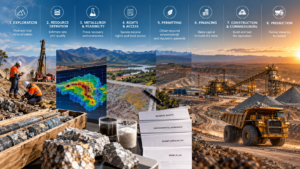
Operational efficiency and data-driven processing are central to the FJH recovery model.
Economic and Strategic Impact
The $150 million investment is expected to create nearly 250 high-skill jobs in Greenbrier County. However, the broader economic impact lies in the “spoke” potential. If the Rupert model proves successful, it could be replicated across the Rust Belt, transforming every coal-tailings pond in the country into a potential strategic reserve.
The West Virginia University (WVU) Rare Earth Elements Initiative has already demonstrated at the pilot scale that acid mine drainage (AMD) can produce REE concentrates with 95% purity. The GreenMet-led hub takes this research into the private industrial sector, bridging the gap between laboratory success and industrial-scale production.
| Metric | West Virginia REE Hub Details |
|---|---|
| Total Investment | $150 Million (Initial Phase) |
| Primary Technology | Flash Joule Heating (FJH) |
| Feedstock Sources | Coal slurry, tailings, international concentrates |
| Estimated Job Creation | ~250 direct jobs |
| Primary End-Users | Defense, EV manufacturers, renewable energy |
2026 Outlook: A New Appalachian Legacy
As we move through 2026, the West Virginia REE hub stands as a testament to the resilience of American industrial regions. The project successfully aligns the interests of environmental remediation with the hard realities of 21st-century warfare and energy transition.
For operators and investors, the Rupert hub signals a shift toward “unconventional mining.” The most valuable minerals of the next decade may not come from new holes in the ground, but from the waste piles of the last century. By anchoring U.S. supply chain security in the heart of coal country, the AmFlash initiative is proving that the path to a high-tech future often runs through our industrial past.