The mining industry has been steadily adopting humanoid robots in mining, artificial intelligence (AI), and automation technologies, but a new revolution is on the horizon. While AI-powered autonomous robots have already been integrated into surveillance and inspection roles, recent advancements in humanoid robotics promise to redefine the sector by enhancing efficiency, safety, and adaptability.

A Brief History of Robotics in Mining
The concept of automated machines performing human tasks is not new. As early as 3000 BC, the ancient Egyptians developed water clocks with figurines that struck bells. By 100 AD, Roman inventors had created moving dolls mimicking human motion.
Significant advancements came in the 20th century with the introduction of Unimate in 1961—the first commercially available robotic arm for General Motors’ assembly lines. In the 1970s, Stanford University researchers developed a mobile robot capable of reasoning, paving the way for AI-powered autonomous systems.
Today, the International Federation of Robotics (IFR) estimates that over 4.3 million industrial robots are in operation worldwide, primarily in the automotive, electronics, and logistics industries. While traditionally slower in automation adoption, the mining sector is now integrating humanoid robots in mining for autonomous surveillance, data collection, and physically demanding tasks in hazardous environments.
Related News
- Why the U.S. Can’t Afford to Lose Canada’s Critical Mineral Aluminum
- WEC Water Optimizes Waste Water Treatment at Burkina Faso Gold Mine
- How Remote Sensing is Transforming Sustainable Mining
- EU Warns of Counterstrike as U.S. Tariffs Push Steel Prices Higher
The Rise of Cobots and Humanoid Robots in Mining
Collaborative Robots (Cobots) and Their Role in Mining
Industrial robots in heavy industries are typically confined to restricted zones for safety reasons. However, collaborative robots (cobots) have emerged as a solution, allowing humans and robots to share the same workspace. Cobots have built-in safety features to prevent injuries, making them viable for mining applications.
More Read
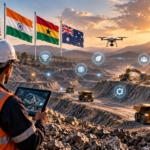
Advantages of Humanoid Robots in Mining
Humanoid robots take automation further by offering advanced mobility, dexterity, and sensory capabilities suited for mining environments. With articulated limbs, precision movements, and vision/tactile sensors, they can:

- Navigate complex terrains
- Handle tools with high precision
- Perform physically demanding tasks
- Adapt to unpredictable conditions
Several companies are actively developing humanoid robots for industrial applications, with some expected to be commercially available as early as 2025.
Leading Humanoid Robots for Mining and Industrial Use
The following are some of the most notable humanoid robots in mining and industrial applications currently in development or testing:
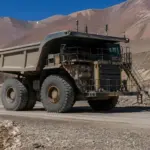
Boston Dynamics’ Atlas
- A highly advanced humanoid robot capable of running, jumping, and executing complex tasks.
- A fully electric version, designed for industrial use, was announced in 2024.
Tesla Optimus
- Introduced in 2021, with a commercial release expected in 2025.
- Production target: 10,000 units. Estimated price: $20,000–$30,000.
Figure AI’s F02
- Developed in partnership with BMW.
- Can lift up to 25 kg and interact using AI-driven language models.
Clone Alpha
- A biomimetic robot with artificial muscles and synthetic organs, initially developed for domestic use but may transition to industrial applications.
Sanctuary AI’s Phoenix
- Features a wheelbase torso for enhanced stability.
- Currently being tested by Magna International.
Agility Robotics’ Digit
- Fully autonomous with a lifting capacity of 15 kg.
- Expected to be available at a lower cost in 2025.
1X Technologies’ Neo
- Designed for industrial and domestic use.
- Can run and lift up to 20 kg.
Unitree H1
- A full-scale humanoid robot with flexible movement capabilities.
- Commercially available at $90,000.
Implications of Humanoid Robots in Mining
The integration of humanoid robots in mining presents several key benefits:
1. Enhanced Safety
Mining is one of the most hazardous industries, with workers frequently exposed to extreme temperatures, toxic gases, and cave-ins. Humanoid robots can perform dangerous tasks, significantly reducing risks to human workers.
2. Increased Efficiency
Unlike human workers, robots can operate continuously without fatigue, speeding up material handling, drilling, and ore processing.
3. Skill Diversification
The introduction of humanoid robots in mining will shift job roles toward programming, maintenance, and AI oversight, creating new career opportunities in mining technology.
4. Cost Reduction
Although the initial investment is high, robots can reduce labor costs and minimize workplace accidents, leading to long-term financial benefits.
Challenges of Humanoid Robots in Mining
Despite their advantages, humanoid robots in mining face several challenges:
- High Adoption Costs – Developing and deploying humanoid robots requires significant investment.
- Infrastructure Modifications – Mines must adapt to accommodate robotic operations.
- Job Displacement Concerns – While automation often leads to new job creation, concerns persist about workforce reductions.
- Adaptability Issues – Robots must function effectively in unpredictable and rugged mining environments, requiring advanced AI-driven reasoning and hazard detection systems.
The Future of Humanoid Robots in Mining
As companies continue to refine humanoid robots in mining, the industry is on the brink of a technological revolution. Although widespread deployment may take a few years, early adopters will gain a competitive edge through improved safety and operational efficiency.
A mining executive recently remarked, “I need help lifting the core sample box, not a bot asking, ‘How can I help you?’” This sentiment highlights the industry’s demand for practical, task-oriented automation solutions.
With humanoid robots set for commercial release in 2025, the question is no longer if but when these technologies will become an integral part of mining operations.
Stay tuned as Skillings Mining Review continues to track the latest developments in mining automation and robotics.