The International Energy Agency (IEA) has issued a high-profile IEA warning about escalating critical mineral supply chain vulnerabilities. With mineral mining risks on the rise, the agency stresses that urgent action is required to diversify and stabilize the global flow of critical minerals essential to modern technologies and clean energy.

In its newly released Global Critical Minerals Outlook, the IEA finds that today’s critical mineral supply chains are highly concentrated in a few nations—leaving key industries exposed to significant supply disruptions. The warning comes amid growing geopolitical instability and mounting concerns over trade restrictions.
“Mineral mining risks have never been higher,” said IEA Executive Director Fatih Birol. “If we fail to diversify the critical mineral supply chain, the world’s transition to clean energy could be stalled, with serious consequences for global economic resilience.”
Related News
- China’s Rare Earth Elements Curtail U.S. Trade Negotiations Amid Rising Supply Chain Fears
- Ukraine–US Mineral Resources Agreement Sparks Major Rare-Earth and Energy Investments
- U.S.-Led Peace Talks Could Unleash Rwandan Processing of Congo’s Critical Minerals
Global Concentration Driving Supply Chain Vulnerabilities
The IEA report highlights that over 70% of cobalt production is located in the Democratic Republic of Congo, while China controls over 85% of rare earth processing. Lithium and nickel supplies are also highly concentrated, compounding risks across the critical mineral supply chain.
Such concentration exposes the world’s electric vehicle (EV), renewable energy, and high-tech industries to extreme mineral mining risks—from political conflicts to natural disasters.
More Read

The European Commission and U.S. Department of Energy have echoed these concerns. Both have launched strategic policies—including the EU’s Critical Raw Materials Act and the U.S. Inflation Reduction Act—focused on reducing dependency and building more secure critical mineral supply chains.

Diversification: A Strategic Priority
The IEA calls for a multi-layered approach to mitigate these mineral mining risks and strengthen global resilience. Key recommendations include:
- Broadening critical mineral supply chains through new mining investments in diverse geographies
- Scaling up recycling and circular economy practices
- Forming international partnerships and supply agreements
- Improving transparency and environmental standards in mineral mining operations
According to the World Bank, global demand for critical minerals could surge nearly six-fold by 2040 due to rapid growth in EVs, solar panels, wind turbines, and battery storage. Without immediate diversification, the critical mineral supply chain faces serious bottlenecks and price volatility.
Industry and Global Response
The private sector is moving to address these warnings. U.S.-based companies are investing in domestic lithium mining and exploring alternative sources for cobalt and nickel. Australia and Canada are ramping up efforts to diversify critical mineral supply chains.
International cooperation is also taking shape. The Minerals Security Partnership, which includes the U.S., EU, Japan, and other key allies, is focused on building stable and sustainable critical mineral supply chains through joint initiatives.
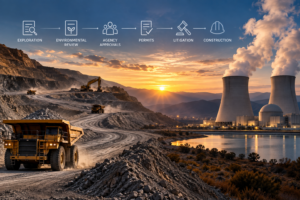
Yet challenges remain. Developing new mines takes years, with stringent regulatory, environmental, and financing hurdles. Additionally, rising competition among nations for critical mineral resources is adding new complexity to an already fragile global system.
A Critical Moment for Supply Chain Strategy
The IEA’s warning comes at a pivotal moment for global economic policy. As nations pursue net-zero goals, reliable access to critical minerals has become a top strategic imperative.
“This is a defining issue for global supply chains,” Birol stated. “Without swift action to diversify and fortify the critical mineral supply chain, the energy transition—and broader economic stability—will be at risk.”
With mineral mining risks mounting, the world’s ability to adapt and act will shape the resilience of industries that power the future.