Indonesia just weaponized its nickel supply.

The government ordered PT Weda Bay Nickel: the world's largest nickel mine: to slash its 2026 output quota from 42 million tonnes to 12 million tonnes. That's a 71% cut. At a single facility. And it's not an isolated move. Indonesia's national nickel ore quotas dropped from 379 million tonnes in 2025 to roughly 260–270 million tonnes for 2026. A 30% reduction across the board.
This isn't about geology or operational constraints. This is Jakarta using production quotas as a blunt instrument to tighten global supply and lift prices after a brutal two-year slump. The London Metal Exchange responded immediately: nickel jumped 2% to $17,835 per tonne, touching intraday highs of $17,980: the highest level since late January.
Welcome to the new reality of nickel markets. Indonesia controls approximately 65% of global supply, and it's now using that stranglehold to dictate pricing dynamics for the entire sector.
Why Indonesia Is Doing This Now
The context is simple: oversupply killed prices. Global nickel has been drowning in excess inventory for the past two years, driven largely by Indonesia's own aggressive capacity expansion. The glut forced higher-cost producers in Australia and New Caledonia to shut operations entirely. Prices collapsed, margins evaporated, and Jakarta watched its dominance undermine its own profitability.
More Read



Enter the RKAB system: annual mining permits that set production quotas for every operator in the country. Indonesia doesn't need to negotiate with miners or wait for market forces. It just issues lower quotas. The decision is unilateral, immediate, and binding.
The strategic calculus isn't subtle. By restricting domestic output through administrative fiat, Indonesia can artificially tighten supply, prop up prices, and restore margins for its own producers: all without reducing its long-term market share. Competitors can't ramp up fast enough to fill the gap. New projects take years. Geology doesn't care about quarterly earnings calls.
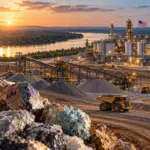
This is resource nationalism in its most direct form: using sovereign control over critical minerals to manipulate global pricing.
The Numbers Tell the Story
Weda Bay's 71% quota cut is the headline, but the scale of Indonesia's broader intervention is what matters. National nickel ore quotas fell by roughly 110 million tonnes year-over-year. That's not a rounding error. That's a deliberate supply shock.
And the market is reacting. Macquarie Group raised its 2026 nickel price forecast by 18% to $17,750 per tonne, citing expected tightness in supply. Other analysts are following suit. The consensus view has shifted from "persistent surplus" to "structural tightening" in a matter of weeks.
But there's a ceiling. Indonesia has historically intervened to prevent prices from rising sustainably above $18,000 per tonne. Why? Because elevated nickel prices undermine the competitiveness of Indonesia's domestic electric vehicle sector, which Jakarta is aggressively building out as part of its broader industrialization strategy. The government wants higher prices for its miners, but not so high that it kills demand for Indonesian-made EVs.
That's a needle that's almost impossible to thread. If prices climb too high, quotas get revised mid-year. If they stay too low, producers bleed cash. The policy creates a de facto trading range, and everyone in the market knows it.
Supply Chain Scramble: Enter the Philippines
The quota cuts are already reshaping regional nickel flows. Philippine nickel ore shipments to Indonesia are expected to double in 2026, jumping from approximately 15 million tonnes in 2025 to 30 million tonnes this year. Indonesian refineries, suddenly facing domestic shortages, are turning to imports to keep smelters running.

Both Nickel Asia Corp. and Global Ferronickel Holdings Inc.: the Philippines' top two nickel ore producers: have publicly stated they're prepared to increase output to fill Indonesia's supply gap. The irony is thick: Indonesia cuts its own ore production but keeps its refining capacity online by importing the exact commodity it just restricted domestically.
Weda Bay itself had already been importing large volumes of ore from the Philippines before this latest quota cut, a sign that Indonesia's domestic supply was stretched even at previous production levels.
This dynamic creates a bifurcated market. Indonesian refiners get preferential access to ore (either domestic or imported), while non-Indonesian buyers face tighter supply and higher prices. It's vertical integration by policy, not M&A.
What This Means for Western Producers
For nickel producers outside Indonesia, the quota cuts are a mixed blessing. On one hand, higher prices improve margins and make marginal projects economically viable again. Australian and North American producers that survived the downturn now have breathing room.
On the other hand, Indonesia's market dominance means it can manipulate supply at will. Western producers can't compete on cost: Indonesia's integrated ore-to-refined-nickel supply chains are structurally cheaper. They can't compete on scale. And they certainly can't compete on policy flexibility.
The strategic response for non-Indonesian producers is to focus on differentiation: premium-grade nickel for battery applications, proximity to Western OEMs worried about supply chain concentration, and ESG credentials that appeal to buyers nervous about Indonesian environmental and labor standards.
But that's a niche strategy, not a path to market leadership. Indonesia controls the base-case supply. Everyone else is playing around the margins.
The 2026 Outlook: Supported Prices, Policy Risk
Nickel prices will likely remain supported throughout 2026, barring a major demand shock. The quota cuts tighten supply, and global nickel demand: driven by EV battery production and stainless steel: continues to grow. Macquarie's $17,750/tonne forecast is reasonable. Prices could test $18,000 by mid-year if supply tightness persists.
But policy risk is significant. If prices climb too aggressively, Indonesia will revise quotas upward to cool the market. If demand softens unexpectedly, Jakarta could hold quotas steady and let prices drift lower rather than cut further. The market is now trading Indonesia's policy intentions as much as fundamental supply-demand dynamics.
For investors and operators, that introduces a new variable: political forecasting. Understanding Jakarta's industrial policy goals: balancing miner profitability, EV sector competitiveness, and geopolitical leverage: is now as important as tracking inventory levels or smelter utilization rates.
The playbook for 2026 is clear: prices stay elevated but capped, Indonesian producers capture the upside, Western producers survive but don't thrive, and the Philippines quietly becomes the swing supplier keeping Indonesia's refineries fed.
This isn't a free market. It's a managed one. And the manager is in Jakarta.
Broader Implications for Critical Minerals Markets
Indonesia's nickel strategy offers a preview of how resource-rich nations are likely to wield supply-side leverage across other critical minerals markets. Whether it's copper, lithium, or rare earths, governments are increasingly viewing production quotas and export restrictions as tools to capture more value from their domestic resource endowments.
The lesson for Western buyers: supply chain diversification isn't optional anymore. It's a strategic imperative. Single-source dependencies create vulnerabilities that sovereign producers can: and will: exploit.
Indonesia's nickel squeeze changes the 2026 outlook by introducing a persistent structural bid under prices, even as it caps the upside through policy intervention. Volatility decreases, but control shifts decisively to the producing nation.
The market has been reshaped. Permanently.
Source: Skillings Mining Review (Data as of Feb 15, 2026)