U.S. investment firm Cove Capital LLC has finalized a landmark agreement with state-owned miner JSC Tau-Ken Samruk to develop the Kazakhstan tungsten deposits of Northern Katpar and Upper Kairakty. The $1.1 billion venture, to be announced by the Trump administration, will position Kazakhstan as a critical source of tungsten for the U.S. and its allies. The U.S. Export-Import Bank has issued a $900 million letter of interest to finance most of the project, underscoring Washington’s intent to secure non-Chinese sources of critical minerals.

Kazakhstan Tungsten Becomes Strategic Mineral Hub for the U.S.
Tungsten — used to harden steel and produce superalloys for aerospace, energy, and defense — has long been dominated by Chinese producers. The United States has not mined tungsten domestically since 2015, leaving supply chains vulnerable.
By investing in Kazakhstan tungsten resources, the Cove-Tau-Ken Samruk partnership effectively brings one of the world’s largest undeveloped tungsten reserves under Western control. The U.S. government has already categorized tungsten as a critical mineral, linking its availability to national security and advanced-manufacturing resilience.
Cove Capital will hold a 70% controlling stake and manage sales, while Tau-Ken Samruk retains 30%. Supplies from the Kazakhstan tungsten mines are designated to “prioritize U.S. government and commercial needs”, according to official documents. Cove CEO Pini Althaus, formerly of USA Rare Earth, described the project as “a generational win for America’s critical-minerals independence.”
Resource Scale and Economic Impact of Kazakhstan Tungsten Projects
Combined, the Northern Katpar and Upper Kairakty sites contain a JORC-compliant 1.4 million tonnes of tungsten trioxide (WO₃) — about 70% of Kazakhstan’s total tungsten endowment. Once operational, annual output could exceed 12 000 metric tonnes, roughly 15% of today’s global tungsten production.
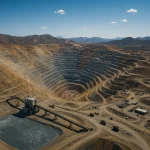
These Kazakhstan tungsten deposits are shallow, high-grade scheelite systems, well-suited for open-pit mining and downstream refining into ammonium paratungstate (APT). The project’s integrated structure—from mine development to processing—makes it a cornerstone of the country’s ambition to join the global critical-minerals supply chain while attracting allied-nation financing.
More Read

Financing and Regulatory Framework for Kazakhstan Tungsten Mining
The U.S. EXIM Bank’s $900 million support highlights how critical-minerals financing is shifting toward state-backed partnerships. The U.S. International Development Finance Corporation (DFC) is also exploring involvement. For investors, the Kazakhstan tungsten initiative demonstrates how Western-aligned funding can mobilize quickly in jurisdictions offering clear governance.

Kazakhstan’s Astana International Financial Centre, operating under English common law, provides a secure regulatory base for such mining ventures. This framework, coupled with government participation through Tau-Ken Samruk, ensures compliance with ESG requirements and enhances transparency—key to attracting institutional mining capital.
Global Market Implications for Kazakhstan Tungsten Supply
For global miners and metal traders, Kazakhstan tungsten could become a pivotal balancing factor in the tungsten market. With China producing over 80% of the world’s tungsten, new Western-aligned production could rebalance pricing, increase supply diversity, and mitigate geopolitical risk.
A steady Kazakhstan tungsten output would benefit U.S. defense contractors, toolmakers, and automotive OEMs that depend on tungsten alloys. It could also trigger competitive responses from Chinese and Vietnamese producers, prompting a more transparent, contract-based trading environment similar to lithium or nickel markets.