As global majors abandon thermal coal, a new generation of Asian coal entrepreneurs is moving fast to capture the last great wave of value — betting that Asia’s energy reality is far from carbon-free.

The comeback nobody expected
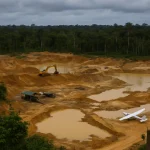
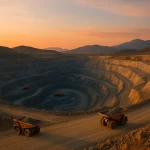
In the tropical jungles of South Sumatra, Indonesia, the hum of excavators tells a story that defies global trends. While multinational mining houses are shutting or selling off coal divisions, a surge of Asian coal operators—small to mid-tier miners from Indonesia, Singapore, India, and Vietnam—are chasing fresh riches in a sector many in the West consider obsolete.
These players, dubbed “coal mavericks” by Bloomberg, are reviving mines that the majors left behind. Their rise signals a regional divergence: even as Europe and North America pivot to renewables, the Asian coal story remains one of energy security, domestic demand, and strategic resilience.
Why the majors are leaving—and what they’re leaving behind
Over the past five years, diversified mining giants such as BHP, Anglo American, and Rio Tinto have systematically exited thermal-coal assets. The reasons are familiar: ESG mandates, shareholder pressure, higher financing costs, and the political stigma of fossil fuels. Coal has become a reputational liability for companies courting Western investors.
But retreating from coal doesn’t erase Asia’s dependence on it. Coal still fuels more than 50 % of electricity in emerging Asian economies, and industrial expansion—from steelmaking to cement—keeps consumption steady. With demand stubbornly high, the majors’ exit has created a vacuum that new Asian coal miners are now filling.
More Read

Enter the Asian coal mavericks
In Indonesia, Singapore-listed Geo Energy Resources Tbk has emerged as a case study in opportunism. The firm and others like it are acquiring stranded assets at discounted valuations and developing them aggressively. One such project—the PT Triaryani Coal Mine in South Sumatra—illustrates the playbook: an initial 3 Mtpa operation targeting 25 Mtpa through infrastructure build-out, including new haul roads, barging facilities, and port access.

While international investors shy away from fossil-fuel lending, these Asian coal ventures often tap domestic capital and government-linked lenders willing to back energy independence. It’s a high-risk, high-reward formula—but one uniquely suited to Asia’s policy landscape.
The economics behind the resurgence
Two forces underpin the resurgence of Asian coal: supply scarcity and regional demand.
More Read
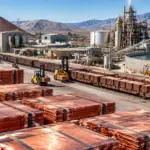
- Supply scarcity: As global miners retreat, new coal production capacity has plummeted. Global supply constraints are widening, especially for low-ash, high-calorific coal grades preferred by Asian power utilities.
- Regional demand: Despite ambitious renewable-energy pledges, Asia’s industrialization wave—especially in Indonesia, Vietnam, and India—ensures baseline coal demand for decades. Power plants, smelters, and metallurgical facilities remain dependent on reliable coal feedstock.
That imbalance between shrinking global supply and stable regional demand gives Asian coal producers pricing leverage. Bloomberg’s analysis notes that even small miners can achieve margins of 25–35 % once logistics are stabilized—a striking contrast to Western projects shuttered under policy pressure.
Infrastructure: The invisible barrier to entry
The real challenge isn’t the coal—it’s the infrastructure. The richest Asian coal deposits lie deep in rainforest terrain or mountainous interior basins. Building out logistics—roads, conveyors, ports, and barging routes—often costs more than the mine itself.
Yet that infrastructure burden is precisely what creates opportunity. Smaller, nimble miners see it as a long-term moat: once built, those assets secure exclusive access to transport corridors and ports that can serve not only coal but also other bulk commodities such as bauxite and nickel.
For investors, these integrated Asian coal ecosystems—mine + port + power—resemble the early-2000s model that fueled Indonesia’s resource boom.
Regional divergence in coal’s future
Asia’s stance on coal contrasts sharply with Western climate narratives. While OECD markets push for rapid phase-outs, emerging economies are prioritizing affordability and stability.
- Indonesia continues to expand coal power under its “Domestic Market Obligation” policy, ensuring national energy security.
- India is modernizing state-owned Coal India Ltd and encouraging private-sector participation to reduce import dependency.
- Vietnam and the Philippines have slowed planned coal plant retirements, citing grid reliability.
This pragmatic approach underscores the reality that the Asian coal era is not over—it’s evolving. The region’s policymakers are managing a dual transition: sustaining industrial growth while cautiously integrating renewables.
The financing squeeze and the rise of local capital
With Western financiers distancing themselves from fossil fuels, Asian coal miners increasingly rely on regional banks, sovereign wealth funds, and private investors. Domestic lenders in Indonesia, India, and China continue to view coal as a strategic sector.
For example, Indonesian state-linked lenders are funding expansion at several new open-pit operations, betting that domestic demand will offset declining export markets. These localized funding channels provide resilience—but also expose the sector to regional economic fluctuations and policy shifts.
Skillings Analysis: The last profitable cycle of Asian coal
“The story of Asian coal isn’t a moral argument—it’s an economic and logistical one,” notes Skillings editorial analysis. “While Western portfolios chase battery metals, Asia’s smaller miners are monetizing the fossil window others abandoned.”
“What’s happening in Indonesia and India today mirrors early-stage critical-minerals dynamics: majors retreat under ESG pressure, smaller players move in with local expertise, and value shifts downstream.”
“For the mining community, the takeaway is clear: energy transition is not synchronized. Understanding these regional lags—and how Asian coal capitalizes on them—is key to predicting supply-chain imbalances.”
Opportunities and risks ahead
Opportunities:
- Undersupplied domestic power markets give Asian coal a stable baseline demand.
- Infrastructure build-outs may later serve other commodities (nickel, copper, rare earths).
- Export diversification—beyond China—toward South Asia and Southeast Asia reduces concentration risk.
Risks:
- Volatile pricing: coal benchmarks have dropped over 60 % from their 2022 peaks.
- Environmental compliance costs are rising; many regional governments are tightening emission standards.
- Stranded-asset risk if renewables scale faster than expected.
- Reputational risk for investors lacking clear ESG segmentation between thermal and metallurgical coal.
For professional miners and investors, that balance of opportunity and risk defines the current Asian coal narrative—a short-term margin play with long-term uncertainty.
From coal to critical minerals: a shared infrastructure frontier
Interestingly, the Asian coal boom intersects with the region’s emerging critical-minerals strategy. Many coal-rich provinces in Indonesia and India also host nickel, copper, and rare-earth prospects. The infrastructure being built for coal—roads, ports, and power—can later support battery-metal projects.
This dual-use infrastructure makes coal more than an “old-energy” story; it becomes a stepping-stone for Asia’s resource-industrial transformation.
Outlook: the twilight of Asian coal
Analysts predict that Asian coal output will plateau by the mid-2030s, but that the next five to seven years could deliver strong cash flows for operators who time their entry correctly. The window is narrow, but profitable—especially for companies capable of integrating logistics, managing ESG optics, and diversifying into cleaner fuels over time.
The broader mining ecosystem should watch closely: today’s Asian coal mavericks could become tomorrow’s regional energy conglomerates, pivoting from coal to renewables or metals as capital and policy evolve.
Skillings Takeaway
Coal’s obituary has been written too early, at least in Asia. What Bloomberg rightly highlights—and what Skillings expands on—is the emergence of a distinct, self-sustaining Asian coal economy built on local capital, domestic demand, and pragmatic policy.
For miners, contractors, and analysts, understanding this phase is vital—not to celebrate fossil fuels, but to anticipate how Asia’s resource logic differs from the West’s.
The energy transition may be global, but its timelines are regional. And for now, Asian coal still burns bright.