The Trump administration has formally expanded the critical minerals list to include ten additional materials — including copper, metallurgical coal, and uranium — in a sweeping effort to boost domestic mining and reduce America’s reliance on imports from rivals like China.
The update, released by the U.S. Department of the Interior and the U.S. Geological Survey (USGS), reshapes how Washington directs federal incentives, permitting, and investment in minerals crucial for economic and national security.

A New U.S. Blueprint: What the Critical Minerals List Covers
The updated critical minerals list now includes copper, silver, uranium, boron, lead, phosphate, potash, rhenium, silicon, and metallurgical coal. Officials say the expanded list will guide everything from tax incentives to national stockpiling programs.
“This provides a clear, data-driven roadmap to reduce our dependence on foreign adversaries, expand domestic production, and unleash American innovation,” said Interior Secretary Doug Burgum.
For the mining sector, the expanded critical minerals list serves as a blueprint for future government funding, streamlining of permits, and private investment signals. Projects aligned with this list — particularly in copper, met coal, and uranium — could now qualify for faster approvals and tax credits under existing laws like the Inflation Reduction Act (IRA).
Copper’s Inclusion: Why It Tops the Critical Minerals List
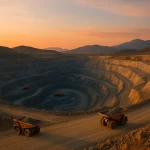
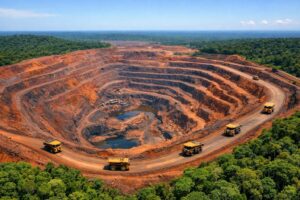
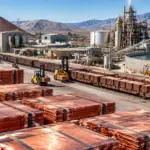
Among the additions, copper stands out. It’s the backbone of electric vehicles (EVs), power grids, and data centers, making it indispensable for both clean energy and defense manufacturing. Despite its importance, the U.S. copper mining industry remains cost-challenged.
More Read

Freeport-McMoRan (NYSE: FCX), the largest American copper producer, operates seven U.S. mines with some of the lowest ore grades globally — making production less profitable than operations in Latin America or Indonesia. The company told Reuters that the critical minerals list designation could make it eligible for over $500 million in annual tax credits.

Rio Tinto, which operates the only other U.S. copper smelter, said the new critical minerals list “sends a clear signal that America is committed to building resilient supply chains for the technologies that will define our future.”
Met Coal and Uranium Rejoin the Critical Minerals List
The inclusion of metallurgical coal (used to make steel) and uranium (used in nuclear reactors and fertilizers) broadens the scope of the critical minerals list beyond clean energy.
Met coal aligns with former President Trump’s long-standing support of the fossil fuel industry, while uranium reflects renewed U.S. interest in nuclear energy and strategic self-sufficiency.
More Read
Several U.S. met coal mines have closed in recent months due to reduced exports to China, which imposed an additional 15% tariff on U.S. coal this year. Meanwhile, uranium import dependence — particularly on Russian and Kazakh supply — remains a vulnerability.
The addition of potash and phosphate (used in fertilizers) also underscores the list’s agricultural dimension. “These are two minerals where stable supplies are absolutely necessary to fill our plates and feed our communities,” said Corey Rosenbusch, CEO of The Fertilizer Institute.
Industry Impact: Why the Critical Minerals List Matters Now
The expanded critical minerals list is more than a symbolic act — it’s a policy instrument reshaping U.S. mining economics.
It influences:
- Federal incentives and permitting: Qualifying projects can access grants, tax credits, and faster regulatory clearance.
- Investment direction: Private capital often follows Washington’s signals, boosting valuations for juniors with qualifying assets.
- Strategic stockpiling: The list dictates what materials enter the National Defense Stockpile, signaling procurement priorities.
For companies like Freeport-McMoRan, Rio Tinto, and Energy Fuels, this list provides a clearer view of federal intent. However, environmental groups like Earthjustice Action warn it could lead to relaxed oversight. “Instead of prioritizing corporate profits, we should focus on recycling and responsible sourcing,” said Cameron Walkup, a policy director at the NGO.
Skillings Analysis
- The expansion of the critical minerals list effectively turns copper into a national security metal — marking a structural shift in U.S. mining policy.
- The inclusion of met coal and uranium signals a pragmatic, not ideological, minerals strategy: hedging across fossil, nuclear, and clean energy.
- Yet, lower domestic ore grades and environmental opposition mean policy designation alone may not overcome economic headwinds. Execution will matter more than politics.
The Next Phase: From List to Implementation
Over the next quarter, the focus will shift from designation to delivery. Agencies like the Department of Energy (DOE) and Department of Defense (DoD) will likely detail project eligibility criteria under the expanded critical minerals list.
Analysts expect increased funding for U.S.-based copper and uranium projects, as well as potential tariff adjustments for imported minerals. By Christmas, the market will be watching whether capital inflows to U.S. mining firms accelerate — or if implementation bottlenecks slow the momentum.
For miners, the takeaway is simple: being on the critical minerals list may now mean the difference between stagnation and scale.