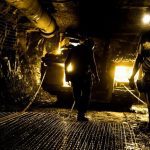
The Komdok mining district in North Korea, situated in South Hamgyong Province, is considered one of the country’s most important mining sites. The Komdok mining region is renowned for its vast lead and zinc reserves, making it a vital contributor to North Korea’s economy. Although confronted with several obstacles, such as antiquated infrastructure and global sanctions, the region plays a crucial role in the country’s economic strategy and endeavours to maintain its mining sector.

The Komdok mining region also harbours other precious minerals such as silver and diverse base metals. The resources extracted from Komdok play a vital role in generating North Korea’s export earnings, given that the minerals mined there traditionally constitute a substantial portion of the country’s trade, particularly with China.
The economic significance of Komdok is extremely significant. The minerals extracted from this region significantly contribute to North Korea’s Gross Domestic Product (GDP) and serve as a crucial source of foreign money. This foreign currency is essential for sustaining the country’s predominantly isolated economy. The government’s focus on the mining sector highlights its strategic significance, as it consistently strives to optimize output and sustain production levels despite various limitations.
Related news
- Major Gold and Copper Discoveries Propel Titan Minerals’ Dynasty Project Forward
- Inflection Resources Taps Fleet Space Technology for Cutting-Edge Copper Exploration in Australia
- Botswana Seeks to Increase Stake in De Beers Amidst Potential Ownership Shift
- Colombia Halts Coal Exports to Israel Amid Gaza Conflict
- York Harbour Metals Grants Firetail Resources Option for Major Newfoundland Copper-Zinc-Silver Project
Infrastructure and mining operations in the Komdok Mining Region
Komdok comprises an extensive infrastructure of mines, processing plants, rail links, electrical substations, and worker housing facilities. This comprehensive infrastructure facilitates both subterranean and surface mining activities. The region’s mining operations are focused on several important mines and facilities, comprising different excavations, vertical openings, and processing installations. One example is the Taehung Youth Hero Mine located in the Komdok region, which is renowned for its extraction of magnesite, magnesia, and associated goods.
Nevertheless, a crucial challenge that Komdok’s mining operations face is the outdated condition of its equipment and infrastructure. A significant portion of the mining equipment is antiquated and urgently requires modernization. The state of being obsolete significantly impedes efficiency and productivity, posing difficulties in meeting contemporary mining requirements and competing internationally.
More Read

Challenges in Energy Supply and Operations
The mining operation in Komdok faces a substantial problem in terms of energy supply. Despite being located near significant hydroelectric power plants, the region has periodic power shortages. The scarcity is worsened by the substandard electricity, leading to significant deterioration of electrical equipment. Fluctuations in voltage and an inconsistent power supply frequently cause disruptions in mining operations, resulting in delays and higher maintenance expenses.

Moreover, the Komdok mining region has been significantly affected by typhoons and other natural calamities. For instance, the occurrence of Typhoon Bolaven in 2012 resulted in significant destruction to the region, and the subsequent efforts to restore and rebuild have been sluggish and inadequate, persisting for several years. The impact of such occurrences not only harms the tangible infrastructure but also hampers production timetables and diminishes overall productivity.
Effects of Global Sanctions
The implementation of international sanctions on North Korea has greatly impeded the progress and effectiveness of the Komdok mining region. The imposition of these restrictions limits North Korea’s capacity to export its minerals, thereby directly impacting its earnings. Moreover, restrictions restrict the country’s ability to obtain essential technologies and spare parts, hindering its endeavours from upgrading and upholding mining equipment.
More Read

The sanctions have also had a wider economic repercussion, diminishing North Korea’s capacity to generate foreign currency, which is crucial for procuring goods and services that are not domestically manufactured. The economic isolation worsens the difficulties the Komdok mining region encounters, hindering significant expansion and development in the mining sector.
Government initiatives and potential outcomes
Notwithstanding these difficulties, the North Korean government persists in allocating resources to developing the Komdok mining region. Initiatives are underway to refurbish and upgrade the mines to enhance productivity and yield. These endeavours encompass the improvement of infrastructure, the refinement of mining methodologies, and the enhancement of living standards for workers. The government’s emphasis on the mining sector highlights its significance to the national economy and its potential as a catalyst for economic stability and expansion.
The future of the Komdok mining region depends on various variables. A crucial aspect is the capacity to modernize and enhance the mining infrastructure to comply with current standards. Furthermore, it is imperative to address energy supply challenges and minimize the consequences of natural disasters in order to maintain and improve mining activities. The geopolitical situation and the ongoing impact of international sanctions on North Korea’s economy are expected to be the primary factors determining Komdok’s destiny.
Despite encountering many obstacles, such as antiquated infrastructure, energy supply problems, natural calamities, and international penalties, Komdok remains an essential element of the nation’s economic structure. The government’s continuous endeavours to restore and update the region underscore its importance and capacity to contribute to North Korea’s economic durability. The future of Komdok will be influenced by internal developments and foreign economic factors, making it a crucial region to monitor in the upcoming years as the geopolitical landscape changes.