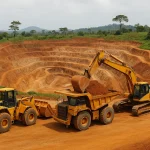
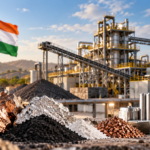
As electric vehicle (EV) sales surged past 17 million units globally in 2024, the spotlight on lithium mining companies and nickel producers has never been brighter. Albemarle Corporation (NYSE: ALB), one of the world’s largest lithium producers, delivered about 88,000 t LCE (lithium-carbonate equivalent) last year. At the same time, the nickel market is navigating a delicate balance between structural surplus and accelerating electrification demand. For mining professionals, analysts, and investors, understanding how lithium mining companies and nickel producers adapt in 2026 is key to anticipating the next phase of the global battery metals race.

Strategic Importance of Lithium Mining Companies and Nickel Producers
Lithium and nickel have become the backbone of modern energy storage. Both are indispensable for manufacturing high-performance batteries used in EVs, portable electronics, and renewable energy systems.
- Lithium acts as the primary charge carrier in lithium-ion batteries, making lithium mining companies central to global electrification.
- Nickel boosts battery energy density and enhances range, especially in high-nickel cathode chemistries (NMC and NCA).
Analysts at Fastmarkets project that global lithium supply will shift from a slight surplus in 2025 to a 1,500-tonne deficit in 2026, while nickel could face a 250,000-tonne surplus according to Sumitomo Metal Mining. This divergence places lithium mining companies at the center of a tightening supply chain, while nickel producers face cost pressure from Indonesia’s high-volume output.
Leading Lithium Mining Companies in 2025–2026
Albemarle Corporation (United States)
One of the most influential lithium mining companies, Albemarle continues to expand globally. Its La Negra III plant in Chile, a USD 500 million investment, cuts water use by 30% through advanced thermal evaporation systems. Despite lower lithium prices, Albemarle reported positive free cash flow for 2025, reinforcing its long-term resilience.
Sociedad Química y Minera de Chile (SQM)
SQM remains among the lowest-cost lithium mining companies globally, producing from brines in the Atacama Desert. The company anticipates a rebound in demand by 2026 and is scaling real-time aquifer monitoring to ensure environmental compliance.
More Read

Tianqi Lithium (China)
Tianqi Lithium—another global heavyweight—has adopted AI-driven refining and real-time data analytics to optimize yield and purity. As one of the fastest-growing lithium mining companies, Tianqi has strengthened its vertical integration with downstream processing partnerships in Australia and China.

Other Key Players
- Ganfeng Lithium (China): Investing heavily in battery recycling and closed-loop lithium recovery.
- Pilbara Minerals (Australia): Expanding its hard-rock lithium operations with new conversion facilities to produce lithium hydroxide domestically.
Technology and Sustainability Among Lithium Mining Companies
Sustainability has become a non-negotiable factor for lithium mining companies competing in global markets. The emergence of Direct Lithium Extraction (DLE) technology marks a turning point: it reduces water use, increases recovery rates, and enables commercial viability for lower-grade brines.
- The DLE market is forecast to grow at a 19.6% CAGR through 2036, reshaping how lithium mining companies source materials.
- In parallel, miners are deploying renewable power at extraction sites and implementing closed-loop water systems to align with ESG frameworks.
For nickel producers, sustainability innovation focuses on reducing the carbon intensity of high-pressure acid leach (HPAL) processes, long criticized for emissions and tailings risks.
Major Nickel Producers and Their Strategic Realignment
While lithium mining companies battle scarcity, nickel producers face the opposite dilemma—oversupply. Indonesia’s rapid capacity expansion in nickel pig iron and matte refining has led to falling global prices. Yet major players like Vale, BHP, and Sumitomo Metal Mining are pivoting toward higher-grade, battery-suitable Class 1 nickel.
In the short term, this could pressure profit margins, but in the long term, vertically integrated operations—linking mining, refining, and recycling—are likely to restore balance. Mining professionals should monitor how companies manage these competing market forces.
Skillings Analysis
- Lithium mining companies that successfully deploy DLE, improve water efficiency, and scale downstream refining will dominate global EV supply chains.
- Nickel producers must rationalize output to protect margins—especially against substitution trends toward lithium-iron-phosphate (LFP) chemistries that reduce nickel intensity.
- For investors, the 2026–2028 window represents a key inflection point: ESG-aligned miners with integrated operations are poised for sustained growth.
Outlook: 2026 and Beyond
Heading into Q4 2025 and early 2026, the industry’s attention will focus on:
- Whether lithium mining companies can maintain production amid tightening resource regulations in Chile, Australia, and the U.S.
- How nickel producers respond to a prolonged surplus.
- The evolution of recycling and secondary supply as part of the global circular economy.
The next 18 months could determine the long-term dominance of today’s lithium mining companies—and whether the mining sector can keep pace with the electrification era it helped ignite.