By Penny Langford

The lithium market is entering 2026 with a deceptively calm price signal. Chinese battery-grade lithium carbonate has been consolidating around 140,000–145,750 yuan per tonne, equivalent to roughly US$18,000–25,000/t depending on exchange rates and product specifications. Beneath that range, however, a significant supply adjustment is taking place.
Roughly 500,000 tonnes of hard-rock concentrate capacity has been curtailed, delayed or rendered uncertain across key operations and project pipelines. That figure should not be confused with 500,000 tonnes of lithium carbonate equivalent (LCE). The effective LCE reduction is materially smaller, but the capacity milestone matters because it represents a large block of feedstock that was expected to support chemical production.
The result is a market that is no longer defined simply by headline nameplate capacity. Operators, investors and battery manufacturers are increasingly focused on available supply, the timing of restarts and the ability of energy-storage demand to absorb new production.
The market is balancing on effective supply
The lithium downturn of 2024 and 2025 forced producers to reconsider expansion schedules, defer capital spending and reduce output from higher-cost assets. Some operations were placed on care and maintenance, while others continued producing but stockpiled concentrate rather than selling into weak markets.
More Read

That response has changed the market’s supply curve.

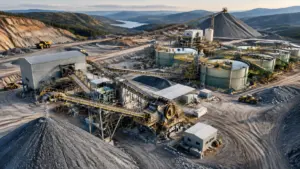
According to Mysteel’s overview of Australian lithium projects, the Australian project pipeline remains substantial, but the timing and operating rate of individual mines are becoming more important than their published capacity. Greenbushes, Kathleen Valley and other Western Australian operations illustrate the distinction between installed capacity and material that can be delivered economically into the conversion chain.
Greenbushes has reduced its expected spodumene concentrate output, while other Australian projects face grade, commissioning or cost pressures. At the same time, China’s Jianxiawo mine remains a central swing factor for the market. The operation’s permitting and restart uncertainty has repeatedly moved lithium futures and spot prices, even when the physical supply impact was difficult to quantify in real time.

This is why the 500,000-tonne figure matters. It is a measure of the supply cushion that may not arrive when expected.

Lithium supply forecasts increasingly depend on operating rates and restart timing, not only on geological resources.
Curtailments by project and supply segment
The table below separates reported or inferred project-level reductions from the broader 500,000-tonne hard-rock capacity milestone. The figures are not directly additive because they use different bases, including LCE, spodumene concentrate and forecast shortfall.
| Project or supply segment | Reported change or risk | Market significance |
|---|---|---|
| Jianxiawo, China | Benchmark forecasts have reduced expected 2026 output from about 62,500 t to 32,000 t LCE | A delayed restart removes a major domestic source and keeps China exposed to imported spodumene |
| Greenbushes, Australia | Guidance reduction of roughly 160,000–225,000 t of spodumene concentrate versus earlier expectations | Equivalent to approximately 16,000–28,000 t LCE, depending on conversion assumptions |
| Other Australian hard-rock projects | Delays, stockpiling and project-ramp uncertainty | Reduces immediately tradable concentrate even where mines remain operational |
| Chinese lepidolite and marginal supply | Periodic curtailments linked to economics, environmental review and overcapacity controls | Provides a flexible but unreliable source of supply during price recoveries |
| Broader hard-rock capacity milestone | Approximately 500,000 t of concentrate capacity curtailed, delayed or uncertain | Represents a significant supply cushion, but not 500,000 t of LCE |
The project-level evidence points to a market adjustment rather than a single mine-driven shortage. Greenbushes has a much larger physical footprint than Jianxiawo, but Jianxiawo carries greater near-term importance for China’s domestic balance. Its restart would add feedstock directly into the country’s integrated chemical and battery ecosystem.
That is also why the market reacts to administrative milestones. A land-use approval, environmental review or production-safety permit can move expectations before a single tonne is mined.
China carbonate prices have found a contested floor
Chinese carbonate prices have moved sharply through the cycle. SMM-linked market data cited in industry commentary show battery-grade lithium carbonate rising from approximately 73,550 yuan/t in late 2025 to more than 180,000 yuan/t in early 2026, before consolidating.
Recent prices near 140,000–145,750 yuan/t indicate that the market has pulled back from its highs but has not returned to the low-price conditions that forced widespread curtailments. The level is high enough to support some restarts, but not necessarily high enough to justify every project in the global development pipeline.
The SMM lithium market analysis describes a market where supply has recovered in some areas, while regional deficits and uncertainty persist. That combination explains the current price behavior: the market is not in an uncontrolled shortage, but neither is it comfortable with the amount of material available.
The earlier Skillings lithium forecast identified a potential US$25,000/t base case as supply discipline and stationary storage demand began to offset the legacy surplus. The current market is testing that thesis at a lower yuan-denominated range, with the direction dependent on restarts and demand realization.

Conversion capacity and feedstock availability will determine how quickly mine supply reaches battery-grade chemical markets.
Energy storage is changing the demand equation
Electric vehicles remain the largest source of lithium demand, but stationary energy storage is becoming the most important source of incremental growth.
Forecasts compiled from Reuters, S&P Global, UBS and industry analysts generally place 2026 energy-storage lithium demand growth in the 55%–60% range, although estimates vary by demand definition and technology assumptions. Other forecasts are more conservative on installed storage capacity, but still identify energy storage as one of the fastest-growing applications for lithium-ion batteries.
S&P Global expects energy storage to be a leading growth driver for lithium-ion consumption. Reuters, citing analyst estimates, has reported that energy storage could account for approximately 31% of total LCE consumption in 2026, up from about 23% in 2025. The precise share is disputed, but the direction is clear: battery demand is broadening beyond passenger vehicles.
Energy storage is important because it is driven by different purchasing decisions. Grid reliability, renewable-energy integration, data-centre demand and capacity payments can support battery deployment even when consumer vehicle sales slow. Many storage projects also use lithium-iron-phosphate chemistry, which increases the importance of lithium carbonate relative to hydroxide.
The demand growth does not automatically guarantee higher prices. If new mines ramp smoothly and conversion plants operate at high utilization, additional supply can still keep the market in surplus. But if storage demand grows faster than delayed projects return, the balance can tighten quickly.

Stationary storage is becoming a core demand pillar rather than a residual market for battery cells.
Jianxiawo is the key restart risk
Jianxiawo remains the most visible supply variable in China’s 2026 lithium outlook.
The mine has been associated with roughly 30,000–60,000 tonnes of LCE at risk, depending on whether the calculation uses expected output, nameplate capacity or the difference between a full-year operating case and a delayed restart. Benchmark has cut its 2026 output estimate substantially, while other market reports have focused on the mine’s potential to return later in the year.
The uncertainty is not simply operational. Jianxiawo’s restart depends on environmental approvals, safety requirements, mine preparation and the pace at which ore handling resumes. That creates a gap between regulatory progress and actual chemical supply.
A smooth restart would weaken the bull case. It could bring a meaningful volume of domestic feedstock into China, improve converter utilization and encourage buyers to delay restocking. A delayed or intermittent restart would have the opposite effect, particularly if storage demand continues to expand.
Lithium price forecast 2026: base, bull and bear cases
The following framework uses Chinese battery-grade lithium carbonate as the reference price. It is designed as a decision-making range rather than a direct investment recommendation.
| Scenario | China carbonate price range | Market balance | Main drivers |
|---|---|---|---|
| Base case | 140,000–250,000 yuan/t | Contested balance, with periods of surplus and deficit | Storage demand remains strong, but some hard-rock projects restart and Jianxiawo returns gradually |
| Bull case | 200,000–250,000+ yuan/t | Sustained deficit | Storage demand outruns restarts; Jianxiawo remains delayed; curtailed capacity does not return quickly |
| Bear case | 100,000–140,000 yuan/t | Surplus | New project ramps accelerate, Jianxiawo resumes at meaningful rates and EV or storage demand underperforms |
The base case is deliberately wide. Prices near 140,000 yuan/t can support low-cost producers but remain challenging for marginal hard-rock and conversion assets. A move toward 200,000–250,000 yuan/t would require more than optimism around energy storage; it would require evidence that supply cannot respond quickly enough.
The bull case becomes more credible if the market loses another season of production from Jianxiawo while energy-storage procurement remains aggressive. In that scenario, inventories could tighten faster than new concentrate reaches Chinese converters.
The bear case depends on execution. If new projects ramp ahead of schedule, suspended capacity restarts and producers release stockpiled material, the market could rebuild a surplus. A lower price environment would then return pressure to higher-cost mines and make the 500,000-tonne capacity milestone more relevant as a source of additional curtailment.
What decision-makers should monitor
For operators and investors, the most useful indicators are operational rather than rhetorical:
- Jianxiawo ore-handling activity: permits are not the same as sustained production.
- Greenbushes realized shipments: production guidance and export availability can diverge.
- Chinese carbonate inventories: falling inventories would confirm that demand is outrunning effective supply.
- Energy-storage installation data: project awards and battery shipments are more useful than broad policy targets.
- Restart economics: marginal producers returning too quickly would cap prices; prolonged downtime would reinforce the deficit case.
- Spodumene concentrate pricing: weakness here could signal a renewed surplus before it appears in carbonate prices.
The 2026 lithium market is therefore less about whether supply exists in the ground than whether it can be mined, permitted, converted and delivered on schedule. The roughly 500,000 tonnes of curtailed or delayed hard-rock capacity has reduced the market’s margin for error. With China carbonate prices already holding near 140,000–145,750 yuan/t and energy storage expanding rapidly, the next decisive move will come from the timing of restarts.
LinkedIn snippet:
Lithium’s 2026 outlook is increasingly shaped by effective supply, not nameplate capacity. About 500,000 tonnes of hard-rock concentrate capacity has been curtailed, delayed or rendered uncertain, while energy-storage demand could grow 55%–60%. The key swing factor is whether Jianxiawo returns before storage demand absorbs the available supply cushion.
X snippet:
Lithium prices near 140,000–145,750 yuan/t are holding despite restart expectations. The 2026 balance now turns on ~500,000 t of curtailed/delayed hard-rock concentrate capacity, fast-growing storage demand and Jianxiawo’s return. Base: contested balance. Bull: deficit. Bear: faster project ramps.