By Salini Krishnan

The race for domestic battery metal sovereignty reached a new milestone this week as Jindalee Lithium officially transitioned its North American assets into a standalone, Nasdaq-listed entity. Through a $571 million merger with Constellation Acquisition Corp. I, a special purpose acquisition company (SPAC) sponsored by Antarctica Capital, the newly formed US Elemental (Nasdaq: ULIT) is positioned to lead the development of the McDermitt Lithium Project.
Located on the Oregon-Nevada border, the McDermitt deposit represents the largest lithium resource currently identified in the United States. As the global automotive industry shifts toward long-term electrification, the creation of US Elemental provides a dedicated vehicle for institutional capital to gain exposure to a Tier-1 asset within a favorable regulatory jurisdiction. The transaction, which includes the Clayton North project in Nevada, underscores a broader trend of “onshoring” critical mineral supply chains to mitigate geopolitical risks associated with overseas sourcing.
The Transaction: Bridging Australian Exploration and US Capital
The merger represents a strategic pivot for Jindalee Lithium, which will retain approximately 80% ownership of US Elemental. By rolling over its interest in its subsidiary, HiTech Minerals, Jindalee ensures its existing shareholders remain heavily leveraged to McDermitt’s upside while gaining the liquidity and visibility of a major US exchange.
Financially, the deal is structured to provide the new entity with the working capital necessary to advance through the final stages of feasibility and permitting. Post-transaction, US Elemental is expected to hold approximately $15 million in cash, net of deal expenses. Furthermore, the company is pursuing a $20 million to $30 million capital raise, anchored by a $4 million private investment in public equity (PIPE) from Antarctica Capital affiliates.
More Read

This influx of capital arrives at a critical juncture. While the project’s scale is undisputed, the path from resource definition to active production requires substantial investment in infrastructure and technical studies. The Nasdaq listing provides the platform needed to tap into the deep pools of ESG-focused capital in New York that are increasingly looking for domestic alternatives to Chinese-dominated supply chains.

McDermitt: Analyzing the Scale of the Resource
At the heart of US Elemental’s value proposition is the McDermitt Lithium Project. The project is situated within the McDermitt Caldera, a geological feature that has become a focal point for the North American lithium industry.
According to the most recent Pre-Feasibility Study (PFS), the project boasts an staggering resource of 21.5 million tonnes of Lithium Carbonate Equivalent (LCE). To put this in perspective, the mine is projected to support a 63-year operational life, providing a generational supply of material for the global battery revolution.
More Read

Key Project Economics
| Metric | Projection |
|---|---|
| Annual Production (First 10 Years) | 47,500 metric tons LCE |
| Mine Life | 63 Years |
| Net Present Value (NPV8%) | $3.2 Billion (Post-Tax) |
| Internal Rate of Return (IRR) | 17.9% (Post-Tax) |
| Estimated Capital Expenditure | $3.0 Billion |
| Total Mineral Resource | 21.5M Tonnes LCE |
The $3.2 billion NPV reflects a robust economic case, even when factoring in the significant $3 billion capital expenditure (CAPEX) required for full-scale development. The sheer volume of the resource allows for modular expansion, which could potentially de-risk the initial build-out by scaling production in stages as market demand evolves.

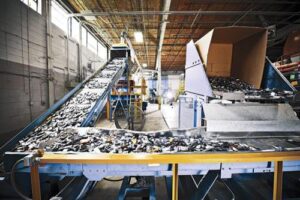
Caption: Advanced mineral processing and modular facility design will be essential for managing the high CAPEX requirements of the McDermitt project.
Permitting and the FAST-41 Advantage
One of the primary hurdles for large-scale mining in the United States has historically been the protracted permitting timeline. However, US Elemental enters the public market with a significant tailwind: the McDermitt project’s inclusion in the federal FAST-41 initiative.
The FAST-41 program was established to improve the transparency and predictability of the federal environmental review and authorization process for “covered” infrastructure projects. For critical minerals like lithium, which are essential to national security and energy transitions, this status ensures a coordinated schedule among various federal agencies, including the Bureau of Land Management (BLM) and the Environmental Protection Agency (EPA).
While FAST-41 does not bypass environmental standards, it significantly reduces “bureaucratic drift,” potentially shaving years off the development timeline. This is a critical factor for investors who have previously been wary of the “permitting purgatory” that has stalled other major US projects. In the context of the current administration’s push for aluminum independence and general mineral self-sufficiency, US Elemental’s regulatory standing is a primary de-risking element.
Strategic Context: The Nevada-Oregon Lithium Corridor
US Elemental does not exist in a vacuum. The McDermitt Caldera is also home to Lithium Americas’ Thacker Pass project, which is currently under construction. The proximity of these two massive deposits suggests the emergence of a “Lithium Hub” that could benefit from shared infrastructure, specialized labor pools, and regional political support.
Comparisons are already being drawn to other significant US developments. For example, Century Lithium’s Angel Island project recently saw its NPV surge to $4 billion in a study update, signaling a broader re-rating of domestic clay-hosted lithium assets. Unlike the traditional brine operations in South America or hard-rock spodumene in Australia, the sedimentary deposits found in the McDermitt region require unique processing techniques, but they offer the advantage of low stripping ratios and predictable geology.

Operational Challenges and Capital Requirements
While the $571 million SPAC merger provides a strong start, US Elemental faces the formidable task of raising $3 billion to bring McDermitt into production. This capital intensity is typical for world-class mining operations but requires a sophisticated financing strategy.
The company is expected to explore various avenues, including:
- Department of Energy (DOE) Loans: Similar to the $2.26 billion conditional loan granted to Thacker Pass, US Elemental is a prime candidate for federal financing support under the Advanced Technology Vehicles Manufacturing (ATVM) program.
- Strategic Offtake Agreements: Major automakers (OEMs) are increasingly moving upstream to secure supply. A multi-year offtake agreement paired with an equity investment from a major car manufacturer could provide a significant portion of the required funding.
- Public Markets: As a Nasdaq-listed entity, the company can utilize secondary offerings as project milestones: such as the completion of a Definitive Feasibility Study (DFS): are reached.
The 2026 Outlook for US Elemental
As the merger closes in the second half of 2026, the focus will shift from corporate structuring to technical execution. The market will be watching for the results of metallurgical testing and the progress of the Environmental Impact Statement (EIS).
The entry of ULIT onto the Nasdaq comes at a time when the lithium market is searching for a bottom after several years of price volatility. However, long-term investors in the mining sector often look past short-term spot prices, focusing instead on the “margin gravity” of low-cost, large-scale assets. US Elemental’s 63-year mine life suggests that it is built to weather multiple commodity cycles, providing a stable backbone for the domestic EV industry.

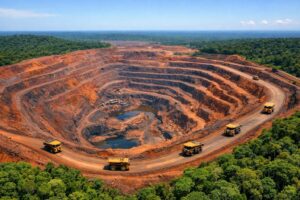
Caption: The strategic location of McDermitt on the Oregon-Nevada border places it at the center of the growing US battery supply chain.
Conclusion
The $571 million listing of US Elemental is more than just a corporate transaction; it is a signal that the infrastructure for a domestic lithium industry is maturing. By combining the massive resource base of McDermitt with the capital access of the Nasdaq and the regulatory speed of FAST-41, US Elemental has created a blueprint for how junior miners can transition into major producers.
For stakeholders in the mining industry, the success of US Elemental will serve as a bellwether for the viability of large-scale, domestic critical mineral projects in the late 2020s.
Daily Market Snapshot: Critical Minerals
| Commodity | Price (USD/t) | Change (24h) |
|---|---|---|
| Lithium Carbonate (99.5%) | $14,200 | +0.4% |
| Copper (LME) | $9,450 | -0.2% |
| Nickel (LME) | $17,800 | +1.1% |
| Cobalt (99.8%) | $28,500 | 0.0% |
Data provided by Skillings Mining Intelligence. For deeper analysis on the 2026 Lithium Landscape, view our latest Lithium Power Map Report.