By Salini Krishnan – April 12th, 2026

McEwen Copper is currently engaged in high-stakes negotiations with a consortium of global lenders to secure approximately $4 billion in financing for its flagship Los Azules project in San Juan, Argentina. As the global race for critical minerals intensifies, the company’s ability to bridge the capital gap for one of the world’s largest undeveloped copper deposits has become a bellwether for Western mining investment in South America.
The financing strategy, which targets a capital structure of 30% to 40% equity with the remainder covered by debt, is designed to fund an estimated $3.2 billion in initial capital expenditures. This “financing hunt” is not merely a corporate endeavor; it is a geopolitical maneuver involving the U.S. Export-Import Bank (EXIM), the U.S. International Development Finance Corporation (DFC), and financial groups from Japan and Europe.
The Strategic Pivot: EXIM, DFC, and “Project Vault”
The push for Los Azules aligns closely with the United States’ “Project Vault” strategy, an initiative aimed at securing critical mineral supply chains independent of Chinese dominance. McEwen Copper has already secured approximately $1.1 billion in letters of interest from various export-credit agencies and development banks.
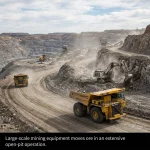
Lenders like US EXIM have signaled a willingness to finance up to 85% of equipment costs, provided the project sources U.S.-manufactured mining machinery. This includes heavy-duty haul trucks and advanced processing technology. By tapping into these agencies, McEwen Copper aims to de-risk a project that, until recently, faced significant headwinds due to Argentina’s volatile economic history.
More Read

Caption: Defense-linked funding and export credit agencies are increasingly de-risking junior mining operations to secure national mineral interests.

Technical Edge: The Cathode Revolution
One of the primary drivers of investor interest in Los Azules is its technical design. Unlike traditional copper mines that produce a concentrate requiring shipment to overseas smelters: often in China: Los Azules is designed to produce copper cathode on-site.
Using Nuton technology, a venture backed by Rio Tinto, the project will employ heap leaching and solvent extraction-electrowinning (SX-EW). This process allows McEwen Copper to bypass the smelting stage entirely, delivering 99.9% pure copper cathode directly to end-users like Stellantis. This not only reduces the carbon footprint of the operation but also enhances the project’s ESG credentials, a factor that helped secure a collaboration agreement with the International Finance Corporation (IFC) in September 2025.
More Read

| Project Metric | Estimate/Target |
|---|---|
| Annual Production | 148,000 – 205,000 tonnes (Cathode) |
| Initial Mine Life | 22 Years (Potential to 33) |
| First Production | 2030 |
| Initial Capex | $3.2 Billion |
| Financing Target | $4.0 Billion (Incl. contingencies) |
For more on how technological shifts are altering the industry, see our report on the Global Battery Revolution.
Political Tailwind: The RIGI Regime
The progress at Los Azules cannot be separated from the shifting political landscape in Buenos Aires. Under President Javier Milei, Argentina has introduced the Large Investment Incentive Regime (RIGI), a reform package specifically designed to attract mega-projects by offering long-term tax stability, customs exemptions, and eased capital controls.
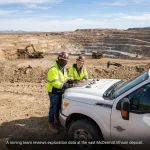
McEwen Copper received formal RIGI approval in late 2025, providing the fiscal certainty required by global lenders. This shift has turned San Juan into a focal point for international mining delegations, including a recent high-level tour by Japanese investors looking to secure long-term copper off-takes.

Caption: The San Juan province, part of the broader Vicuña District, is home to several tier-one copper assets currently undergoing rapid development.
Strategic Backers: Stellantis and Nuton
The presence of Stellantis, one of the world’s largest automakers, as a major shareholder (holding roughly 14% of McEwen Copper) underscores the direct-to-manufacturer supply chain model. Stellantis is not just an investor; it is a future customer seeking to insulate its EV production lines from price volatility and supply shortages.
Similarly, Rio Tinto’s Nuton venture provides both technical validation and financial weight. The use of Nuton’s bio-leaching and advanced leaching technologies is expected to improve copper recovery rates from primary sulfides, which historically have been difficult to process via traditional heap leaching. This technical partnership is explored in further detail in our analysis of biomining breakthroughs.
Timeline and Operational Outlook
While the financing hunt remains the immediate priority, the operational timeline for Los Azules is crystallizing:
- Feasibility Study Completion: Finalized in October 2025.
- Equity Raise / IPO: Targeting $300 million or more in 2026 to satisfy the 30-40% equity requirement.
- Construction Commencement: Slated for late 2026.
- Full Buildout: 2027 through 2029.
- First Copper: 2030.
The scale of the buildout is immense. The project requires the construction of high-altitude infrastructure, modular processing units, and extensive logistics networks in the rugged Andean terrain.

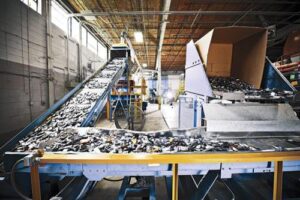
Caption: Los Azules will utilize advanced modular processing units to produce copper cathode directly on-site, bypassing the need for traditional smelting.
Key Risks: The $4B Hurdle
Despite the momentum, several risks remain. The sheer size of the $4 billion financing package is a significant hurdle in a high-interest-rate environment. Any delays in the planned 2026 IPO could push back the construction start date. Furthermore, while the RIGI regime provides a framework for stability, Argentina’s long-term political consistency remains a point of caution for more conservative lenders.
Operational risks are also present. High-altitude mining presents unique logistical challenges, from weather-related downtime to the physical toll on equipment. The industry’s ability to manage these costs effectively will be critical, as seen in recent mine electrification efforts aimed at slashing diesel dependency in remote sites.
Market Implications
For the broader copper market, Los Azules represents a significant portion of the “next wave” of supply. With global copper demand expected to double by 2035 to meet net-zero targets, the success of McEwen Copper’s financing hunt is a critical test of whether the industry can bring massive new mines online in time to prevent a structural deficit.
As McEwen Copper continues its interviews with financial advisers for its public listing, the mining world will be watching closely. A successful $4 billion raise would not only secure the future of Los Azules but also signal that Argentina is officially “open for business” in the global copper race.
For ongoing updates on major projects like Los Azules and Hudbay’s Copper Mountain expansion, visit skillings.net.