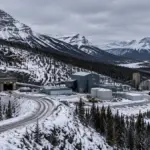
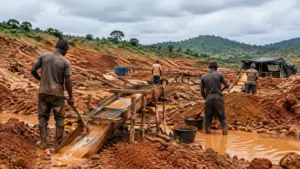
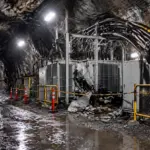
An underground exploration face at a hard-rock silver operation.

By Sonny Rollins
Americas Gold and Silver reported a new high-grade vein discovery at its Galena Complex in Idaho, returning 1,062 grams per tonne (g/t) silver and 0.7% copper over 1.3 metres. Separate drilling at the nearby Crescent area returned 1,891 g/t silver and 0.3% copper over 1.3 metres, according to a company release and market reporting.
The results add to a series of exploration updates from the company’s Idaho operations, where narrow silver-copper veins are being tested alongside broader mineralized zones. Americas Gold and Silver also reported a 20.5-metre interval grading 654.7 g/t silver at the Cosalá Complex in Mexico, highlighting a different style of mineralization with potentially different implications for mine planning and resource work.
The assays are significant for exploration, but they do not by themselves establish a mineral resource or demonstrate that any interval can be converted directly into production.
High-grade results from Galena and Crescent
The new Galena vein result was reported from drilling within the company’s operating underground complex in Idaho’s Silver Valley. The district has a long history of silver, copper, lead, zinc and antimony production, and the company is using existing underground infrastructure to test extensions and new structures.

At Crescent, drilling returned a higher silver grade over a similar narrow interval:
| Project or area | Reported interval | Silver grade | Copper grade |
|---|---|---|---|
| Galena Complex, new vein discovery | 1.3 m | 1,062 g/t | 0.7% |
| Crescent area | 1.3 m | 1,891 g/t | 0.3% |
| Cosalá Complex, San Rafael area | 20.5 m | 654.7 g/t | 1.5% |
The company has described Crescent as a past-producing, high-grade underground silver mine located within the broader Silver Valley district. According to Americas Gold and Silver’s Galena Complex operations page, Crescent historically produced more than 25 million ounces of silver at an average grade of about 891 g/t between 1917 and 1981.
Market reporting on the exploration release identified the 1,062 g/t result as a new vein discovery at the Galena mine and the 1,891 g/t result as drilling from the Crescent area. The results were also reported by TradingView through a market news release.

Drill core logging is used to assess mineralization continuity and geological controls.
Why narrow high-grade veins matter
A 1.3-metre interval grading more than 1,000 g/t silver can be important in an underground mine, particularly where the mineralized structure is close to existing workings, shafts, haulage routes and processing infrastructure.
However, narrow vein results must be evaluated differently from broad intercepts. The reported grade may reflect a concentrated mineralized structure that needs to be traced along strike and down dip before its continuity can be established. Mine planning must also account for dilution from surrounding waste rock, access development, ground conditions, mining method and recovery.
The copper content is relevant because Galena’s mineralization is polymetallic. Copper, lead and antimony can contribute to the value of a mined tonne, but payable recoveries depend on mineralogy, processing performance, concentrate specifications and offtake terms. A high assay result is therefore only one part of the economic assessment.
The company has previously reported that the Galena Complex includes more than 50 years of operating history, extensive underground workings and a processing mill producing silver-antimony-copper and silver-lead concentrates. It has also been upgrading underground equipment and shaft capacity as part of a broader effort to increase operating flexibility.
The immediate exploration question is whether the new vein discoveries represent isolated high-grade shoots or parts of larger, continuous structures. Follow-up drilling will be needed to test both possibilities.
Cosalá shows a different grade-width profile
The Cosalá result in Sinaloa, Mexico, has a different geological and operational profile. The company reported 20.5 metres at 654.7 g/t silver, with reported copper content of 1.5%, from the San Rafael area.
The interval is substantially wider than the 1.3-metre Galena and Crescent intercepts. Although its silver grade is lower, its combination of grade and width may provide a different type of planning opportunity if the mineralization is continuous, metallurgically recoverable and accessible from existing infrastructure.
Broad intervals can potentially support more consistent production zones than isolated narrow veins. They may also reduce the relative effect of dilution, although that depends on the true geometry of the mineralization and the selected mining method. Drill intercept lengths should not be treated as equivalent to true thickness unless the company provides that interpretation.
The company has described the Cosalá drilling as part of ongoing work around the San Rafael deposit and nearby zones. Market reporting said the 20.5-metre interval was located outside the company’s previous inferred resource boundary, making follow-up drilling important for determining whether the mineralization can support resource expansion.

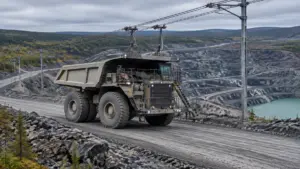
Underground mine infrastructure in the mountainous Silver Valley district.
Assays do not establish a resource
The reported results are exploration drill intercepts. They do not constitute a mineral resource estimate, reserve estimate or feasibility study.
Before mineralization can be incorporated into a formal resource, the company must establish geological continuity, define the geometry and extent of the mineralized zones, complete additional sampling and drilling, and apply appropriate estimation and classification methods. Metallurgical testing, mining studies, infrastructure reviews and permitting would be required before any development decision.
This distinction is particularly important for high-grade narrow veins. A single exceptional assay can identify a promising structure, but it cannot show how much mineralization is present or whether it can be mined economically at scale.
The same applies to the wider Cosalá interval. Its grade-width combination is notable, but the economic relevance will depend on continuity, depth, access, dilution, recovery and the relationship with existing resources and mine plans.
Next drilling and resource work
Americas Gold and Silver is expected to use further drilling to test the extensions of the Galena and Crescent structures and to improve geological confidence around the reported intercepts. The company has also outlined plans for updated resource work across its operations.
At Galena, the key questions include whether the new vein can be traced into areas accessible from existing workings and whether it contains sufficient continuity to affect mine sequencing or head grades. At Crescent, drilling will help determine how the new high-grade zones relate to historic workings and previously identified mineralization.
At Cosalá, additional drilling around the San Rafael area will be watched for confirmation of the broader high-grade trend. The company’s 2026 news releases provide further operational and exploration updates, while its reserves and resources page provides the company’s framework for formal mineral inventory reporting.

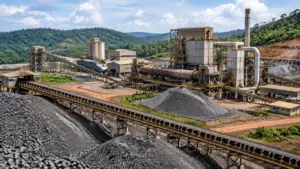
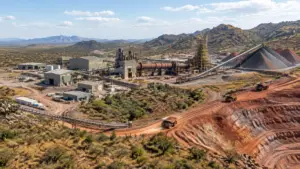
Processing infrastructure is a key factor in evaluating polymetallic silver discoveries.
For operators, the results reinforce the value of exploration around established underground infrastructure. Discoveries near existing shafts, workings and mills can face fewer infrastructure hurdles than greenfield projects, although they still require technical validation and capital.
For the market, the main distinction is between grade, width and continuity. The Galena and Crescent results stand out for their very high silver grades over narrow intervals. The Cosalá result is notable for combining a high silver grade with a much broader interval.
Further drilling and resource work will determine whether those differences translate into mineable inventory. Until then, the results should be treated as encouraging exploration data rather than a statement of future production or value.