Lundin Gold Inc. (TSX: LUG; Nasdaq Stockholm: LUG) has finalized a definitive agreement with LunR Royalties to monetize the silver production from its flagship Fruta del Norte (FDN) mine in Ecuador. The transaction, valued at approximately $670 million, underscores a sophisticated shift in how mid-tier producers are unlocking latent value from secondary metal streams to reward equity holders directly.

Under the terms of the agreement, LunR Royalties will acquire a life-of-mine silver stream on Fruta del Norte in exchange for 50.5 million common shares of LunR. In a move that has captured the attention of institutional investors, Lundin Gold announced it does not intend to hold these shares as a long-term investment. Instead, the company plans to distribute the entire 50.5 million share block to its current shareholders as a “dividend in kind,” effectively spinning off the royalty value directly to its base.
The deal is expected to close in the second quarter of 2026, pending customary regulatory approvals and shareholder consent for the dividend distribution.
The Mechanics of the $670 Million Silver Stream
The definitive agreement formalizes a binding term sheet originally disclosed on February 22, 2026. By transitioning from a term sheet to a definitive agreement, Lundin Gold has locked in a structure that provides LunR with a tiered participation in the silver output of one of the world’s highest-grade gold mines.
The stream is structured with clear delivery thresholds that protect Lundin’s long-term upside while providing LunR with immediate cash flow:
More Read
- Phase 1: LunR will purchase 100% of payable silver production until a total of 12.2 million ounces have been delivered.
- Phase 2: Once the initial threshold is met, LunR’s take drops to 50% of payable silver until an additional 7.8 million ounces are delivered.
- Phase 3: For the remainder of the mine’s life, LunR will purchase 7.5% of the payable silver production.
The stream area is expansive, covering approximately 5,566 hectares. This includes all mining concessions related to current Fruta del Norte operations, encompassing existing mineral reserves and resources, as well as five copper-gold-silver porphyry discoveries currently in early-stage exploration.


Why a “Dividend in Kind” Matters for Investors
The decision to distribute the LunR shares as a dividend in kind is a strategic maneuver designed to eliminate the “conglomerate discount” often applied to miners with diverse asset portfolios or royalty holdings. Typically, when a mining company sells a stream, the cash is used for debt repayment or capital expenditures. By opting for a share distribution, Lundin Gold is providing its shareholders with direct exposure to a pure-play royalty vehicle.
More Read
For the investor, this creates a dual-holding: a high-margin gold producer (LUG) and a silver-focused royalty company (LunR) backed by the very asset they already know. This structure is reminiscent of the “Kramer-esque” aggressive value unlocking: giving the “little guy” a piece of the M&A action. It reflects the broader trend in the Mining Industry Media & Publishing space where operational excellence must be paired with innovative capital allocation to maintain premium valuations.
“This is about direct value transmission,” noted a Vancouver-based mining analyst. “Lundin is essentially saying that the silver at FDN is worth $670 million, and rather than keeping that on the balance sheet where the market might only value it at 0.8x P/NAV, they are handing it to the shareholders to let the market price it as a standalone royalty asset.”
Fruta del Norte: The Engine Room in Ecuador
The success of this deal rests entirely on the operational prowess of Fruta del Norte. Located in Southeast Ecuador, FDN is widely regarded as one of the most significant gold discoveries of the last two decades. It is characterized by high grades and a remarkably low-cost profile, making it a “Top Tier” asset in any global comparison.
Lundin Gold has provided robust guidance for the 2026 fiscal year, highlighting the stability of the asset:
| Metric | 2026 Forecast |
|---|---|
| Gold Production | 475,000 – 525,000 oz |
| Payable Silver Production | 500,000 – 600,000 oz |
| Exploration Budget | $56 Million (USD) |
| Drilling Target | 100,000 meters |
This production profile ensures that the initial 12.2-million-ounce silver threshold for LunR will be serviced by a steady, high-volume stream. Furthermore, the 2026 exploration program: one of the largest in the company’s history: aims to extend the mine life and potentially uncover new zones that would fall under the 7.5% “life-of-mine” tail of the silver stream.
“We aren’t just mining gold here; we are building a multi-decade district,” Charles Pitts, CEO of SMR OPS 100K, recently noted in a casual briefing. “When you see $56 million going into the ground for drilling, it tells you the company believes the current reserve is just the tip of the iceberg.”
Operational Excellence and ESG Leadership
Lundin Gold’s ability to execute such a significant financial transaction in Ecuador also speaks to the maturing mining jurisdiction of the country. While other regions have struggled with permitting and social license, Lundin has maintained a gold standard for ESG (Environmental, Social, and Governance) integration.
The company has successfully navigated the complexities of operating in a sensitive ecosystem while maintaining strong relationships with local communities and the Ecuadorian government. This stability is a prerequisite for a $670 million royalty deal; streaming companies like LunR do not write checks of this size unless they are confident in the “above-ground” risks of the jurisdiction.
Investors looking at the broader market can see similar moves toward high-grade, low-risk jurisdictions in our analysis of SSR Mining’s recent acquisitions and the Vicuña District copper expansion.
“https://cdn.marblism.com/idELpAuYzSc.webp“: vicuna-district-copper-expansion.webp
Strategic Significance: The Silver Catalyst
While gold is the primary driver for LUG, silver has often been viewed as a byproduct. However, in the 2026 market, silver’s role in the global battery revolution and industrial applications has increased its strategic value. By monetizing this stream now, Lundin Gold is capitalizing on a high-price environment for silver to fortify its equity value.
The transaction also highlights the competitive nature of the royalty and streaming sector. New players like LunR are aggressively seeking Tier-1 assets to build their portfolios, often offering better terms than traditional diversified miners might receive through debt markets.
Summary of Key Risks and Outlook
While the deal appears to be a “win-win,” investors should monitor several key factors as the Q2 2026 closing date approaches:
- Shareholder Approval: The dividend in kind requires a formal vote. Given the value proposition, opposition is expected to be low, but proxy dynamics are always a factor.
- Ecuadorian Regulatory Landscape: Any shift in mining tax or royalty laws in Ecuador could impact the net proceeds of the stream.
- Metal Price Volatility: The $670 million valuation of the LunR shares is tied to the market’s perception of silver’s long-term price. Significant drops in silver could affect the “realized” value of the dividend for LUG shareholders.
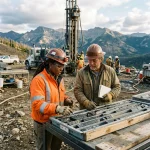
However, with Fruta del Norte’s cash costs remaining in the lowest quartile globally, Lundin Gold is well-positioned to weather market volatility. The company’s focus remains on the 100,000-meter drill program which could significantly de-risk future production and add to the total ounce count available for the stream.
“https://cdn.marblism.com/pNDT8XZa2ry.webp“: miners-examining-core-samples-high-altitude-andean-drill-site.webp
Conclusion: A Masterclass in Capital Allocation
Lundin Gold’s definitive agreement with LunR Royalties is more than just a financing deal; it is a signal to the market that the company is committed to creative shareholder returns. By carving out the silver stream and handing the equity directly to its owners, Lundin is setting a new precedent for how mid-tier miners handle “secondary” assets.
As we move toward the Q2 2026 close, the industry will be watching closely to see if other producers follow suit, spinning off byproduct streams into dedicated royalty vehicles. For now, Lundin Gold shareholders are looking at a future where they hold both the gold engine of Fruta del Norte and a high-upside silver royalty play.
For more deep-dives into the mining sector’s biggest moves, visit Skillings Mining Intelligence.