By Penny Laneford

The uncomfortable truth nobody in the boardrooms wants to admit is this: the global “green” revolution is currently a paper tiger. We can talk about EV quotas and solar arrays until we’re blue in the face, but without a massive, immediate injection of new copper supply, those targets are nothing more than decorative PDFs.
Lundin Mining isn’t waiting for the market to realize its mistake.
In a move that signals a definitive shift toward dominating the next generation of Andean “super-mines,” Lundin Mining has finalized a $215 million stake increase within the Vicuña District. This isn’t a speculative bet on a junior explorer’s dream; it is a calculated consolidation of what is arguably the most significant copper-gold district currently under development on the planet.
For those tracking the 2026 critical minerals scoreboard, this move represents a major power play. Lundin is effectively shoring up its perimeter before the rest of the industry wakes up to the scarcity of Tier-1 assets.
More Read

The $215M Consolidation: Beyond the Balance Sheet
At first glance, $215 million might look like a modest figure for a company with Lundin’s footprint. It isn’t. When viewed alongside their recently expanded $4.5 billion credit facility, the strategic calculus becomes clear: Lundin is clearing the decks for a massive construction push.

This stake increase focuses on internalizing control and streamlining the ownership structure of the Vicuña District assets. By upping their ante now, they are reducing the “noise” of minority partners and simplifying the decision-making process for the $18 billion total investment required over the life of the project.
The goal? To become a top-ten global copper producer.
More Read
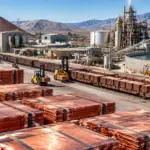
Lundin is currently eyeing annual production exceeding 500,000 tonnes of copper and 550,000 ounces of gold. To put that in perspective, that’s not just a “large” mine: that’s a foundational pillar of the global supply chain.

The Vicuña Integrated Technical Study: A 70-Year Vision
In mid-February 2026, the release of the Vicuña Integrated Technical Study sent a ripple through the sector. It wasn’t just the size of the resource that caught people’s attention; it was the sheer scale of the planned throughput.
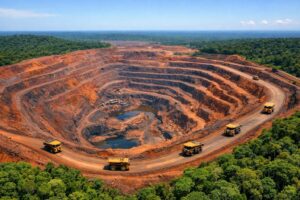
We’re talking about an initial processing capacity of 175,000 tonnes per day, eventually scaling to a staggering 293,000 tonnes per day in later stages. That requires infrastructure that looks less like a mine and more like a small, industrial city perched in the high Andes.
For those interested in the nuts and bolts of how this ore becomes market-ready, our guide on copper processing 101 breaks down the journey from crushing to cathode: a process that will be executed here on a scale rarely seen in modern mining.
The study outlines a three-stage development profile. This isn’t a “dig it and see” operation. It’s a 70-year mine life. Seven decades. That means when the current crop of CEOs has retired and the “2050 Net Zero” targets are ancient history, Vicuña will likely still be churning out copper.
The “Third Country” Factor: Navigating Chile and Argentina
The Vicuña District sits in a precarious, albeit lucrative, geographical position. It straddles the border between Chile and Argentina. Historically, this would be a jurisdictional nightmare: a tangle of competing tax codes, labor laws, and environmental regulations.
However, Lundin has been a pioneer in utilizing the Mining Treaty between the two nations. This “Third Country” approach allows for the seamless movement of people, equipment, and minerals across the border. It turns a logistical hurdle into a strategic moat.
But don’t mistake “seamless” for “easy.” The altitudes are punishing, and the environmental scrutiny is intense.

During 2026, the focus is shifting from “what’s in the ground” to “how do we build it.” Lundin, along with its heavyweight partner BHP, is advancing detailed engineering and initial equipment procurement. A final sanctioning decision could come as early as the end of this year. If they pull the trigger, the construction phase will be one of the largest engineering undertakings in South American history.
The Big Brother Factor: The BHP Partnership
You don’t spend $18 billion alone unless you have a death wish or a bottomless sovereign wealth fund. Lundin’s partnership with BHP in the district is the ultimate de-risking mechanism.
BHP brings the “Big Miner” muscle: the procurement leverage, the massive balance sheet, and the experience in managing multi-decade, multi-billion-dollar megaprojects. Lundin brings the district-level expertise and the agility that allowed them to assemble this land package while the majors were still licking their wounds from the last downturn.
This partnership is a blueprint for the future of the industry. As the “easy” copper deposits disappear, the remaining giants will require collaborative efforts that bridge the gap between mid-tier explorers and global behemoths.
Strategic Context: The Global Copper Deficit
Why pay $215 million to increase a stake in a project that hasn’t even poured its first ton of concentrate? Because the alternative is worse.
The global copper market is staring down a structural deficit that analysts have been warning about for years. Old mines are seeing declining grades. New mines take 15 to 20 years to go from discovery to production. Meanwhile, the world is trying to electrify everything.
Lundin is moving because they know that by 2030, a 5% or 10% stake in a Tier-1 copper asset will be worth significantly more than it is today. They are buying the future at a discount.

Risk Assessment: What Could Go Wrong?
Let’s be real: $18 billion projects in the Andes aren’t exactly “safe” bets.
- Capital Intensity: The capex requirements are eye-watering. Any significant inflationary spike in labor or materials could blow the budget wide open.
- Geopolitics: While Argentina has become more mining-friendly under recent administrations, the pendulum can always swing back. Stability is the name of the game, and 70 years is a long time to stay stable.
- Water and Power: Operating at these altitudes requires massive energy and water infrastructure. Lundin is banking on desalination and renewable energy integration, but the execution risk is high.
Lundin’s strategy to mitigate these risks has been to build a “fortress balance sheet.” By securing the $4.5 billion credit facility and tightening their grip on the equity, they are ensuring they have the stay-power to weather any short-term volatility.
The Bottom Line for 2026
Lundin Mining is no longer just a “successful mid-tier.” They are a major in the making. The $215 million stake increase in the Vicuña District is a loud signal to the market that they intend to own the copper narrative for the next half-century.
For investors and industry operators, the takeaway is simple: the era of “wait and see” for copper is over. The companies that will dominate the 2030s are the ones making the hard, expensive, and contrarian moves today.
Lundin is already in the driver’s seat.