By Charles Pitts

The United States hasn’t seen a new greenfield copper mine start production since 2008. Think about that for a second. We’ve had three different presidential administrations, a global pandemic, and a complete overhaul of the automotive industry toward electrification, yet the domestic mining sector hasn’t birthed a new copper project from the ground up in nearly two decades.
Until now.
Taseko Mines has officially harvested the first copper cathode at its Florence Copper project in Arizona. It is a milestone that shouldn’t just be celebrated: it should be studied. This isn’t just about another company putting metal into the market. This is the end of an 18-year drought for American greenfield copper.
Per facility. That’s not a typo.
More Read

For an industry that has spent years warning about the “looming” copper deficit, Florence Copper is the first real sign that domestic supply can actually move the needle.

The 18-Year Drought Ends in Arizona
The significance of this timeline cannot be overstated. Since 2008, the U.S. has relied heavily on brownfield expansions: essentially squeezing more juice out of existing lemons: or importing the copper needed for everything from power grids to iPhones. Greenfield projects, which are new mines built on land not previously mined, have been notoriously difficult to permit, fund, and execute.
Taseko’s success in Arizona marks a shift. By late February 2026, Florence Copper commenced production, and as of early March, the first copper cathodes have been harvested. The electrowinning plant is fully operational, and the copper is officially plating.
More Read


The Florence Copper facility integrates modular units for efficient extraction.
The strategic calculus here isn’t subtle: The U.S. needs domestic copper to avoid being held hostage by global supply chain volatility. While China’s critical minerals export controls have dominated the headlines regarding minerals like gallium and germanium, the real war is for the base metals that power the grid. Copper is at the top of that list.
This Isn’t Your Grandfather’s Open Pit
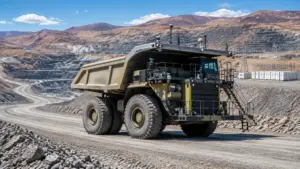
When most people think of copper mining, they think of massive holes in the ground, fleets of diesel-gulping haul trucks, and dust clouds visible from space. Florence Copper is a different beast entirely. It utilizes in-situ copper recovery (ISCR).
Instead of moving millions of tons of rock, the facility injects a water-based solution into the ore body to dissolve the copper. That solution is then pumped back to the surface for processing. No massive pit. No tailings piles. No waste rock dumps.
The tech driving this is Metso’s VSF® X solvent extraction technology. It’s a solution-based extraction method that positions Florence Copper among the lowest greenhouse gas (GHG) intensity primary copper producers in North America. This isn’t just a win for the balance sheet; it’s a win for the permitting process. In a world where ESG (Environmental, Social, and Governance) metrics can kill a project before it starts, ISCR is the path of least resistance.
But you can’t disrupt geology. The process requires precision. Taseko is currently operating three drill rigs to expand the wellfield, with a fourth on the way to support the production ramp-up. They aren’t just digging; they’re plumbing the earth for metal.
The 85 Million Pound Reality Check
Let’s talk about the numbers. They’re aggressive, and for Taseko, they’re transformative.
For 2026, the company is targeting between 30 and 35 million pounds of copper production as the operation ramps up. That’s a solid start, but the real prize is the nameplate capacity of 85 million pounds of LME Grade A copper per year.
Once it hits that stride, Taseko will become the third-largest copper cathode producer in the United States.

Operational safety and strategic intelligence are key to the Florence ramp-up.
To understand the scale, you have to look at the long-term forecast. The operation is expected to produce a minimum of 1.5 billion pounds of copper over its 22-year mine life. More importantly for the “Made in America” crowd: all metal produced at Florence Copper will remain in the U.S. for domestic manufacturing.
We’ve seen other projects, like USA Rare Earth’s Round Top project, consolidate control to secure domestic supply. Taseko is following that playbook, ensuring that the copper harvested in Arizona stays in the American economy.
Investor Magnet: Why This Matters for the Markets
For investors, the start of operations at Florence is a massive de-risking event. Mining projects are notorious for “Permitting Hell”: a state of perpetual limbo where capital sits idle. Taseko navigated nearly a decade of regulatory hurdles to get here.
The economic impact is equally staggering. The project is estimated to contribute $4.3 billion to the Arizona economy over its life. But the real value is in the cost profile. Because ISCR avoids the massive capital expenditures associated with traditional mining (think $500 million haul truck fleets and massive crushers), the operating costs are significantly lower.
For a deep dive on how this compares to traditional methods, check out our guide on Copper Processing 101: From Crushing to Cathode. Florence Copper effectively skips the “crushing” part and goes straight to the chemistry.

Advanced engineering components are vital for maintaining high production capacity.
The Broader Implications for U.S. Mining
Florence Copper is an inflection point. If Taseko can successfully scale this ISCR model to hit that 85-million-pound target, it proves that greenfield production in the U.S. is not only possible but commercially viable in the modern regulatory environment.
It also highlights a shift in where the “smart money” is going. We’re seeing a pivot toward projects that prioritize a small physical footprint and high technological integration. It’s similar to how Anglo American is reviving the Woodsmith project through strategic partnerships: it’s all about de-risking the “new” and the “different.”
However, we shouldn’t get complacent. While Florence is a win, one greenfield project in 18 years is a grim statistic. The demand for copper is accelerating at a rate that one facility: no matter how efficient: cannot satisfy. Electrification. Digitization. Automation. They all require copper.
What Happens Next
The clock is now ticking on the ramp-up. The mining industry will be watching Taseko’s quarterly reports like hawks to see if the ISCR wells perform as modeled. If the recovery rates hold and the VSF X tech continues to produce LME Grade A cathode at scale, Florence Copper will become the blueprint for future domestic extraction.
Arizona has long been the heart of American copper, but Florence is its high-tech future.

Florence Copper represents a new chapter in the U.S. copper supply story.
The strategic calculus isn’t just about copper; it’s about survival in a world where mineral independence is the new gold standard. Taseko Mines has fired the first shot in what will be a long campaign to rebuild American mining.
2026 is the inflection point. We’ll see if the rest of the industry can keep up.