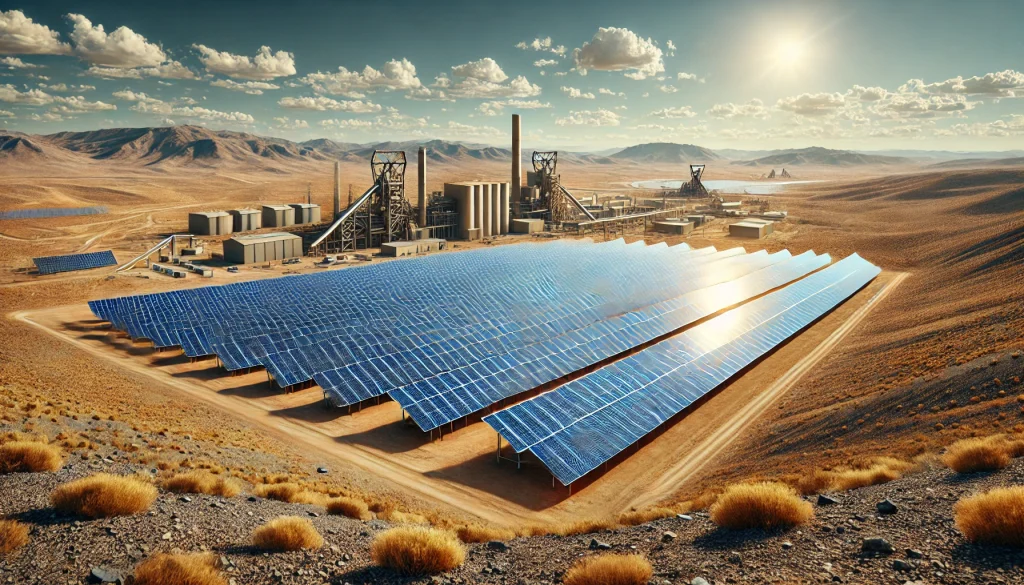
Grid Africa, a renewable energy company, has partnered with local miners in Zimbabwe to construct a 72 MW solar power plant, a critical initiative aimed at alleviating the severe power shortages that have been crippling the mining industry. This development comes at a time when Zimbabwe’s mining sector, the largest consumer of electricity in the country, is grappling with frequent load shedding and escalating power costs due to unreliable energy supply from the national grid.

The Power Crisis in Zimbabwe’s Mining Sector
Zimbabwe’s power utility, the Zimbabwe Electricity Supply Authority (ZESA), has been struggling to meet the energy demands of the mining sector, with generating capacity fluctuating between 1,400 MW and 2,000 MW due to infrastructure challenges, including frequent breakdowns at thermal power plants and water shortages at hydroelectric facilities. This has led to an increase in load shedding from about two hours to as much as ten hours daily, forcing miners to rely on costly diesel generators and other alternative power sources.
The power crisis has significantly impacted the productivity of the mining sector, raising operational costs and hindering economic growth. According to the World Bank, these shortages are estimated to cost Zimbabwe 6.1% of its GDP annually. The World Bank also projects that electricity demand in the country will rise from 1,950 MW in 2022 to 5,177 MW by 2030, primarily driven by increasing demand from the mining and agriculture sectors(
Related News
- Global Mining Automation Market to Double by 2032, Driven by Safety, Efficiency, and Technological Advancements
- New Tech to Battle Corrosion: Game-Changer for Mining Equipment Maintenance
- New Tech to Battle Corrosion: Game-Changer for Mining Equipment Maintenance
- Strategic Move: WSP Global Acquires Power Engineers for $1.78 Billion
- Illegal Mining Gangs Devastate Amazon Rainforest in Pursuit of Green Energy Minerals
Grid Africa’s Strategic Solar Initiative
Grid Africa’s CEO, Norman Moyo, announced that the 72 MW solar plant will save participating mines over $9.2 million annually by reducing their dependence on imported energy. The project is backed by strategic technology and financing partners, making it a significant step toward addressing the mining sector’s power woes. Although the names of the miners involved were not disclosed, the initiative highlights Grid Africa’s growing influence in the renewable energy sector in the region. The company has previously collaborated with local firms such as Varun Beverages and Tanganda Limited on smaller-scale solar projects of 2.5 MW and 1.8 MW, respectively(
Government Response and Industry Investments
The Zimbabwean government has mandated that large-scale miners and ferrochrome producers establish their own power generation facilities by 2026 to mitigate the ongoing energy crisis. This directive is part of a broader strategy to ensure energy security as the country’s economic growth pushes power demand beyond 3,000 MW in the next two years. Several mining companies, including Zimplats, Caledonia Mining, Mimosa, and Eureka Mine, have already begun investing millions in solar projects. For instance, Zimplats is investing $27 million in a 35 MW solar power plant as part of a broader $1.8 billion expansion plan(
More Read

Ferrochrome miners are also taking significant steps by constructing a 300 MW thermal power plant in Hwange, with the first 100 MW expected to come online by mid-2025. This is part of a larger push towards self-sufficiency in power generation, crucial for maintaining and expanding mining operations amidst ongoing national energy challenges(

Impact on Zimbabwe’s Mining and Energy Landscape
The partnership between Grid Africa and local miners marks a pivotal shift towards renewable energy in Zimbabwe’s mining industry. By reducing reliance on traditional power sources and mitigating the impact of load shedding, the solar plant project is set to stabilize operations and cut costs significantly for miners. As the mining sector continues to lead the country’s energy consumption, initiatives like these will play a crucial role in shaping Zimbabwe’s future energy landscape and supporting the broader economic growth agenda.
Overall, the 72 MW solar plant initiative by Grid Africa and its mining partners underscores the potential of renewable energy solutions to transform not only the mining industry but also the national energy infrastructure, positioning Zimbabwe for a more sustainable and resilient future.