By Charles Pitts

NexMetals has fundamentally shifted the narrative for Botswana’s base metals sector, announcing a massive 70% increase in the Mineral Resource Estimate (MRE) for its flagship Selkirk project. The 2026 update establishes an Indicated resource of 1.1 billion pounds of copper equivalent (CuEq), effectively transitioning the project from an exploratory prospect into a high-confidence, large-scale development asset.
This update is not merely about volume; it is about geological confidence. By upgrading 78.2 million tonnes (Mt) at 0.66% CuEq to the Indicated category, NexMetals has de-risked the technical foundation of the project, setting the stage for a definitive feasibility push. With the inclusion of cobalt and precious metals as payables, Selkirk is positioned to become a central pillar of Botswana’s post-diamond mining economy.
The 2026 Selkirk MRE: Breaking Down the 1.1 Billion Pound Milestone
The core of the 2026 MRE lies in the significant resource confidence upgrade. In the previous 2024 estimate, the project was almost entirely classified as Inferred. The 2026 data reflects an intensive drilling and resampling program that has successfully delineated a massive, continuous mineralized body suitable for open-pit extraction.
Key Data Snapshot: Selkirk 2026 MRE
| Category | Tonnage (Mt) | CuEq Grade (%) | Contained CuEq (Mlbs) |
|---|---|---|---|
| Indicated | 78.2 | 0.66% | 1,137 |
| Inferred | 16.5 | 0.55% | 200 |
| Total | 94.7 | 0.64% | 1,337 |
| Note: Figures rounded for clarity. Contained metal based on 2026 price assumptions and metallurgical recoveries. |
The inclusion of cobalt, gold, and silver as payables in the 2026 MRE has added substantial “hidden” value. Previously, the project was valued primarily on its copper and nickel content. However, updated metallurgical work has confirmed that these byproduct metals can be recovered into saleable concentrates, boosting the overall copper equivalent valuation and improving the projected net smelter return (NSR).
More Read



Open-Pit Potential: A Shift in Operational Scale
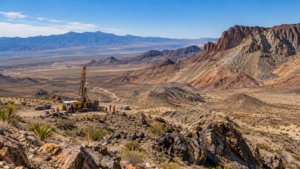
Historically, the Selkirk mine was operated as a high-grade, underground nickel mine. However, NexMetals’ 2026 strategy focuses on a much larger, lower-grade “halo” of mineralization that surrounds the historical workings. This allows for a massive open-pit operation, which significantly lowers the unit cost of extraction and allows for the processing of larger tonnages.
The 0.66% CuEq grade in the Indicated category is particularly compelling for an open-pit model in 2026. For comparison, many global copper projects currently entering production are working with grades below 0.50% Cu. NexMetals’ ability to maintain a 0.66% average across 78 million tonnes provides a robust margin of safety against commodity price volatility.
More Read

Furthermore, the project benefits from “brownfield” advantages. Situated near the historic mining town of Selebi-Phikwe, Selkirk is supported by existing rail, road, and power infrastructure. This reduces the initial capital expenditure (CAPEX) required to bring the mine online, a critical factor for investors looking at copper-nickel stocks to buy in 2026.
Botswana: The Premier Mining Jurisdiction of 2026
Botswana has long been the darling of African mining due to its political stability and clear regulatory framework. As the nation seeks to diversify away from its historical dependence on diamonds, the government has become an active partner in fast-tracking base metal projects like Selkirk.
The investment climate in Gaborone remains top-tier. Unlike other jurisdictions that have seen increased resource nationalism, Botswana has maintained a predictable tax and royalty regime. For NexMetals, this means the 1.1 billion lbs of CuEq are located in one of the safest “low-risk” zip codes in the global mining industry.
The emergence of the “Western Copperbelt” and the revitalization of the Selebi-Phikwe region are part of a broader trend we’ve covered in our Africa mining news. With global demand for electrification metals surging, Botswana is positioning itself as a reliable alternative to more volatile regions in Central Africa.

Metallurgical Breakthroughs and Byproduct Value
The 70% increase in total CuEq metal wasn’t just a result of more drilling; it was a result of smarter chemistry. NexMetals’ 2026 metallurgical program proved that the Selkirk ore could produce separate, high-quality copper and nickel concentrates.
Key metallurgical highlights include:
- Nickel Recoveries: Consistently exceeding 80% in optimized flotation circuits.
- Copper Recoveries: Reaching up to 90% with minimal impurities.
- Cobalt Integration: Successful recovery of cobalt into the nickel concentrate, providing a significant “green metal” credit.
- PGM Credits: The presence of palladium and platinum adds a precious metal layer that enhances the project’s resilience during base metal price dips.
This diversified metal basket makes Selkirk more than just a copper play. It is a multi-commodity hub that aligns with the global shift toward critical mineral security.
2026 Outlook: Timeline and Investor Risks
While the resource increase is a major win, NexMetals still faces the typical hurdles of a large-scale mining restart. The company is currently moving toward a Pre-Feasibility Study (PFS) slated for 2027, with an aim for a Final Investment Decision (FID) shortly thereafter.
Key Risks to Watch:
- Energy Costs: While Botswana has a stable grid, electricity tariffs have been rising. NexMetals is reportedly exploring on-site solar integration to hedge against power inflation.
- Capital Markets: Large-scale open-pit projects require significant upfront capital. The project’s success will depend on NexMetals’ ability to secure favorable debt and equity financing in a potentially volatile 2026 financial market.
- Logistics: While existing rail is a plus, the cost of transporting concentrate to global smelters (via South African or Namibian ports) remains a variable that investors must model.
Despite these risks, the sheer scale of the Selkirk resource update makes it one of the most significant Botswana mining projects to watch this year. The 1.1 billion lbs of Indicated CuEq provides the “critical mass” necessary to attract major joint-venture partners or mid-tier acquirers.

Conclusion: A New Chapter for Selkirk
NexMetals has delivered on its promise to uncover the true scale of the Selkirk deposit. By increasing the resource by 70% and upgrading the bulk of the metal to the Indicated category, they have provided the market with a clear roadmap for development.
In a world desperate for new copper and nickel supply from stable jurisdictions, the Selkirk project stands out as a rare combination of size, grade, and safety. For investors focused on the energy transition, NexMetals’ latest update isn’t just a technical report: it’s a signal that Botswana’s next major copper-nickel hub has officially arrived.
Social Media Snippet
NexMetals has just delivered a game-changing 70% resource increase at its Selkirk project in Botswana, moving 1.1 billion lbs of copper equivalent into the Indicated category. This pivot to a large-scale, open-pit model marks a new chapter for Botswana’s critical minerals sector. Read our full analysis of the 2026 MRE and what it means for copper-nickel investors. #MiningNews #Botswana #Copper #Nickel #NexMetals