By Charles Pitts

The global nickel market enters 2026 in the midst of a fundamental structural realignment. What was once a relatively straightforward commodity market: split between high-purity metal for alloys and lower-grade material for stainless steel: has evolved into a complex, multi-tiered ecosystem. As the electric vehicle (EV) sector matures, the distinction between “Class 1” and “Class 2” nickel has become the primary battleground for miners, investors, and automotive OEMs.
Since the price volatility of 2024 and 2025, the market has grappled with an “identity crisis.” On one side stands Indonesia, the world’s undisputed production powerhouse, which has successfully bridged the gap between lower-grade ores and battery-grade chemicals. On the other side are Western producers in Australia, Canada, and Scandinavia, who are attempting to carve out a “Green Nickel” premium based on superior ESG credentials and compliance with the U.S. Inflation Reduction Act (IRA).
As we look toward the remainder of 2026, the surplus that defined the mid-2020s is beginning to bifurcate. While total tonnage remains ample, the availability of low-carbon, high-purity nickel is increasingly constrained by geopolitical filters and environmental mandates.
Defining the divide: Class 1 vs. Class 2
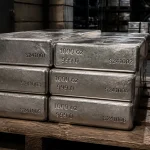
Historically, the nickel market was bifurcated by chemistry and end-use. Class 1 nickel, defined by a purity of 99.8% or higher, was typically derived from sulfide ores. These deposits, found in regions like Sudbury, Ontario, and Western Australia, were the only materials suitable for the London Metal Exchange (LME) delivery and high-tech applications.
More Read

Class 2 nickel, including Nickel Pig Iron (NPI) and ferronickel, was largely the domain of the stainless steel industry. These materials were cheaper to produce but contained impurities that made them unsuitable for the high-performance cathode chemistries required by EVs.

That wall collapsed with the rise of High Pressure Acid Leach (HPAL) technology and the conversion of NPI into nickel matte. These processes allow Indonesia to transform its vast laterite ore reserves into battery-grade nickel sulfate. This technological breakthrough flooded the market, leading to a surplus that reached approximately 198,000 tonnes in late 2025. However, as we move into 2026, the focus has shifted from raw volume to the “quality” of the supply chain.

Large-scale open-pit mining operations continue to drive the global supply of critical minerals for the energy transition.
More Read

The Indonesian pivot: From volume to value
Indonesia now accounts for nearly two-thirds of global nickel supply. For the 2026 outlook, the most significant driver is the Indonesian government’s transition from an expansionary “market share” strategy to one of “price management.”
Having successfully established a dominant position, Jakarta is now utilizing supply discipline to support global prices. In early 2026, the government began delaying mining permits and slashing ore output quotas. Furthermore, a moratorium on new NPI smelters and unintegrated HPAL plants has been enforced to prevent further oversupply and focus on downstream value addition.
Industry analysts observe that Indonesia is now acting as a de facto “swing producer.” By tightening the tap on ore supply, the country has pushed prices into a “defensible clearing range” of $18,000 to $22,000 per tonne. This range is high enough to maximize royalties and support local refining profits, but theoretically low enough to keep Western sulfide projects from becoming overly competitive.

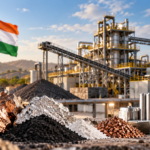
Indonesia’s HPAL facilities are the central engine of the global nickel sulfate supply chain.
The ESG wall and Western supply chains
While Indonesian nickel dominates on volume, it faces significant headwinds in Western markets due to its carbon footprint. Indonesian NPI and HPAL processes are often coal-powered, resulting in lifecycle emissions that can be three to five times higher than those of traditional sulfide miners in Canada or Australia.
For 2026, the “ESG premium” is no longer a theoretical concept: it is a procurement requirement. Western OEMs are increasingly desperate for supply that complies with the U.S. Foreign Entity of Concern (FEOC) rules, which limit the use of Chinese-funded or Indonesian-processed material in vehicles seeking IRA tax credits.
This has created a structural shortfall in “eligible” Class 1 nickel. While the global market is in surplus, the compliant market is in a deficit. This has prompted major automakers to sign direct offtake agreements with miners in Tier-1 jurisdictions, often at a premium to LME spot prices.
| Metric | Base Case (Balanced) | Bull Case (Tight Supply) | Bear Case (Oversupply) |
|---|---|---|---|
| LME Cash Price (2026 Avg) | $19,500 / t | $23,000 / t | $15,500 / t |
| Global Demand Growth | 5.5% | 7.5% | 3.5% |
| Indonesian Strategy | Continued quota discipline | Sharp output cuts | Quota expansion |
| EV Battery Trend | Mixed LFP/NMC adoption | High-nickel dominance | Rapid LFP expansion |
| Primary Risk | Geopolitical trade barriers | HPAL operational delays | Global economic recession |
Technology shifts: High-Nickel vs. LFP
The 2026 nickel market outlook is also being reshaped by battery chemistry. The rapid adoption of Lithium Iron Phosphate (LFP) batteries: which contain zero nickel: has acted as a ceiling for demand growth. LFP now dominates the mass-market EV segment in China and is making significant inroads in Europe and North America.
However, nickel-rich chemistries (NMC and NCA) remain the standard for high-performance, long-range, and premium EVs. As automakers transition their fleets toward larger SUVs and trucks in 2026, the demand for high-density nickel cathodes is expected to grow by roughly 12% to 15% annually.
The industry is currently seeing a consolidation of “Class 1” demand around these high-energy cells. By 2027, battery manufacturing is expected to consume more than 50% of the world’s Class 1 nickel, a massive jump from less than 10% just five years ago.

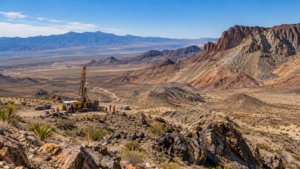
Western mining operations, like this shaft complex, are increasingly marketed as a premium, low-carbon alternative to tropical laterite production.
Operational implications for 2026
For operators and investors, the “Class 1 vs. Class 2” divide dictates capital allocation. Within the Skillings Mining Review network, there is a clear trend of reinvestment into brownfield expansions in stable jurisdictions rather than greenfield explorations in high-risk regions.
- Refining Bottlenecks: The challenge in 2026 is not mining the ore, but refining it into high-purity sulfate. Intermediate products like Mixed Hydroxide Precipitate (MHP) are the new “liquid gold” of the sector, with refinery capacity outside China remaining at a premium.
- Resource Nationalism: Beyond Indonesia, countries like the Philippines are considering export restrictions similar to Jakarta’s ore ban. This adds a layer of sovereign risk that is pushing Western buyers toward “friend-shoring.”
- Efficiency and Automation: With prices stabilizing in the $20,000 range, margins are thinner than in the post-COVID boom. Operational efficiency, monitored through advanced control room technology, has become the primary differentiator for profitable versus marginal assets.
Summary: A bifurcated future
The nickel market in 2026 is no longer a monolith. It is a tale of two supplies: the vast, low-cost, high-carbon Indonesian volumes that satisfy the world’s stainless steel and Chinese EV needs, and the scarce, high-cost, low-carbon Western volumes that the IRA-compliant world requires.
As Indonesia continues to exercise its role as a price stabilizer, the extreme volatility of the early 2020s may subside. However, the premium for “Green Nickel” is likely to widen as ESG mandates move from voluntary disclosures to regulatory requirements. For the global mining community, navigating this identity crisis requires a clear understanding of where their product fits on the purity: and the policy: spectrum.