By Penny Langford

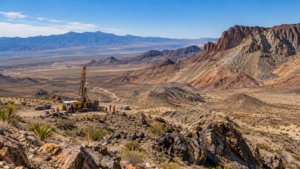
The race to secure a domestic lithium supply chain in the United States has largely focused on two fronts: the massive brines of the Clayton Valley and the hard-rock spodumene potential of the Piedmont. However, a third, geologically distinct contender in Nevada: Ioneer’s Rhyolite Ridge: has emerged as a focal point for global industrial heavyweights.
Unlike the clay-hosted deposits that have faced technical skepticism or the brine operations that struggle with water rights, Rhyolite Ridge sits on a unique lithium-boron mineralogy that fundamentally alters the economic and strategic math of mineral extraction. As the project nears its final investment decision, the interest from the Korea Overseas Infrastructure & Urban Development Corporation (KIND) and major automotive players like Hyundai signals a major de-risking event for the U.S. lithium landscape.
The Searlesite Advantage: Chemistry as a Competitive Moat
The core value proposition of Rhyolite Ridge lies not just in the volume of its lithium, but in the specific mineral that hosts it: searlesite. A sodium borosilicate mineral, searlesite is the primary boron host within the deposit’s Cave Spring Formation.
In most lithium-clay projects, the lithium is tightly bound within smectite or illite clays, often requiring high-temperature roasting or intensive chemical processing to liberate the metal. Rhyolite Ridge’s "Searlesite layer" is different. Here, lithium and boron co-exist in a way that allows for sequential sulfuric-acid vat leaching. Because the ore is readily leachable and requires minimal grinding, the energy and chemical inputs are significantly lower than those of peer projects.
More Read



This "co-product" mineralogy creates a natural hedge against market volatility. Boron, a critical industrial mineral used in fiberglass, ceramics, and agriculture, provides a steady secondary revenue stream. According to Ioneer’s technical filings, the boron revenue effectively covers much of the operational cost of the lithium extraction, positioning Rhyolite Ridge in the lowest quartile of the global lithium cost curve. For investors and offtake partners, this isn't just a lithium play; it is a high-margin industrial chemical operation.
The Korean Connection: KIND, Hyundai, and the American Battery Belt
The strategic importance of Rhyolite Ridge has transcended North American borders, catching the attention of the "Big Three" South Korean battery and automotive sectors. The involvement of the Korea Institute of Next Generation Convergence Technology (KIND) and the interest from Hyundai Motor Group represent more than just financing; they represent a geopolitical alignment.
More Read
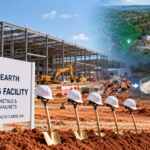
Under the Inflation Reduction Act (IRA), South Korean automakers and battery manufacturers must source a specific percentage of their critical minerals from the U.S. or its free-trade partners to qualify for consumer tax credits. Rhyolite Ridge serves as a bridge for this requirement.
Why the KIND/Hyundai interest matters:
- De-risking the Offtake: Major automotive OEMs typically hesitate to sign offtake agreements for "unproven" mineralogies. The technical due diligence conducted by Korean entities provides a "stamp of approval" that simplifies downstream financing.
- Direct Supply Security: Hyundai’s aggressive pivot toward North American EV production: exemplified by their Metaplant in Georgia: requires a localized supply of battery-grade lithium hydroxide.
- Technical Synergy: South Korea’s expertise in high-nickel cathode production (which requires lithium hydroxide over carbonate) aligns perfectly with Rhyolite Ridge’s planned output of battery-grade lithium hydroxide and boric acid.
Comparative Analysis: Rhyolite Ridge vs. Global Sedimentary Deposits
To understand the scale of the "de-risking" signaled by industrial interest, one must look at how Rhyolite Ridge compares to other major sedimentary projects.
| Feature | Rhyolite Ridge (USA) | Thacker Pass (USA) | Jadar (Serbia)* |
|---|---|---|---|
| Primary Minerals | Lithium, Boron (Searlesite) | Lithium (Smectite/Illite) | Lithium, Boron (Jadarite) |
| Processing Route | Sulfuric Acid Vat Leach | Sulfuric Acid Leach | Acid Leach/Digestion |
| Co-product Value | High (Boric Acid) | Minimal | High (Boric Acid) |
| Permitting Status | Final EIS / Advanced | Construction / Early Stage | Regulatory Delays |
| Operational Margin | High (due to Boron) | Moderate | High |
*Note: Jadar has faced significant local opposition and regulatory pauses, highlighting the "permitting premium" currently enjoyed by Nevada-based projects.
Navigating the Permitting Maze: The Buckwheat and the BLM
No discussion of Rhyolite Ridge is complete without addressing the environmental hurdles that have defined its timeline. The project’s footprint overlaps with the habitat of Tiehm’s buckwheat, a rare plant species. For several years, this became a flashpoint for environmental advocacy groups and federal regulators.
However, the October 2024 release of the Bureau of Land Management’s (BLM) Final Environmental Impact Statement (FEIS) marked a watershed moment. Ioneer redesigned the mine plan to ensure a 100-foot buffer around the buckwheat populations and committed to a comprehensive conservation plan. The BLM’s advancement of the project suggests that the "mining vs. environment" narrative is evolving toward a "mitigation and coexistence" model: a necessary shift for the U.S. to meet its 2030 energy goals.

The U.S. Department of Energy (DOE) has further validated this path through its Loan Programs Office (LPO). With a conditional commitment for a loan of up to $700 million, the federal government has effectively underwritten the technological viability of the Rhyolite Ridge flowsheet. This backing, combined with the Korean strategic interest, makes the project one of the most heavily de-risked lithium assets in the Western world.
2026 Outlook: Construction and the Path to Production
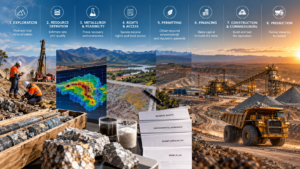
As we look toward the remainder of 2026, the focus for Rhyolite Ridge shifts from the courtroom and the boardroom to the field. With federal permits in hand, the commencement of major construction will be the final signal that the "Searlesite era" of Nevada mining has arrived.
The project is estimated to produce enough lithium to power nearly 370,000 electric vehicles annually. More importantly, it will produce over 170,000 tonnes of boric acid, making it a critical hub for the North American industrial sector.
For the lithium price forecast 2026, the entry of Rhyolite Ridge is a stabilizing force. Unlike the highly volatile "swing supply" from Chinese lepidolite, Rhyolite Ridge represents a fixed, long-term, low-cost domestic source. This is the exact type of supply that helps level out the L-shape recovery that many analysts expect for the mid-decade market.

Conclusion: A Blueprint for Allied Supply Chains
Rhyolite Ridge is more than just a mine; it is a proof of concept for the "Friend-shoring" strategy. By combining American mineral wealth, federal financial support, and South Korean industrial expertise, the project bypasses the traditional reliance on Chinese refining corridors.
The unique mineralogy that once made Rhyolite Ridge a geological curiosity has become its greatest strength. As global industrial giants like Hyundai and entities like KIND secure their positions in the Nevada desert, they aren't just buying lithium; they are buying into a new model of mineral security that is as resilient as it is profitable.
For operators and investors, the message is clear: the future of lithium isn't just about finding the metal: it's about finding the right chemistry and the right allies to extract it.