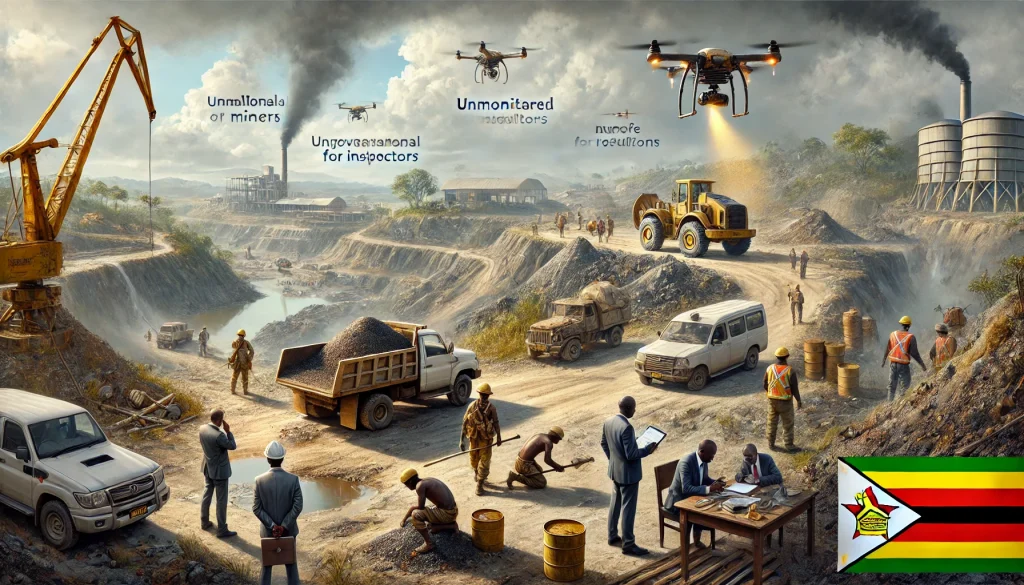
Zimbabwe’s mining sector, a cornerstone of the nation’s economy, is grappling with significant enforcement challenges as the Ministry of Mines and Mining Development struggles with severe resource constraints. A chronic shortage of inspection vehicles has hindered the government’s ability to regulate mining activities, leading to a surge in illegal operations and a rise in mining-related accidents.

Rising Illegal Mining Activities
The lack of adequate transportation for inspectors has left vast mining territories unmonitored, creating fertile ground for illegal mining to flourish. These unregulated operations, often involving artisanal and small-scale miners, are not only unlawful but also perilous.
- Over 100 fatalities tied to unsafe mining practices were reported in 2023, underscoring the risks posed by unregulated mining.
- Industry experts identify the absence of regular site inspections as a critical factor in these incidents. Without proper oversight, miners cut corners on safety protocols, operate in dangerous conditions, and expose themselves and surrounding communities to severe hazards.
Related News
- Chinese Lithium Miner Rolls Out $1.3 Million Community Development Program in Zimbabwe’s Goromonzi District
- Norge Mining Skaland Acquisition Secures Europe’s Largest Graphite Producer Amid Rising Demand
- Australian Mining Exports to Lose $100 Billion Amid China Economic Slowdown
- Upstream Aluminium Market Overview: Q3 Aluminium Market Trends Highlight Growth, Challenges, and Strategic Shifts
Minister Acknowledges Shortfalls
Minister of Mines and Mining Development Winston Chitando recently addressed the issue, admitting the severe shortage of vehicles for provincial mining inspectors.
“In most provinces, vehicles for inspectors are few,” Chitando stated at a media briefing. He assured stakeholders that the Ministry is exploring solutions, with further measures to be announced in 2025.
Despite these assurances, progress remains slow. The Ministry’s limited resources have significantly constrained its ability to fulfill its regulatory mandate.
Budgetary Constraints Exacerbate Challenges
The Ministry of Mines received less than 0.4% of Zimbabwe’s 2025 national budget, despite the mining sector contributing over 70% of the country’s foreign currency earnings. This disparity has created a severe resource gap:
More Read

- Legal Operations Left Unchecked: Registered mining companies often go without regular inspections, allowing unsafe practices to persist. Equipment malfunctions and mine collapses have become more frequent due to lax oversight.
- Environmental Neglect: Unmonitored mining operations frequently breach environmental standards, causing long-term ecological damage.
Hope for Reform
While the challenges are formidable, Minister Chitando expressed optimism about potential reforms. He emphasized that increased funding during upcoming budget debates could enhance the Ministry’s oversight capacity.

“There is a need to increase the level of inspections, and the government is committed to ensuring that it happens,” Chitando noted.
Stakeholders in the mining sector, including safety and environmental advocates, have urged immediate action. The rainy season, associated with increased risks of mine collapses and flooding, underscores the urgency of addressing these issues.
Addressing the Crisis
Experts recommend several key steps to curb illegal mining and reduce accidents:
More Read

- Emergency Funding: Allocating immediate funds to procure inspection vehicles for provincial offices.
- Technological Integration: Deploying drones and remote monitoring systems to supplement physical inspections.
- Private Partnerships: Collaborating with private stakeholders to support safety and compliance initiatives.
Zimbabwe’s mining sector stands at a critical juncture. While the government has pledged to enhance oversight, addressing the shortage of inspection vehicles is a pressing priority. Without decisive action, the sector risks further losses—both human and economic—from unregulated mining practices. Strengthening regulatory enforcement is not just essential for safety but also pivotal for ensuring the long-term sustainability of Zimbabwe’s mining industry.