By Charles Pitts

The year 2026 is emerging as the ultimate pivot point for the global energy grid. As artificial intelligence (AI) transitions from a novelty to the backbone of industrial productivity, the demand for 24/7 “firm” power has reached a fever pitch. In this environment, the traditional dominance of natural gas is being challenged by the commercial rollout of Small Modular Reactors (SMRs).
While the levelized cost of energy (LCOE) has historically favored natural gas, the “AI load shock” is fundamentally altering how operators and investors value reliability, carbon neutrality, and fuel price stability. The choice is no longer just about the cheapest kilowatt-hour on a spreadsheet; it is about which technology can sustain the massive, unrelenting energy appetite of the next-generation grid.
The LCOE Spreadsheet Reality: 2026 Benchmarks
On a pure, unsubsidized basis, natural gas remains the incumbent champion of low-cost generation. According to mid-2026 cost projections, new Combined-Cycle Gas Turbine (CCGT) plants typically deliver electricity in the range of $40 to $70 per megawatt-hour (MWh). This efficiency is driven by mature supply chains and the relative abundance of shale gas, particularly in the North American market.
In contrast, SMRs are entering the “First-of-a-Kind” (FOAK) phase. Early-mover projects, such as those from NuScale and Rolls-Royce, face the typical hurdles of new technology: high capital expenditures (CAPEX) and the absence of a scaled manufacturing base. Current estimates for FOAK SMRs sit between $90 and $160 per MWh.
More Read

However, the headline LCOE does not tell the full story. For SMRs, the industry is banking on the “Nth-of-a-Kind” (NOAK) transition. Once the supply chain matures and modular assembly lines are fully operational, the target band drops significantly to $50–$90 per MWh.
| Technology | 2026 FOAK LCOE ($/MWh) | Target NOAK LCOE ($/MWh) | Carbon Profile | Typical Build Time |
|---|---|---|---|---|
| Natural Gas (CCGT) | $40 – $70 | $40 – $65 | High (w/o CCS) | 3 – 5 Years |
| SMR (Nuclear) | $90 – $160 | $50 – $90 | Zero-Emission | 4 – 7 Years |
| Wind + Storage | $75 – $110 | $55 – $85 | Zero-Emission | 2 – 3 Years |
The AI “Reliability Premium”
The explosion of AI data centers has created a unique market condition: the reliability premium. Hyperscale data centers, which are projected to consume up to 14% of total U.S. electricity by 2030, require massive amounts of power that must be available 99.99% of the time.
More Read
For these operators, the volatility of natural gas prices is a significant risk. Natural gas costs are highly sensitive to geopolitical events and extraction trends. In contrast, uranium fuel represents only a small fraction of a nuclear plant’s lifetime operating cost. This makes the SMR a “predictable” asset over a 40- to 60-year lifespan.
Furthermore, many AI giants have aggressive net-zero mandates. Natural gas, unless paired with expensive and still-unproven Carbon Capture and Storage (CCS) technology, cannot meet these requirements. This has led to a surge in interest for AI’s copper thirst and reliable nuclear power to fuel these clusters.
Uranium’s New Frontier: SMRs as a Catalyst
The SMR showdown is a primary driver for the current uranium bull market. Unlike traditional gigawatt-scale reactors, SMRs are designed to be deployed closer to load centers and can be scaled incrementally.
Goldman Sachs analysts suggest that meeting AI-driven demand could require an additional 85 to 90 GW of nuclear capacity globally. This represents a structural shift in uranium demand that is independent of the existing reactor fleet. For miners, the 2026 outlook is defined by the need for long-term supply contracts as SMR developers secure fuel for their initial modules.
As the copper deficit in 2026 looms, the energy sector is realizing that every megawatt of clean power: whether from SMRs or renewables: requires a massive investment in critical minerals.
Copper: The Critical Link in the Grid
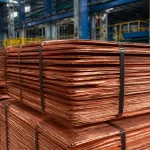
Regardless of whether natural gas or SMRs win the cost battle, copper is the ultimate beneficiary. The transition to an AI-driven grid requires extensive conductor upgrades, transformer builds, and cooling system installations.
SMRs, due to their modular nature, often require complex electrical interfaces to integrate into local grids or private “behind-the-meter” data center connections. This infrastructure is incredibly copper-intensive. Industry forecasts suggest that power network copper demand could climb to nearly 15 million tonnes by 2030, with AI-specific infrastructure accounting for a non-trivial portion of that growth.
The metal is vital for the transformers and high-capacity cables that will carry SMR-generated power to the GPU clusters driving the next industrial revolution. This synergy between energy generation and critical mineral supply is a cornerstone of the 2026 outlook for mining professionals.
Investor & Operator Outlook 2026
The showdown between SMRs and natural gas is not a zero-sum game, but rather a shift in portfolio allocation.
- For Operators: The focus is on “system value” over LCOE. In 2026, the value of firm, carbon-free power at a collocated data center site often outweighs the $30-$50/MWh premium of an SMR over a gas turbine.
- For Investors: Natural gas offers near-term cash flow and lower entry costs. However, SMRs represent the “long-game” in energy transition, with significant upside in the uranium and copper supply chains.
- The Congestion Premium: As regional grids become more congested, the ability to put a small, 300MW SMR directly on a data center campus: bypassing years of transmission delays: becomes a massive economic advantage for nuclear technology.

Mining operations control rooms are increasingly integrating energy management data as sites look toward SMRs and gas for remote power.
Conclusion
By the end of 2026, the energy industry will likely see a hybrid reality. Natural gas will continue to provide the bulk of the world’s flexible capacity, but SMRs will have moved from the “science project” phase to the “strategic asset” phase.
The LCOE gap is narrowing, but the true showdown is happening in the boardrooms of AI giants and the planning offices of grid operators. In the quest for a carbon-neutral, data-driven future, the firm reliability of nuclear power is becoming a price many are willing to pay. For the mining industry, this transition ensures that the demand for uranium and copper will remain robust well into the 2030s.