By Charles Pitts

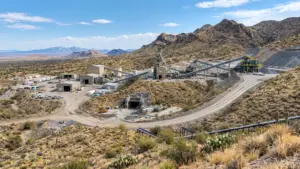
The Vicuña Copper District, a massive high-altitude cluster of deposits straddling the border of Argentina and Chile, is fundamentally rewriting the playbook for large-scale mineral development. In an industry where a 20-year mine life is considered a “tier-one” asset, the emerging joint venture between Lundin Mining and BHP is scoping an operation with a conceptual life of more than 70 years.
This is not merely a mine; it is a multi-generational industrial corridor. Anchored by the Josemaría and Filo del Sol deposits, the Vicuña project targets an average annual production of 395,000 tonnes of copper in concentrate. At this scale, the project would rank among the largest copper operations on the planet, rivaling the output of legacy giants like Escondida or Grasberg.
For operators and investors, the economics of Vicuña are inextricably linked to Argentina’s shifting regulatory landscape: specifically the implementation of the Large Investment Incentive Regime (RIGI): and the relentless demand from global electrification and AI-driven data center infrastructure.
The Geological Foundation: A District of Giants
The Vicuña District is defined by its extraordinary geological concentration. While many copper projects struggle with declining grades and increasing depth, Vicuña hosts a series of high-grade porphyry and epithermal systems that remain open at depth.
More Read

The district currently centers on three primary assets:

- Josemaría (San Juan, Argentina): The most advanced project in the cluster, Josemaría is a large-scale copper-gold-silver deposit with a proven and probable reserve base capable of supporting decades of production.
- Filo del Sol (Chile/Argentina): Described by analysts as the most significant greenfield copper discovery in three decades, Filo del Sol provides the high-grade “kicker” to the district’s economics. Its high-sulphidation epithermal core allows for early-stage processing of high-margin ore.
- Lunahuasi: A more recent discovery by NGEx Minerals, Lunahuasi has returned drill intercepts exceeding 6% copper. While not currently part of the BHP-Lundin JV, it underscores the district’s potential for further resource expansion.

Economic Scale: 395,000 Tonnes Per Year
The Preliminary Economic Assessment (PEA) for the combined Vicuña operation outlines a production profile that would single-handedly shift Argentina’s standing in the global copper market. Targeting 395,000 tonnes of copper annually, the project addresses the widening copper supply deficit expected by late 2026.
More Read
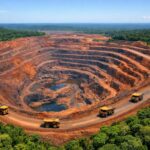
The integration of Filo del Sol and Josemaría under a 50/50 joint venture between Lundin and BHP is a strategic masterstroke. By consolidating these assets, the partners can share infrastructure: including water pipelines, power grids, and tailings facilities: thereby lowering the overall capital intensity per pound of copper produced.
Vicuña Project Snapshot: Key Economic Metrics
| Metric | Projection (Conceptual PEA) |
|---|---|
| Annual Copper Production | ~395,000 tonnes (in concentrate) |
| Mine Life | 70+ Years |
| Primary Commodities | Copper, Gold, Silver |
| Ownership | Lundin Mining (50%) / BHP (50%) |
| Strategic Advantage | Shared district-scale infrastructure |
| Contained Copper (M&I) | 6.4 Million Tonnes |
The RIGI Factor: Unlocking Argentina’s Potential
Historically, Argentina’s mining sector has been hampered by fiscal volatility and currency controls. However, the introduction of the Régimen de Incentivo para Grandes Inversiones (RIGI) has fundamentally changed the internal rate of return (IRR) calculations for megaprojects like Vicuña.
RIGI offers 30 years of tax stability, reduced corporate tax rates, and, crucially, improved access to foreign exchange. For a project with a 70-year horizon, these protections are essential for securing the billions in project financing required for construction.

The regime allows for the duty-free import of specialized equipment and ensures that a portion of export revenues can be retained in USD, mitigating the risks associated with the Argentine Peso. Similar projects, such as McEwen Copper’s Los Azules, have already sought RIGI status, signaling a broad industry shift toward the San Juan province as a premier copper hub.
Operational Challenges and the 2026 Outlook
While the geological and economic upside of Vicuña is immense, the operational hurdles are equally significant. The project is located at high altitudes in the Andes, requiring robust logistics for material transport and a resilient workforce strategy.
As we move toward the second half of 2026, several critical milestones remain:
- Permitting & RIGI Admission: Formal approval of the Vicuña assets under the RIGI framework will be the primary catalyst for a final investment decision (FID).
- Infrastructure Synergy: Finalizing the engineering plans for the shared processing facilities between Josemaría and Filo del Sol.
- Resource Expansion: Ongoing drilling at Filo del Sol and Lunahuasi is likely to further increase the total resource base, potentially extending the mine life even beyond the 70-year mark.

The scale of Vicuña also means its impact on the global copper price forecast is substantial. While it adds significant supply, the timeline for ramp-up means it will likely come online just as traditional mines in Chile and Peru face declining grades and social headwinds.
Conclusion: A Generational Asset
The Vicuña Project is more than a mining operation; it is a cornerstone of the future mineral supply chain. In a world increasingly desperate for copper to power the energy transition and digital economy, the ability to lock in a 70-year supply of concentrate is a rarity.
For the Lundin-BHP partnership, the challenge now lies in execution. Navigating the high-altitude terrain and the complex political environment of Argentina will require precision. However, with the backing of RIGI and a world-class resource base, Vicuña is positioned to be the defining copper story of the decade.