Key Takeaways
- Turkey passed a new mining law allowing operations in registered olive groves.
- The law enables lignite extraction in agricultural zones under certain conditions.
- Critics argue the law undermines environmental protections and favors coal.
- Protests and legal challenges are already underway in several provinces.
- The law also offers incentives for renewable energy development through 2030.
The Turkish mining law passed Friday has redrawn the map of energy development across the country’s agricultural heartland—especially for olive farmers like Ayşe Yılmaz, who now fears her century-old grove in Aydın could be uprooted in the name of power generation.

The 21-article omnibus bill, approved 255–199 by parliament, empowers the Energy Ministry to authorize mining in registered olive groves if the project serves electricity production and is deemed irreplaceable. This sweeping change, central to the Turkish mining law reforms, grants the state new latitude to override agricultural protections long enshrined in the Olive Law.
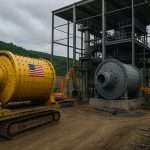
Two lignite zones in Muğla province—home to some of the country’s richest olive orchards—have already been designated as mining sites to supply thermal power plants. Under the Turkish mining law, similar reclassifications could follow elsewhere.
“This law is not about energy security,” said Can Dündar, a prominent energy analyst. “It’s a pivot back to coal under the cover of reform.”
Olive Trees Versus Lignite
The Turkish mining law’s cornerstone is the so-called “super permit” in Article 11, which allows agricultural lands, including olive groves, to be converted for mining if relocation is unfeasible. Companies must pay annual land rehabilitation fees, and trees may be transplanted within the same region.
More Read

But experts and locals alike doubt the feasibility. “You don’t ‘relocate’ a living heritage,” said agronomist Ayşe Yılmaz. “You destroy it.”

While the law expands incentives for renewable energy, including 85% discounts on permits for solar and wind farms operational by 2030, critics argue these provisions mask its broader push for coal.
“This is dual messaging,” said Emre Peker, an Istanbul-based energy consultant. “Turkey is hedging coal with clean energy optics.”
More Read

Resistance and Legal Repercussions
The “We Won’t Give Up Our Land” campaign has become the face of grassroots resistance. In a statement, the coalition denounced the Turkish mining law as “an open seizure of public space” and vowed legal and civil opposition.
Protests have intensified in provinces like İzmir, Manisa, and Balıkesir, with municipal leaders threatening to challenge the law in constitutional court. Izmir Mayor Tunç Soyer labeled the new policy “a violation of both local autonomy and ecological continuity.”
The Energy Ministry has not yet released formal guidelines, but legal experts warn that the law’s language—particularly its invocation of “public interest”—opens the door to broad interpretation.
“The ambiguity is the danger,” said professor Selin Atalay of Ankara University. “It gives cover for aggressive land use under the guise of national need.”
Strategic Shift or Short-Term Gamble?
The Turkish mining law highlights the government’s ongoing struggle to reduce energy imports and narrow its current account deficit. By streamlining approvals and granting expropriation powers through 2030, Ankara aims to accelerate domestic energy production—even at the cost of long-protected lands.
Yet in a global landscape moving toward decarbonization, Turkey’s reliance on lignite invites scrutiny.
“The world is watching,” said Dr. Marina Valli, a Mediterranean agriculture specialist. “What’s happening in Turkey could influence policy elsewhere. The stakes go beyond olive trees.”