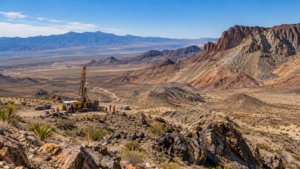
South Dakota ISR uranium wellfield and processing infrastructure.

By Charles Pitts
The uranium market’s most important signal in 2026 may not be the daily spot price. It may be the growing number of projects moving through permitting, financing and construction milestones while utilities continue paying a premium for longer-term supply.
That tension was visible in South Dakota, where enCore Energy’s Dewey-Burdock uranium project received Bureau of Land Management approval for initial ancillary infrastructure. The decision allows work on a limited portion of the project, including access roads, four groundwater monitoring wells and overhead power lines. It does not authorize full-scale production, and state permits remain outstanding.
The distinction matters. The United States is seeking to rebuild domestic uranium production and reduce exposure to foreign fuel-cycle risks, but mine development remains a multistage process. Even projects receiving federal approvals in 2026 are unlikely to deliver significant new volumes immediately.
More Read

At the same time, uranium spot prices were around $90.60 per pound on August 26, according to Trading Economics, while market indicators cited in earlier Skillings uranium price coverage placed long-term contract prices near $90–94 per pound. That implies a term premium of approximately 5–10%, depending on the reference date and contract structure.

For operators, the premium helps establish the revenue environment needed to restart mines and build processing capacity. For investors and policymakers, it is a measure of how seriously utilities are treating future fuel security.
Dewey-Burdock shows what expedited permitting can : and cannot : do
The Dewey-Burdock project is located in the historic Edgemont Uranium District in Custer and Fall River counties, South Dakota. enCore plans to use in-situ recovery, or ISR, to recover uranium from sandstone-hosted mineralization rather than excavating a conventional open pit or underground mine.
More Read

The BLM decision followed a final environmental assessment and a Finding of No Significant Impact. It covers roughly 240 acres of BLM-managed land within the broader project area and authorizes early infrastructure construction.
The federal milestone was followed by a 20-year renewal of the project’s Nuclear Regulatory Commission source-materials licence. The Federal Permitting Improvement Steering Council subsequently said that federal permitting had been completed under the FAST-41 process, describing Dewey-Burdock as the first South Dakota project added to that framework. The Permitting Council announcement said the project is expected to support the US nuclear fuel supply chain.
But federal completion is not the same as operational readiness. As South Dakota Searchlight reported, enCore still faces state-level permitting requirements and continuing opposition connected to groundwater, environmental and tribal concerns.
enCore’s project materials provide a useful view of the development sequence. Its preliminary economic assessment assumes a central processing plant and wellfield construction beginning in 2027. The proposed plant would use ion-exchange recovery trains and yellowcake processing facilities, with a planned flow capacity of 4,000 gallons per minute and uranium production capacity of approximately 1 million pounds per year.
The company’s stated preliminary capital cost is $264.2 million, with estimated operating costs of $23.81 per pound of U₃O₈. Those figures remain dependent on permitting, final engineering, construction and operating performance.

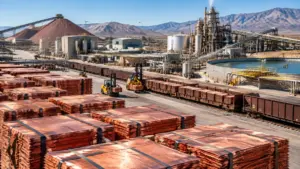
Conventional uranium processing infrastructure in southeastern Utah.
DISA Uranium adds a financed US production platform
The US domestic supply story also shifted through corporate consolidation. DISA Uranium Corporation launched after agreeing to acquire IsoEnergy’s Utah portfolio of permitted, past-producing conventional uranium assets.
The portfolio includes the Tony M Mine, Daneros Mine, Rim Mine, Sage Plain Project and Flatiron Project. The transaction combines those assets with DISA’s high-pressure slurry ablation technology and its NRC licence for remediation and recovery of uranium from abandoned mine waste.
According to DISA’s launch announcement, the company secured commitments for a US$105 million private placement. IsoEnergy committed US$33 million and is expected to hold approximately 33% of DISA Uranium after closing.
The financing is intended to support three linked activities:
- Development of the Utah conventional mine portfolio.
- Remediation and uranium recovery from abandoned mine waste.
- Design and advancement of new US uranium processing infrastructure.
DISA said preliminary testing of its technology at the Tony M Mine reduced feedstock mass to about 22% of the original volume while recovering approximately 88% of the uranium. Those results are company-reported and should be treated as early technical indications rather than demonstrated commercial performance.
The significance of the platform is strategic rather than immediate. It places conventional resources, remediation and processing capacity within a single US-focused vehicle. However, no firm production capacity or operating schedule has been disclosed for the combined platform. The assets still require development work, technical validation, capital allocation and, where applicable, additional permits.
Marysvale is an exploration signal, not a production commitment
Terra Clean Energy’s Marysvale project in Utah illustrates an earlier stage of the supply pipeline.
The company announced that the Utah Division of Oil, Gas and Mining had issued work-program permits for a planned exploration programme. The permits cover five diamond-drill pads and seven exploration trenches designed to evaluate uranium-bearing outcrops.
The company announcement said field crews were expected to mobilize after reclamation bonding requirements were addressed.
Those permits do not authorize mine construction, production or processing. Their market significance is that they move a US uranium asset from a conceptual or permitted land position into field-level resource definition. The next relevant data points will be drill results, resource estimates, metallurgy, project economics and the pathway to mine permitting.
For the uranium price forecast 2026, Marysvale is therefore more important as an indicator of future supply responsiveness than as a source of near-term pounds.
Rook I demonstrates the scale of the long-term response
In northern Saskatchewan, NexGen Energy broke ground on the Rook I underground uranium mine and mill in the Athabasca Basin.
The project is expected to require approximately $2.2 billion in construction capital and around four years to build. CBC coverage carried through NexGen’s project materials reported that surface infrastructure has begun, shaft development is expected to start in 2027 and production is targeted around the end of the decade.
NexGen estimates that Rook I could produce up to 30 million pounds of uranium annually, placing it among the largest planned uranium mines globally. The project is designed for an estimated 24-year operating life and could create approximately 459 full-time jobs once operational.
The scale is substantial, but timing is the crucial point. A project capable of adding 30 million pounds per year does not ease a 2026 market imbalance if construction, shaft sinking, commissioning and licensing push production toward 2030.
Rook I also highlights the capital intensity of large-scale uranium supply. NexGen has been reported as evaluating project equity, debt and utility prepayment structures to fund the build. That is a reminder that strong uranium prices can improve project economics, but they do not remove construction, financing or execution risks.

Underground uranium mine construction in Saskatchewan’s Athabasca Basin.
Uranium permitting and supply tracker
The following tracker separates near-term milestones from future production potential. Capacities are not directly comparable because the projects are at different stages and use different mining methods.
| Project or platform | Current status | Stated capacity or scale | Financing or capital signal |
|---|---|---|---|
| Dewey-Burdock, South Dakota | BLM approved initial infrastructure; federal permitting reported complete; state permits remain in process | Proposed CPP capacity of approximately 1 million lb U₃O₈/year | Preliminary capital cost of $264.2 million |
| DISA Uranium, Utah and US legacy sites | Platform launched with IsoEnergy’s permitted, past-producing Utah portfolio | Production capacity not yet disclosed | US$105 million private placement; IsoEnergy committed US$33 million |
| Marysvale, Utah | Exploration work permits issued for five drill pads and seven trenches | No production capacity established | Financing and mine capital not disclosed |
| Rook I, Saskatchewan | Construction started; shaft development expected in 2027 | Up to 30 million lb U₃O₈/year | Approximately $2.2 billion construction capital |
This tracker is a linkable reference point for following the North American uranium build-out: four visible project milestones, but only one : Rook I : has entered major construction, while Dewey-Burdock remains dependent on state approvals and the Utah projects remain earlier in the development cycle.
What the term premium says about 2026 prices
Spot uranium prices provide a view of immediate transactions and financial-market activity. Term prices provide a different signal: what utilities are willing to pay to secure future deliveries.
The current premium suggests that buyers are placing greater value on certainty amid several overlapping risks:
- Mine ramp-up risk: Existing producers may not reach planned output on schedule.
- Permitting risk: New mines can receive federal support while still requiring state approvals and environmental review.
- Fuel-cycle risk: Conversion, enrichment and fabrication constraints can limit the value of additional mine production.
- Geopolitical risk: Dependence on major producing and processing jurisdictions creates exposure to sanctions, logistics disruptions and policy changes.
- Demand timing: Reactor life extensions, new large reactors, SMRs and data-centre power demand may increase contracting before physical demand fully appears.
Trading Economics’ August data placed uranium near $90.60 per pound, up more than 21% from the same period a year earlier. Earlier Skillings analysis placed a broad 2026 base case near $85–120 per pound, with an average around $90–100 per pound. The range is wide because uranium is not a fully transparent exchange-traded market, and published indicators may reflect different contract structures.
The base case assumes continued utility contracting, gradual mine restarts and no major disruption in Kazakhstan, Niger, conversion or enrichment. A bull case toward $120–150 per pound would require contracting acceleration to coincide with a supply failure or significant fuel-cycle bottleneck.
A lower-price outcome remains possible if reactor projects are delayed, utilities pause procurement, secondary supplies return to the market or mine restarts outperform expectations.
Implications for operators and investors
For operators, the term premium improves the case for disciplined development. It can support project financing, long-term offtake negotiations and decisions to reopen permitted or past-producing mines. But the projects now entering the pipeline demonstrate that price support does not substitute for water permits, technical studies, community agreements, construction execution or processing capacity.
For investors, the most useful distinction is between permitting progress and production probability. Dewey-Burdock has advanced through an important federal milestone, but state approvals remain material. DISA Uranium has secured a large financing package, but its production profile is still being defined. Marysvale has moved into exploration. Rook I has reached construction but will not immediately affect 2026 supply.
The US nuclear push is therefore increasing the value of credible domestic supply, but the physical response will unfold over years rather than months.
Bottom line
The most balanced uranium price forecast 2026 is for a supported but volatile market, with a base-case average around $90–100 per pound and a persistent term premium over spot.
Dewey-Burdock, DISA Uranium, Marysvale and Rook I show how the domestic and allied supply response is developing across different stages: federal permitting, platform financing, exploration and major construction.
For mining professionals, the central question is not simply whether uranium prices rise. It is whether the term market remains high enough to convert permitting progress into financed construction and, eventually, reliable pounds. Until that conversion occurs at scale, the premium for secure future uranium supply remains an important signal for the market.
Shareable social snippet
Uranium’s 2026 story is shifting from spot-price speculation to supply-chain execution. Dewey-Burdock has secured a key US federal milestone, DISA Uranium launched with a US$105M financing, Marysvale moved into exploration and Saskatchewan’s Rook I broke ground. The term premium shows utilities are paying for future certainty.