By Penny Laneford

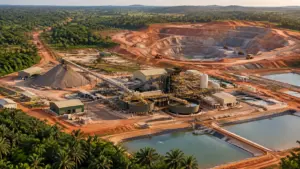
Abandoned uranium mines across the American West and beyond are getting a second life: and it’s all thanks to a technology that didn’t even exist when those operations shuttered three decades ago.
Small Modular Reactors, or SMRs, are fundamentally reshaping global energy calculations. And as utilities scramble to meet aggressive decarbonization targets while simultaneously feeding the insatiable electricity demands of AI data centers and EV charging networks, uranium has become the unexpected darling of the energy transition. The consequence? Mines that went dark in the 1990s: victims of post-Cold War pricing collapse and anti-nuclear sentiment: are now dusting off old permits and firing up equipment.
This isn’t nostalgia. This is economics.
The Numbers Don’t Lie
Here’s the brutal math: the world currently consumes approximately 180 million pounds of uranium annually. Global mines produce only about 130 million pounds. That leaves a 50-million-pound gap that’s been filled by drawing down Cold War-era stockpiles: stockpiles that are rapidly depleting.
More Read
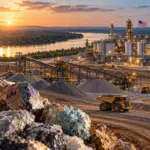
The International Atomic Energy Agency projects global uranium demand could hit 100,000 metric tons per year by 2040. That’s nearly double current mining output. Somebody has to dig that yellowcake out of the ground, and fast.


Uranium spot prices tell the story clearly. After languishing at $64 per pound in early 2024, prices climbed to $82 by September. Some recent contract negotiations have locked in rates between $125 and $130 per pound. Citi analysts project uranium will stabilize around $110 per pound by 2026: still far above the sub-$30 prices that killed the industry in the 1990s.
More Read
Companies that mothballed operations when uranium couldn’t fetch $15 a pound are now staring at prices that make even marginal deposits economically viable.
Why SMRs Change Everything
Traditional nuclear plants are massive, expensive, and take decades to permit and build. A single large reactor might cost $10 billion and require 15 years from conception to commercial operation. That model is broken for modern energy markets that need flexibility and speed.
SMRs flip the script. These compact reactors: typically producing 300 megawatts or less compared to 1,000+ megawatts from conventional plants: can be factory-built and shipped to sites. Construction timelines shrink from decades to years. Capital requirements drop from billions to hundreds of millions. And crucially, SMRs can be deployed incrementally, matching supply to demand without betting the entire company on a single enormous project.
Utilities serving most of the U.S. electric load have committed to reducing carbon emissions to near-zero by 2050. Many are now looking extremely eagerly at advanced reactors to meet soaring electricity needs that wind and solar alone cannot reliably satisfy. Every SMR that comes online needs fuel. Every fuel rod needs uranium.

If SMRs prove efficient and economical: and early deployments suggest they will: they could be mass-produced at scale within the next decade. That scenario sends uranium demand into territory the industry hasn’t seen since the height of the Cold War nuclear buildup.
Ghost Towns Becoming Boomtowns
The uranium bust of the 1990s left scars across the Colorado Plateau, Wyoming’s Powder River Basin, and the Texas Gulf Coast. Mining towns that had thrived during the atomic age watched their economic lifelines disappear as prices cratered. Permits were surrendered, equipment was sold off, and facilities were remediated or simply abandoned.
Now companies around the globe are both looking for new deposits and reopening old mines. The calculus has fundamentally changed.
Consider the dynamics: a mine that required $40 per pound to break even was a financial disaster when spot prices hovered at $20. That same mine becomes a cash machine at $80. Deposits that geologists mapped in the 1980s but deemed uneconomic suddenly merit fresh investment. Processing facilities that were decommissioned are being rehabilitated.
The advantage of reopening old operations over greenfield development is significant. Existing mines often retain permits, have characterized ore bodies, and feature infrastructure that: while aged: requires less capital than building from scratch. Environmental baselines are established. Community relationships exist. The path to production is shorter.
Cleaner Than Your Grandfather’s Mine
Critics of uranium mining often invoke images of the industry’s troubled past: open pits, contaminated tailings, and communities suffering from radioactive exposure. Those concerns were legitimate and drove much of the opposition that contributed to the 1990s collapse.
But modern uranium extraction looks dramatically different.

In-situ leaching (ISL) now accounts for 57% of global uranium production, up from just 16% in 2000. This technique eliminates the open pits and massive waste rock piles that characterized traditional mining. Instead, operators drill a series of wells into uranium-bearing aquifers, inject an oxygenated solution that dissolves the uranium in place, and pump the uranium-rich liquid to the surface for processing.
Surface disturbance is minimal: a wellfield looks more like an oil patch than a traditional mine. Water consumption drops significantly. There are no tailings ponds filled with radioactive sludge. No mountains of waste rock. The environmental footprint shrinks by orders of magnitude.
This technological evolution matters enormously for permitting and public acceptance. Regulators can approve ISL operations with greater confidence in environmental outcomes. Communities that rejected conventional uranium mines may accept wellfield development. The social license to operate: always precarious for nuclear-adjacent industries: becomes achievable.
The Geopolitical Dimension
Uranium supply chains carry strategic implications that transcend pure economics. Russia and Kazakhstan together dominate global uranium production and enrichment services. The events of 2022 concentrated minds in Western capitals about the risks of energy dependence on adversarial nations.
Reopening domestic uranium production in the United States, Canada, and Australia isn’t just about capturing commodity profits. It’s about energy security. Utilities serving critical infrastructure don’t want their fuel supply vulnerable to geopolitical disruption. Governments promoting SMRs as a decarbonization solution need reliable domestic uranium sources to make the case politically viable.
This strategic calculus adds a floor beneath uranium prices that pure market economics might not support. Subsidies, strategic reserves, and preferential procurement policies for domestic uranium could emerge, providing additional incentives for mine reopenings even if spot prices soften.
What Comes Next
The uranium renaissance is still in early innings. Most closed mines haven’t yet resumed production: companies are conducting feasibility studies, updating permits, and securing financing. The lead time between deciding to reopen a mine and actually shipping yellowcake can span several years.

But the trajectory is clear. As SMR deployments accelerate through the late 2020s and the supply-demand gap widens, uranium prices should remain elevated. Mines that economic analysts had written off permanently are being reassessed. Exploration budgets are increasing. Junior mining companies are raising capital to develop uranium properties that have sat dormant for generations.
The communities that lost their economic base when uranium prices collapsed may see revival. Geologists who pivoted to other commodities when uranium work disappeared are finding their expertise suddenly valuable again. Equipment manufacturers are fielding inquiries about gear they haven’t built in decades.
Whether this renaissance proves durable depends on variables that remain uncertain: SMR deployment pace, regulatory evolution, competing energy technologies, and the ever-present possibility of another nuclear accident reshaping public opinion. The industry has been burned before by boom-bust cycles that left investors and communities devastated.
But for now, the fundamentals point upward. Uranium demand is rising, supply is constrained, and prices are strong. Mines that went silent in the 1990s are waking up.
The atomic age, it turns out, was just taking a nap.
For more coverage on how zero-carbon initiatives are reshaping mining equipment, visit Skillings Mining Review.