By Charles Pitts

The timeline for small modular reactors (SMRs) has shifted from a distant decade-out prospect to an immediate market driver. While industry analysts previously targeted the 2030s for commercial SMR deployment, a convergence of streamlined regulatory pathways and urgent demand from data center operators has pulled the expected uranium demand inflection point forward into the 2026–2027 window.
In March 2026, the U.S. Nuclear Regulatory Commission (NRC) implemented an accelerated licensing framework that fundamentally alters the development horizon for advanced reactors. This “speedrun” approach to permitting is designed to reduce the multi-year review cycles that have historically hampered the nuclear sector. However, as the regulatory path clears, a new bottleneck is emerging: the specialized uranium fuel required to power these compact, high-output units.
The Regulatory Accelerant: NRC’s New Pathway
For decades, the primary barrier to nuclear innovation was a licensing process designed for large-scale, light-water reactors. The introduction of 10 CFR Part 53 and subsequent streamlining measures in early 2026 have provided a dedicated, risk-informed pathway for SMRs. This change allows developers to move from design certification to construction permits at a pace that was previously impossible.
According to internal NRC projections, approximately 25 license applications for SMRs and advanced reactors are expected to be in the pipeline by 2029. This surge in filings is not a theoretical exercise; it represents a hard shift in utility planning. By reducing the “regulatory friction” of the permitting phase, the NRC has effectively shifted the critical path of these projects from the courtroom and the review board to the mine and the enrichment plant.
More Read

Big Tech and the Data Center Power Demand
The acceleration of nuclear timelines is being financed and fueled by the hyper-scale data center industry. With artificial intelligence workloads driving a projected 160% increase in data center power demand by the end of the decade, the reliability of carbon-free, 24/7 “baseload” power has become a non-negotiable requirement for companies like Microsoft, Google, and Amazon.

This demand is already impacting the mining sector. As seen in recent copper demand forecasts, the infrastructure required to support AI is placing unprecedented stress on the supply of critical minerals. Uranium is the latest commodity to feel this pull. Unlike traditional utilities that may take a decade to commit to a project, tech giants are entering into power purchase agreements (PPAs) that incentivize developers to bypass traditional delays, further compressing the 2026–2027 deployment schedule.

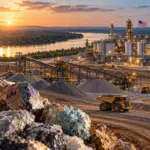
The HALEU Squeeze: A Specialized Supply Crisis
While the regulatory “speedrun” handles the permits, the fuel supply remains the physical limit of the SMR rollout. Most advanced SMR designs do not run on the low-enriched uranium (LEU) used by the current global fleet. Instead, they require High-Assay Low-Enriched Uranium (HALEU), which is enriched to between 5% and 20%.
The global supply of HALEU is currently in a state of critical transition. Historically, Russia was the primary commercial supplier of this fuel. Geopolitical shifts and subsequent sanctions have forced a rapid and difficult pivot toward domestic Western production.
| Metric | 2024 Actual | 2026 Forecast | 2027 Projected |
|---|---|---|---|
| SMR License Applications (Active) | 4 | 12 | 19 |
| HALEU Commercial Supply (Western) | Negligible | Pilot Scale | Early Commercial |
| Uranium Supply Deficit (U₃O₈ Equiv.) | -1.2M lbs | -4.5M lbs | -8.2M lbs |
| Average NRC Review Time (Months) | 42 | 24 | 18 |
Establishing a commercial HALEU supply chain requires more than just mining more ore; it necessitates new enrichment facilities and specialized fuel fabrication plants. As regulators speed up approvals, the industry is approaching a “fuel-side squeeze” where reactors may be licensed to operate before the fuel for their initial cores is physically available.

Uranium Market Dynamics: 2026–2027 Outlook
The 2027 demand inflection point is no longer a “bull case” scenario; it is becoming the base case. The uranium market is already structurally tight due to underinvestment in new mines over the last decade. The layering of SMR demand on top of traditional reactor life extensions and the restart of mothballed units (such as the Palisades plant in Michigan) has created a significant supply gap.
Market analysis suggests that by 2027, the deficit in primary uranium production could exceed 8 million pounds annually. This mimics the supply-side pressures seen in other sectors, such as the antimony price breakout, where geopolitical constraints and sudden demand shifts have led to rapid price appreciation.
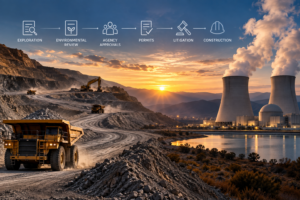
For mining operators, the challenge is the lag between a “permitting win” for an SMR and the years required to bring a new uranium mine into production. While SMR licensing is now on a “speedrun,” mine permitting remains a multi-year slog, ensuring that the supply-demand imbalance will persist through the end of the decade.

Operational Realities: The View from the Control Room
As we look toward 2027, the integration of real-time data and automated fleet management will be essential for uranium miners trying to meet this accelerated demand. The scale of the deficit means that every pound of “yellowcake” (U₃O₈) must be extracted with maximum efficiency.
“The speed at which the NRC is moving is a signal to the entire supply chain,” says one industry analyst. “But you can’t print uranium. You have to dig it, and you have to enrich it. The disconnect between the speed of the paperwork and the speed of the shovel is the story of 2026.”
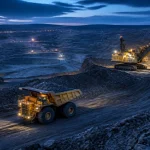
Mining companies are increasingly relying on centralized operations centers to manage the logistical complexity of high-output extraction. These centers integrate geological data with real-time equipment monitoring to ensure that production targets are met despite the tightening environmental and operational constraints.

Conclusion: A Market in Transition
The SMR licensing speedrun is a pivotal development for the global energy transition, but it has fundamentally altered the risk profile for the uranium market. By pulling demand forward into the 2026–2027 window, the NRC and Big Tech have created a situation where the fuel supply is now the primary constraint on nuclear growth.
Investors and operators must look beyond the “permitting wins” and focus on the technical realities of HALEU enrichment and primary mine production. As the copper price outlook has shown, the gap between policy ambitions and physical reality is where the most significant market volatility: and opportunity: resides.
The fuel squeeze is arriving early. The question is whether the mining and enrichment sectors can move fast enough to keep the reactors from sitting empty.
Shareable Social Media Snippet
Headline: Uranium’s “Speedrun” Problem: Why SMRs are Hitting a Fuel Wall by 2027.
Snippet: New NRC licensing policies are approving reactors faster than ever, but the HALEU fuel supply isn’t keeping up. With Big Tech bankrolling a nuclear surge, the uranium deficit is arriving years ahead of schedule. We dive into the 2026–2027 supply squeeze. #Uranium #SMR #NuclearEnergy #MiningNews #EnergyTransition