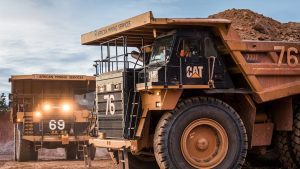
 A majority of African economies, accounting for 83%, remain highly dependent on commodities, rendering them vulnerable to external shocks. These economies experience robust growth when commodity prices are high but face significant setbacks and reversals when prices decline. This issue was a central topic at the African Centre for Economic Transformation (ACET) Summit on Economic Transformation held on May 20.

Commodity Dependency and Economic Vulnerability
Dr. Kouassi Yeboua, a senior researcher at the African Futures Innovation Programme, highlighted Chad as a prime example of the volatility tied to commodity dependency. Between 2001 and 2014, Chad enjoyed an average GDP growth of 9%. However, since 2015, the country has seen its GDP contract, poverty increase, and developmental gains reversed due to its inability to sustain economic growth. The shift from agriculture to oil made Chad’s economy less diversified and more susceptible to external shocks.
Leveraging Resources for Long-Term Investment
At the summit, Professor Nicola Viegi, head of the Department of Economics at the University of Pretoria, emphasized the need for African countries to leverage their resources to boost investment capacity. Rather than using resources to finance current consumption, Viegi suggested that resources should be directed towards economic transformation.
“For example, if we were able to sell all our resources and use part of that to build infrastructure, then we would not have debt and have resources that we are able to invest,” said Viegi. He proposed rethinking commodities as an opportunity for diversification rather than a curse.
Africa’s Role in the Global Energy Transition
The global push towards energy transition is expected to increase demand for African resources. However, African countries currently play a minor role in global value chains for minerals and resources. “We are currently at a place where other powers fight to get control of these resources,” said Yeboua. He noted that Africa is becoming more dependent on the East, which is the manufacturing hub of the world, leading to less diversification in African economies.
More Read
Transformation Through Economic Diversification
Yeboua and Viegi both stressed the importance of transforming African economies to achieve long-term growth. This transformation involves leveraging resources for sustainable development, investing in human capital, and building infrastructure linkages across the continent.

“This is where the lack of future orientation in Africa is problematic,” said Viegi, citing Norway as an example of a country that used its natural resources to generate financial resources for long-term investment.
Avoiding the Resource Curse
Viegi warned against the continuous cycle of growth linked to commodity prices, advocating for inward-facing development strategies. “There are two main diplomatic attitudes towards Africa, namely an attitude of exploitation or an attitude of paternalism. We do not want either,” he said. African countries must learn from successful resource management practices in other regions to avoid the so-called resource curse.
More Read

Building Infrastructure and Human Capital
The lack of infrastructure and high unemployment rates are significant barriers to economic integration and productivity in Africa. As demand for critical minerals increases, countries must create better investment conditions, including infrastructure development and regional value chains, to attract investors.
“Chinese companies are now building factories in Zimbabwe to produce lithium, and this approach is critical and the right path to follow,” noted Yeboua.
Success Stories and Lessons from Africa
Viegi pointed to Morocco and Tunisia as examples of African countries that successfully integrated into global value chains by focusing on manufacturing and tourism. South Africa, he suggested, must find ways to fix its infrastructure and develop human capital, potentially positioning itself as a hub for innovation and new enterprises on the continent.
Institutional Stability and Accountability
To attract sustainable investments, African countries need to ensure institutional stability and create a system of accountability and transparency. This will allow for a focus on long-term goals and investments. “Institutional stability and a system of accountability and transparency will make it possible for countries to focus efforts on long-term goals and investments,” said Viegi.
The ACET Summit underscored the need for African economies to transition from commodity dependency to diversified and sustainable growth models. By leveraging their resources wisely, investing in infrastructure and human capital, and ensuring institutional stability, African countries can transform their economies and achieve long-term prosperity.