Venezuela sits on more oil than Saudi Arabia. But here’s the thing nobody talks about at industry conferences, they can barely pump it anymore. So what does a regime do when the money machine breaks? They grab shovels and start digging for gold. Welcome to the Orinoco Mining Arc, where desperation meets extraction economics.

The numbers tell the ugly truth. Venezuela pulls roughly $2.2 billion annually from gold alone, but that’s just what makes it onto the books. The real figure? Nobody knows, and that’s exactly the problem.
Back in 2016, when oil revenues were circling the drain, Maduro’s government carved out 112,000 square kilometers of Amazon rainforest and called it the Orinoco Mining Arc. Think of it as Plan B when Plan A involves watching your oil infrastructure crumble under sanctions and spectacular mismanagement.
The pivot wasn’t subtle. One day you’re an oil state with the world’s largest proven reserves, 304.3 billion barrels sitting underground, and the next you’re telling your military to secure gold mines instead of refineries. It’s like watching ExxonMobil suddenly decide to become a prospecting outfit.

More Read
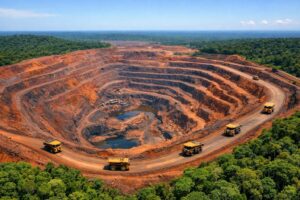
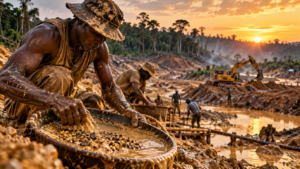
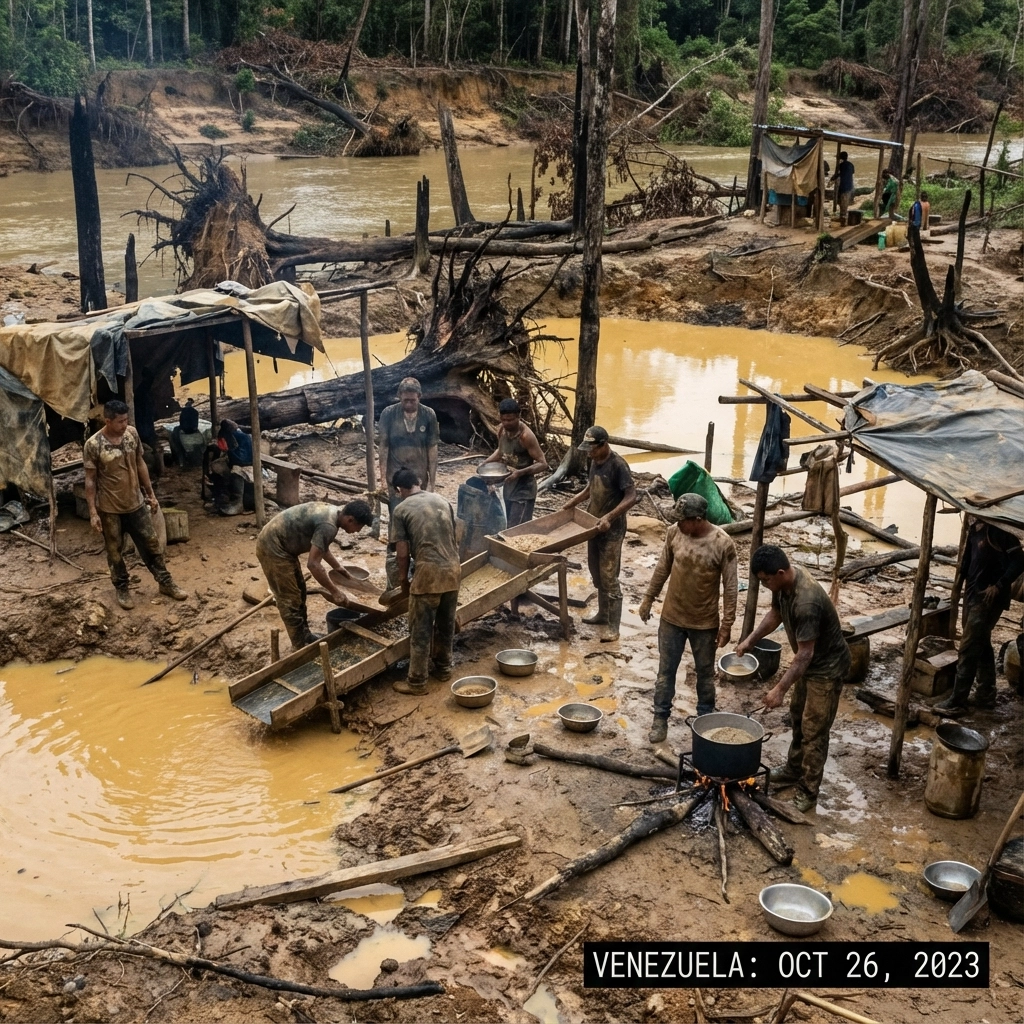
But here’s where it gets messy. This isn’t your grandfather’s mining operation with hard hats and safety protocols. The Orinoco Mining Arc operates more like the Wild West, if the Wild West had AK-47s and mercury poisoning.

The state doesn’t really control what happens out there. Sure, they issue the permits and collect what taxes they can, but the day-to-day reality involves criminal organizations, illegal armed groups, and enough corruption to make a Chicago alderman blush.
ELN guerrillas run chunks of territory. FARC dissidents control others. Criminal gangs like Tren de Aragua have carved out their own pieces. Meanwhile, legitimate mining companies try to operate somewhere in between, hoping nobody shoots at their equipment.
More Read

And the environmental damage? It’s biblical. Mercury flows into rivers that feed the Amazon basin. Indigenous communities get displaced or killed when they complain. Entire ecosystems disappear under the machinery of desperation economics.
The government projects they’ll hit 79 tons of gold production by 2025. That sounds impressive until you realize most of it never sees the inside of a Venezuelan bank. Transparency Venezuela, and yes, the irony of that name isn’t lost on anyone, estimates only 14% of extracted mineral value actually reaches the national treasury.
The rest disappears into smuggling networks that make Swiss cheese look solid. Gold flows to Colombia, then to Miami. Coltan, critical for your smartphone, heads straight to China. The whole operation resembles a garage sale where the homeowner keeps getting robbed by the customers.
What makes this particularly infuriating for industry professionals is the waste of potential. Venezuela doesn’t just have gold. They’re sitting on Latin America’s largest gold reserves, plus significant deposits of diamonds, nickel, copper, and rare earth elements including coltan.
China controls most global coltan production, which means every iPhone, Tesla battery, and wind turbine depends on minerals from regions where child labor is common and environmental protection is a joke. Venezuela could disrupt that monopoly, but instead they’ve created a parallel smuggling economy that benefits everyone except Venezuela.
The geopolitical implications keep mining executives up at night. Russia provides technical support for Venezuela’s extractive industries. China offers financing and takes minerals as payment. Meanwhile, U.S. companies watch from the sidelines as sanctions block them from participating in what should be a natural partnership.
Opposition leader María Corina Machado has floated a $1.7 trillion privatization plan that would redirect Venezuelan resources toward U.S. investors and Gulf Coast refineries. But that requires regime change, and regime change requires more than wishful thinking and strongly worded UN resolutions.
The human cost accumulates daily. Independent reporters document forced disappearances, sexual violence, and killings in mining areas. Environmental groups track mercury contamination spreading through river systems that support millions of people downstream.

Mining companies operating legally in other South American countries watch Venezuela’s situation with mixture of horror and opportunity recognition. Nobody wants to see an entire nation’s mineral wealth controlled by criminal organizations, but everyone understands that Venezuela’s chaos creates market opportunities elsewhere.
The technical aspects reveal how desperate the pivot has become. Venezuela lacks modern extraction equipment, so they rely on artisanal mining methods that maximize environmental damage while minimizing yield. It’s like using a sledgehammer for surgery, technically possible, but the patient usually dies.
Chinese equipment manufacturers fill the gap where they can, providing machinery that works but doesn’t meet international environmental standards. Russian advisors help optimize extraction processes while turning blind eyes to smuggling operations that fund their own activities.
The state-sponsored extraction narrative gets complicated when the state barely functions. Yes, Caracas issues permits and collects fees, but regional military commanders often negotiate their own deals with mining operators. It’s federalism through firepower rather than constitutional process.
What galls industry analysts most is the sheer inefficiency. Venezuela possesses some of the world’s highest-grade gold deposits, easily accessible through modern mining techniques. Instead, they’re strip-mining the Amazon with equipment that belongs in museums.
The $2.2 billion annual figure represents just the tip of an iceberg nobody can properly measure. Black market sales probably double or triple that amount, but those transactions happen in Colombian cities, Miami banks, or Chinese trading houses: anywhere except Venezuelan ledger books.
Oil production continues declining while gold extraction increases, creating an inverse relationship that defines modern Venezuela. Every barrel they can’t pump drives another hectare of mining concessions. It’s resource cannibalism disguised as economic diversification.

The international mining community finds itself in an impossible position. Venezuelan mineral resources could supply critical materials for global energy transition projects. Solar panels, wind turbines, and electric vehicle batteries all require minerals that Venezuela possesses in abundance.
But nobody wants to fund criminal organizations or enable environmental destruction. So the minerals flow through illegal channels to manufacturers who ask fewer questions about provenance. The end result? Higher costs for legitimate companies and continued chaos in Venezuela.
Current sanctions prevent U.S. and European companies from direct involvement, but nothing stops Venezuelan minerals from reaching global markets through third-party channels. It’s prohibition economics applied to extractive industries, with predictably perverse results.
Mining executives whisper about post-Maduro scenarios where Venezuelan resources return to legitimate global markets. But nobody knows when that might happen, or whether the environmental and social damage can be reversed once it does.
The Orinoco Mining Arc represents everything wrong with resource extraction in the 21st century: environmental destruction, human rights violations, corruption, and international sanctions creating market distortions that benefit exactly the wrong people.
Yet the underlying geological reality remains unchanged. Venezuela sits on mineral wealth that could power clean energy transitions while providing economic development for one of South America’s most populous nations. Instead, that wealth funds criminal organizations while poisoning the Amazon basin.
The mining industry will eventually return to Venezuela. The only question is whether there will be anything left worth extracting by the time political conditions allow legitimate operators to work there safely and legally.
Until then, the blood gold continues flowing, the environment continues degrading, and the international mining community continues watching one of the world’s richest mineral deposits get systematically destroyed by the very people who should be protecting it.