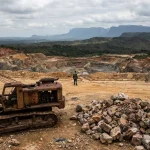
The global mining sector stands at a critical inflection point in 2026, where three seismic forces: artificial intelligence deployment, ESG mandates, and geopolitical supply chain realignments: are fundamentally reshaping how extractive industries operate, compete, and survive.

This isn’t your grandfather’s mining industry. While traditional challenges like declining ore grades and permitting delays persist, mining executives now navigate an entirely different strategic landscape where autonomous fleets, carbon accounting, and critical mineral geopolitics determine market leadership.
AI and Autonomous Operations: From Pilbara to Global Deployment
The adoption curve for autonomous mining technology has accelerated beyond industry projections. Current data shows autonomous, autonomous-ready, and tele-remote mining equipment now represents over 4% of global mining operations: a dramatic surge from less than 1% in 2020.
What started as experimental deployments in Australia’s Pilbara region has evolved into mainstream operational strategy. Rio Tinto‘s autonomous haul truck fleet, which has logged over 7 million kilometers without a single lost-time injury, demonstrates the dual value proposition driving adoption: enhanced safety outcomes and operational efficiency gains averaging 12-15% in pilot programs.

More Read

The geographic expansion tells the real story. Major copper and gold operations across the Americas and Africa are implementing autonomous systems in 2026, though adoption rates vary significantly by region. Chile’s copper mines lead Latin American deployment, while several operations in Ghana and the Democratic Republic of Congo are piloting autonomous equipment for the first time.

Digital twins and predictive maintenance represent the next frontier. Mining companies report 20-30% reductions in unplanned downtime when combining autonomous equipment with AI-powered predictive analytics. The technology stack includes real-time ore grade analysis, equipment health monitoring, and dynamic routing optimization that adjusts hauling patterns based on changing mine conditions.
But here’s the reality check: full mine automation remains elusive. Labor considerations, regulatory frameworks, and the complexity of underground operations mean that true “lights-out” mining won’t arrive this decade. Instead, 2026 represents the year when human-machine collaboration becomes the standard operational model.
More Read

ESG Evolution: From Compliance to Competitive Advantage
Environmental, social, and governance factors have transformed from regulatory checkbox exercises into core business strategy. Mining companies that viewed ESG as a cost center are discovering it’s actually a revenue driver and risk mitigation tool.
Climate risk now ranks as a major operational concern for mining executives worldwide. Many of the world’s most valuable mineral deposits sit in regions experiencing severe drought, water scarcity, and extreme heat events. Operations in Chile’s Atacama Desert, Australia’s Pilbara, and parts of sub-Saharan Africa face water availability challenges that directly impact production capacity.
The response has been swift and comprehensive. Clean-tech mining initiatives are moving from pilot projects to full-scale deployment. Renewable-powered mining operations are becoming standard practice, with several major operations achieving 100% renewable energy consumption. Anglo American’s hydrogen-powered haul trucks and Newmont’s solar-powered processing facilities represent the new baseline, not cutting-edge innovation.
Battery electric vehicle deployment within mining operations shows remarkable geographic clustering. Australia, Canada, Sweden, Finland, and Chile lead adoption rates, driven by favorable national policies, renewable energy availability, and strong collaboration between miners and equipment manufacturers. Australia maintains its position as the global frontrunner, with several operations reporting 40% BEV penetration in their light vehicle fleets.
Water management strategies have evolved beyond conservation to include comprehensive water cycle management. Mining companies are investing in desalination plants, water recycling systems, and partnerships with local communities to ensure sustainable water access. Vale’s Capanema mine in Brazil has achieved 99% water recycling, setting new industry benchmarks.
Critical Minerals and Market Dynamics
The geopolitical dimension of mining has never been more prominent. Critical minerals competition between the United States and China has intensified, with China maintaining dominant positions across multiple essential materials.
China controls over 15 critical minerals essential to the energy transition, including 98% of gallium production and 95% of magnesium production globally. More concerning for Western supply chains, China processes over 80% of global rare earth elements despite controlling only 37% of known reserves. This processing advantage, built over decades of deliberate industrial policy, creates chokepoints that extend far beyond mining into manufacturing and defense applications.

Copper supply constraints persist despite production growth. Global copper mine output is projected to grow 4.7% in 2026 to 24.5 million tonnes, with increased production from Chile, Peru, the Democratic Republic of Congo, Indonesia, and China. However, the International Copper Study Group predicts a refined copper deficit of approximately 150,000 tonnes, indicating continued market tightness.
The copper deficit reflects broader supply-demand imbalances across critical minerals. Electric vehicle adoption, renewable energy deployment, and grid infrastructure modernization are driving unprecedented demand for copper, lithium, cobalt, and rare earth elements. Simultaneously, new mine development faces permitting delays, declining ore grades, and social license challenges that extend project timelines.
Coal production presents a paradox for the energy transition narrative. Despite global decarbonization commitments, coal production will increase in 2026. India, China, and Southeast Asian nations continue relying on coal for affordable, reliable power generation. GlobalData projects production gains from India, Australia, South Africa, and Russia will offset declines in China and the United States.
The lithium market faces particular volatility. Spodumene prices have experienced significant swings as supply additions from Australia and Argentina coincide with slower-than-expected EV adoption in key markets. However, long-term demand projections remain robust, supporting continued investment in lithium projects across the “lithium triangle” of Chile, Bolivia, and Argentina.
Strategic Implications for Mining Leadership
Operational complexity has emerged as the top risk facing mining executives in 2026, according to surveys of 500 senior mining leaders worldwide. This reflects mounting pressure to deliver predictable output as mines operate at greater depths, ore grades decline, and costs increase across all commodity categories.
The talent shortage in mining represents a strategic vulnerability for North American operations. The United States has only 14 mining schools compared to China’s extensive technical education infrastructure. This disparity becomes critical as geopolitical competition drives demand for geologists, mining engineers, and metallurgists with expertise in critical minerals extraction and processing.
Permitting reform remains crucial for U.S. competitiveness in critical minerals. Environmental review processes that require 7-10 years for major projects cannot compete with international alternatives offering 2-3 year approval timelines. The proposed SPEED Act could accelerate approvals, though litigation risks and state-level opposition continue to create uncertainty.
Public-private investment models introduced in 2025 are expanding in 2026, offering financing support and demand guarantees for domestic critical minerals projects. These partnerships address the capital intensity and long payback periods that have historically discouraged private investment in U.S. mining projects.
The intersection of technology, sustainability, and market dynamics creates both opportunities and challenges for mining leadership. Companies that successfully integrate autonomous operations, achieve measurable ESG outcomes, and secure positions in critical mineral supply chains will emerge as industry leaders. Those that treat these trends as separate initiatives rather than integrated strategy will struggle to compete.
Mining executives who understand that 2026 represents a transition year: not a destination: position their operations for sustainable success. The companies thriving in this environment combine operational excellence with strategic foresight, recognizing that today’s decisions determine tomorrow’s market position in an increasingly complex global mining landscape.
Ready to dive deeper into the 2026 mining outlook? Get exclusive access to our comprehensive market analysis, executive interviews, and strategic recommendations with Skillings Pro for just $4.95/month. Join mining leaders who rely on our insights to navigate industry transformation.