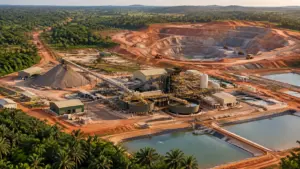
Here’s the thing nobody in Silicon Valley wants to admit: their shiny AI revolution runs on the same reddish-brown metal that humans have been pulling out of the ground for 10,000 years. And we’re about to run short.

2026 marks the inflection point where copper stops being just another commodity and becomes the bottleneck that could slow down everything from ChatGPT to electric vehicles. The numbers are brutal, the supply chain is stretched thin, and the mining industry is suddenly the most important player in a tech story that nobody saw coming.
The Appetite of the Machine
Let’s talk about what’s actually happening inside those massive AI data centers popping up across the American Southwest and Northern Europe.
A conventional data center: the kind that’s been humming along for the past two decades: requires somewhere between 5,000 and 15,000 tons of copper. That’s a lot, sure. But a hyperscale AI facility? We’re talking up to 50,000 tons. Per facility. That’s not a typo.
J.P. Morgan projects data center copper demand will hit approximately 475 kilotons in 2026, up roughly 110 kilotons from 2025 alone. Goldman Sachs expects U.S. data center power demand to reach 47 gigawatts by 2030: a 176% increase driven almost entirely by AI workloads. That translates to roughly 180,000-240,000 tonnes of copper just for these facilities.
More Read



But here’s where it gets really uncomfortable. A single 300-megawatt AI data center requires 6,000-9,000 tonnes of copper just for the building itself. The grid infrastructure needed to actually deliver power to that facility? It requires three to four times more copper than the data center. We’re talking new transmission lines, upgraded substations, reinforced distribution networks stretching across entire regions.
Every time Microsoft or Google announces a new AI campus, they’re not just placing an order for copper. They’re triggering a cascade of infrastructure projects that multiply that copper demand exponentially.
More Read

The Supply Side is Breaking
Meanwhile, the mining industry is staring at a wall it can’t climb fast enough.
S&P Global’s January 2026 study paints a grim picture: global copper demand will reach 42 million metric tons by 2040: a 50% increase from current levels. But here’s the kicker: existing supply is actually poised to decrease as the sector faces challenges across the entire value chain.
The projected shortfall? Ten million metric tons by 2040. That’s not a rounding error. That’s a crisis.
For 2026 specifically, we’re looking at a deficit of hundreds of thousands of tonnes driven by years of underinvestment in new mining capacity. The industry spent the 2010s focused on efficiency and cost-cutting rather than exploration and development. That chickens-coming-home-to-roost moment is now.

And here’s what makes this particularly nasty: technology companies building AI facilities cannot easily defer projects based on copper price fluctuations. They’ve got shareholders expecting growth, competitors breathing down their necks, and billions already committed to AI infrastructure. This demand is price-inelastic. They’ll pay whatever it takes.
That creates a scarcity premium dynamic where copper prices can spike without meaningfully reducing demand from the tech sector. Other industries that actually can defer purchases: construction, consumer electronics, traditional manufacturing: end up squeezed out.
Everyone Wants the Same Metal
AI data centers aren’t even the only hungry mouths at the table.
S&P Global identifies four major demand vectors converging simultaneously: core economic sectors, electrification for renewable energy and EVs, AI and data centers, and: surprisingly: surging defense spending. The military-industrial complex is modernizing rapidly, and modern weapons systems are copper-intensive.
The AI/data center and defense categories alone are each expected to roughly triple by 2040, representing a combined 4 million metric tons of additional annual demand. And that’s before we even factor in the wildcard: humanoid robotics. If just 1 billion units operate by 2040, that could add another 1.6 million metric tons annually.
Electric vehicles already consume four times more copper than internal combustion cars. Solar farms, wind turbines, battery storage systems: the entire zero-carbon mining push ironically requires massive amounts of mined copper to function.
Every major global trend is pulling in the same direction. Electrification. Digitization. Automation. Defense modernization. And they’re all competing for a metal that takes 15-20 years to bring from discovery to production.
Why This is a Mining Problem, Not a Tech Problem
Silicon Valley executives love talking about innovation and disruption. But you can’t disrupt geology. You can’t innovate your way around the fact that major copper deposits are getting harder to find, deeper underground, and located in increasingly complicated jurisdictions.

Chile and Peru dominate global copper production, but both countries face mounting social and environmental pressures that constrain expansion. The DRC holds massive reserves but comes with geopolitical risk that makes boards nervous. New projects in stable jurisdictions like the U.S., Canada, and Australia exist, but permitting timelines stretch into decades.
Companies like Kobold Metals are using AI and machine learning to accelerate mineral discovery: which is deeply ironic given that AI is driving the very shortage they’re trying to solve. But even if they find the next great copper deposit tomorrow, it won’t produce commercial quantities until the 2030s at the earliest.
The mining industry operates on geological time. The tech industry operates on quarterly earnings. Those two clocks do not sync.
What Happens Next
The copper crunch of 2026 is going to force some uncomfortable conversations.
Tech companies will need to get serious about copper recycling and circular economy principles. Currently, only about 35% of copper is recycled globally: there’s significant room for improvement, but building that infrastructure takes years.
Miners will face enormous pressure to accelerate development timelines while simultaneously meeting increasingly stringent environmental and social standards. That’s a needle that’s almost impossible to thread.
Governments will need to decide whether critical mineral extraction is a national security priority worth fast-tracking permits: a politically fraught proposition in an era of heightened environmental awareness.
And investors? They’re already waking up. Copper prices are climbing, mining stocks are getting attention they haven’t seen in years, and the smart money is flowing into exploration-stage companies that were overlooked during the commodity bear market.
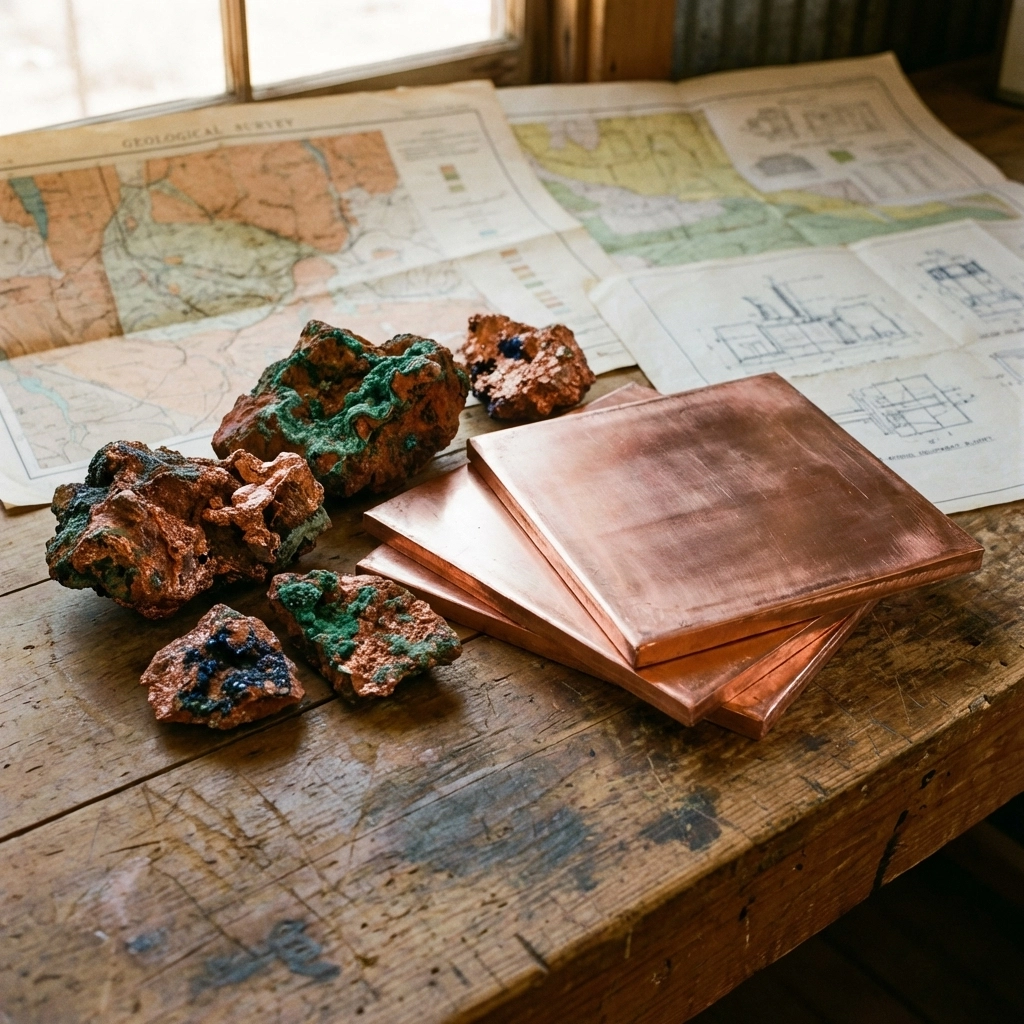
The transition to an electrified, AI-powered economy was always going to run through the mining sector. We just didn’t expect it to hit this wall this fast.
2026 is the year the copper crunch stops being a theoretical supply chain problem and starts being a very real constraint on technological progress. The mining industry suddenly finds itself at the center of the most important infrastructure story of the decade.
Welcome to the new reality. The machines need copper. And there’s not enough to go around.
For more coverage on how global commodity trends are reshaping the mining landscape, visit Skillings Mining Review.