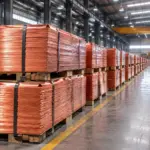
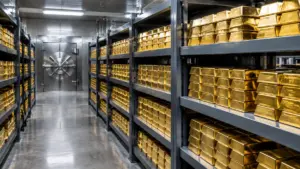
Sudan’s artisanal gold sector is a major source of revenue for the forces fighting the country’s war.

Switzerland has begun banning purchases, imports and transit of Sudanese gold while restricting the sale of certain mining chemicals to the country, in a move intended to choke off a key source of financing for Sudan’s three-year war.
The measures, which took effect Thursday, align Switzerland with sanctions adopted by the European Union in July. They target a commodity that has become central to the finances of both the Sudanese Armed Forces and the paramilitary Rapid Support Forces, as well as the cross-border trading networks that connect Sudan to regional markets.
Switzerland’s Federal Council said Sudanese gold was being treated as a “key conflict resource” and cited the country’s worsening humanitarian crisis. The new restrictions cover the purchase, import and transit of gold originating in Sudan, along with related services and financial assistance. Switzerland is also prohibiting the sale and supply of certain chemicals used in gold mining and extraction.
The announcement adds a major compliance issue for refiners, banks, traders and logistics firms handling African gold. It also puts renewed focus on whether existing responsible-sourcing systems can identify conflict-linked metal after it has passed through regional hubs, particularly the United Arab Emirates.

Why Sudanese gold matters to the war
Gold has long been embedded in Sudan’s political economy. After the country lost much of its oil revenue following South Sudan’s independence in 2011, gold became a critical source of foreign currency and patronage for military and political elites.

The sector expanded rapidly through artisanal and small-scale mining. According to a 2026 analysis by the Center for Strategic and International Studies, Sudan produced an estimated 74.6 tonnes of gold in 2025, placing it among Africa’s largest producers.
The same analysis said between 50% and 70% of Sudanese gold production is smuggled out of the country each year, with much of the trade moving through the UAE. The lack of reliable production data makes the exact value of the trade difficult to establish, but researchers describe it as a multibillion-dollar system supporting armed groups, traders, smugglers and external intermediaries.

A Chatham House study found that artisanal and small-scale mining accounted for 53.71 tonnes, or 83% of declared gold production in areas controlled by the Sudanese Armed Forces in 2024. Processing of gold-bearing tailings accounted for another 4.95 tonnes.
The report said the gold trade provides one of the most significant sources of income for the SAF and RSF, helping them purchase weapons, fuel and other supplies. Gold is also used as a means of payment in cross-border trade, allowing transactions to continue despite the collapse of much of Sudan’s formal financial system.
| Indicator | Reported figure | Why it matters |
|---|---|---|
| Sudanese gold production in 2025 | 74.6 tonnes | Places Sudan among Africa’s major gold producers |
| Artisanal and small-scale share of declared output in SAF-held areas, 2024 | 83% | Shows the difficulty of monitoring dispersed production |
| Estimated share of production smuggled annually | 50%–70% | Highlights the limits of origin-based import controls |
| Declared gold exports from SAF-held areas in 2024 | 27.96 tonnes | Valued at about $1.59 billion, according to Chatham House |
| Gold production recorded in SAF-held areas in 2024 | 64.36 tonnes | Indicates the scale of the formal and semi-formal sector |
Figures are drawn from CSIS and Chatham House research and should be treated with caution because official statistics exclude some production and smuggling.
Switzerland’s role in the supply chain
Switzerland is one of the world’s most important gold refining and trading centers. Its refineries process large volumes of bullion from multiple origins before the metal enters banking, jewelry and industrial markets.
The Swiss government already imposes due-diligence requirements on imports of gold and other precious metals. The new ban goes further by creating an explicit prohibition on Sudan-origin gold and associated financial and support services.
That distinction matters for companies that have historically relied on country-of-origin declarations and supplier documentation. Gold can pass through several jurisdictions, be mixed with metal from other sources and then be refined into a new product. Once that process occurs, establishing the original mine or region of production becomes more difficult.
Switzerland’s official announcement does not impose a blanket ban on all gold from the UAE or other transit countries. But it raises the stakes for firms buying from those markets. A trader may not be handling a shipment declared as Sudanese gold, yet still face scrutiny if the available evidence suggests that the material originated in Sudan.
That creates a practical question for compliance teams: Is a supplier’s paperwork enough, or must the buyer prove that the material could not have come from a conflict-affected area?
The ESG compliance test
The new restrictions arrive as mining ESG compliance in 2026 increasingly shifts from broad policy statements to transaction-level evidence.
The OECD Due Diligence Guidance expects companies to identify, assess and mitigate risks in mineral supply chains linked to conflict, human rights abuses and corruption. Industry standards, including responsible-sourcing programs used by the London Bullion Market Association and Responsible Jewellery Council, similarly rely on documentation, audits and risk-based controls.
But Sudan exposes the weakness of systems that depend too heavily on documentation generated within the supply chain itself.
A gold shipment can be technically compliant at the point of export while still carrying risks created earlier in the chain. In Sudan, production is dispersed among artisanal miners, local traders and processing operations operating in areas controlled by competing armed actors. Gold may then move through Egypt, Chad, Libya, South Sudan or the UAE before reaching a refinery or financial institution.
The CSIS assessment argues that due diligence is necessary but insufficient on its own. It recommends stronger traceability and a possible rebuttable presumption that refined gold imported from the UAE contains Sudanese gold unless the importer can demonstrate otherwise.
Such a policy would shift the burden of proof toward importers and refiners. It would also increase the value of independent audits, transaction monitoring, beneficial-ownership checks and physical traceability systems.

Refining and assay facilities will face greater pressure to verify gold origin and supply-chain records.
What it means for refiners and traders
For refiners, the immediate effect is not necessarily a shortage of gold. Sudan represents a relatively small share of global mine supply, and much of its production already avoids direct shipment to Switzerland or the European Union.
The more significant impact is operational and reputational.
Refiners and traders must now review:
- Suppliers based in the UAE, Egypt and other regional transit markets.
- Historical transactions involving Sudanese counterparties.
- Gold labeled as recycled or remelted material.
- Shipping, customs and financial records that could establish the original source.
- Beneficial ownership of mining companies, exporters and intermediaries.
- Any technical assistance or chemical sales linked to Sudanese mining activity.
The EU measures also prohibit the sale, supply, transfer or export of mercury and cyanide to Sudan. These chemicals are widely used in gold extraction, particularly in informal and artisanal operations. Switzerland’s parallel controls are designed to restrict the inputs needed to expand or maintain parts of the country’s mining economy.
The policy creates a compliance cost for legitimate operators as well as for firms suspected of facilitating conflict trade. Companies may respond by suspending higher-risk suppliers, requiring additional testing or avoiding certain routes entirely.
That could reduce liquidity for Sudan-linked gold, but it may also push more transactions into informal channels unless enforcement is coordinated across neighboring countries and major gold hubs.
The company and market angle
For listed gold producers, refiners and royalty companies, the Swiss decision is less about the direction of the gold price than about market access and supply-chain risk.
Companies with transparent mine-to-refinery systems may gain a relative advantage if banks, jewelers and industrial users become more selective. Conversely, firms dependent on opaque third-party supply, high-risk jurisdictions or weak supplier disclosures could face higher audit costs, shipment delays and reputational damage.
The issue is particularly relevant for refiners and bullion traders whose business models depend on high throughput and rapid turnover. A compliance failure involving conflict gold can produce consequences beyond a single shipment, including banking restrictions, loss of certification, regulatory investigations and exclusion from preferred-supplier networks.
Investors and corporate boards are therefore likely to focus on measurable controls rather than general ESG commitments. Questions may include how much gold is sourced from intermediary markets, whether suppliers are independently audited, how chain-of-custody data is verified and whether companies disclose high-risk transactions.
As with other commodities affected by sanctions, the commercial winners may be firms that can demonstrate provenance quickly and consistently: not simply those with access to the cheapest supply.
A ban with clear limits
Switzerland’s action closes a formal market channel, but it does not eliminate the routes that have sustained Sudan’s gold economy.
Researchers have documented gold moving through neighboring countries and into the UAE, where it can be refined, traded or re-exported. Once the metal is mixed with other material, a direct import ban becomes harder to enforce.
The humanitarian consequences also require care. Millions of Sudanese depend directly or indirectly on artisanal mining for income. A blunt disruption of the sector could reduce armed-group revenues while also cutting livelihoods for miners, traders and displaced communities with few alternatives.
That makes enforcement and humanitarian policy inseparable. Measures aimed at conflict financing will be more effective if they are combined with support for safer mining practices, legal trading channels and independent oversight.

Dispersed artisanal workings make mine-level traceability difficult.
What companies should watch next
The next phase will depend on whether Switzerland and the EU move beyond direct origin bans and address transshipment through regional hubs.
Key indicators include:
- Whether customs authorities increase scrutiny of gold imported from the UAE and Egypt.
- Whether refiners adopt stronger negative-origin testing and traceability requirements.
- Whether banks and insurers impose additional controls on Sudan-linked trade finance.
- Whether the UAE strengthens enforcement against conflict-linked gold.
- Whether international bodies coordinate data on traders, refineries and beneficial owners.
- Whether restrictions on mercury and cyanide are enforced across Sudan’s neighboring supply routes.
The Swiss Federal Council has made the legal position clear: Sudanese gold is now prohibited from entering Switzerland through purchase, import or transit channels.
The harder task will be proving where gold came from after it has crossed borders, changed hands and entered the global refining system. That is where the effectiveness of the ban: and the credibility of mining ESG compliance in 2026: will ultimately be tested.
For additional market context, see Skillings’ coverage of gold mining news in 2026 and its analysis of critical-minerals supply-chain risk.

Supply-chain verification increasingly depends on documented sampling, testing and chain-of-custody controls.