Weekly intelligence briefing for mining executives, investors, analysts and policymakers.
By Charles Pitts

Copper near US$14,780 per tonne is signaling more than strong demand. It reflects the convergence of artificial intelligence and data-center construction, grid investment, mine-supply constraints and a widening debate over who controls strategic mineral flows. At the same time, recent transactions across copper, gold, bauxite and lithium show that mining M&A is increasingly about districts, infrastructure and optionality: not simply headline resource tonnes.
1. COPPER: Chile exposes the processing and tariff fault lines
Chile’s July copper production reached its lowest level for that month since 2011. The result reinforces a structural constraint in the world’s largest copper-producing jurisdiction: Chile mines about one-quarter of global copper but smelts roughly 4%.
That gap illustrates a processing and geography mismatch. Ore may be produced in one region, concentrated in another and refined elsewhere. The result is a supply chain that can appear well supplied globally while individual markets face acute shortages of concentrates, refined metal or suitable logistics capacity.
Copper’s current price reflects this tension. Demand from AI infrastructure, data centers and power grids is adding pressure to a market already sensitive to mine disruptions, declining grades, weather and project delays.
More Read
The U.S. Section 232 tariff decision expected on Sept. 30 has added another layer. Buyers have been stockpiling copper into the United States ahead of the decision, creating a regional tariff premium. That inventory shift can tighten availability in one destination while making global inventories appear less representative of underlying consumption.

The central question is therefore not only how much copper exists. It is where the metal is located, in what form, and whether it can move across borders without a policy penalty.
Copper scenario frame
| Case | Operating logic |
|---|---|
| Base | Strong grid and data-center demand meets uneven mine supply and regional inventory distortions. |
| Bull | Chilean weakness persists while tariff-related stockpiling tightens U.S. availability. |
| Bear | Demand timing softens, inventories normalize and new supply offsets disruptions. |
2. M&A: ownership is moving toward districts and infrastructure
Recent transactions show companies buying strategic optionality rather than isolated deposits.
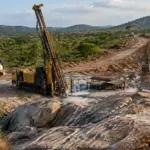
Austral Resources has made a binding A$80.7 million bid for Hammer Metals, including the Kalman copper-gold deposit near Rocklands. Vizsla Copper is acquiring Agnico Eagle’s Delta polymetallic VMS and Helm Bay gold projects for approximately C$32 million. Agnico is expected to take about 19.99% of Vizsla, with a possible increase to 22% pending approval.
Rio Tinto has agreed to acquire the Aurukun bauxite project from Glencore and Mitsubishi. The terms remain undisclosed and approvals are still required. Capstone Copper has agreed to a US$25 million acquisition of San Pietro, while Evolution Mining has increased its interest in Nevada North lithium to 32.5%.
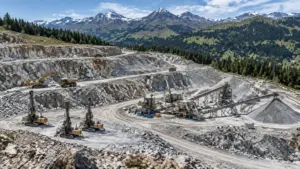
Taken together, these deals point to a different form of consolidation. The value lies in access to land packages, processing routes, roads, power, water, permitting knowledge and nearby exploration targets. District control can reduce development duplication and create future expansion options even when the acquired asset is not immediately production-ready.
For investors, this means the headline transaction value is only one part of the analysis. The more important questions concern infrastructure reuse, permitting status, metallurgical compatibility, ownership concentration and the buyer’s ability to convert optionality into operating cash flow.

District-scale mining infrastructure increasingly determines strategic value.
3. GOLD: the conversion chain remains the real test
Gold development is advancing across several distinct stages, and recent company developments illustrate why those stages should not be treated as interchangeable.
Medallion Metals has received final federal environmental approval for Ravensthorpe in Western Australia. The project is supported by a US$50 million loan facility and an offtake arrangement involving Trafigura. Approval and funding materially improve the project’s development position, but they do not eliminate construction, commissioning or operating risk.
Kalamazoo Resources has reported a 36-metre intersection at 16 grams per tonne gold from its Mt Olympus drilling program and plans a fourth-quarter resource update. The result may improve geological confidence, but a drill intercept is not yet a mine plan or an economic reserve.
St Barbara’s US$453 million exit from New Simberi to Lingbao Gold shifts its strategic focus toward Nova Scotia. The transaction also demonstrates how portfolio reshaping can be used to concentrate capital and management attention on jurisdictions or projects considered more aligned with a company’s next phase.
The conversion chain remains:
Drill intercept → resource estimate → permits → finance → production.
Each step answers a different question. Drilling tests geology. A resource estimate organizes confidence and continuity. Permits establish legal and environmental conditions. Finance tests whether the project can attract capital on acceptable terms. Production ultimately tests execution, metallurgy, labor, infrastructure and market access.
4. LITHIUM: data integrity is now a market variable
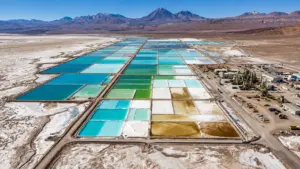
Lithium carbonate reportedly fell by more than 14% in early September after a methodology change lifted reported inventories to about 175,000 tonnes.
The distinction matters. A statistical inventory shock is not the same as a physical supply surplus. If the methodology changes what is counted, where it is counted or how material is classified, the market signal can change before the underlying flows of ore, chemicals or batteries do.
CATL’s Jianxiawo mine is also returning to environmental review after its approval was revoked. That development reinforces the role of permitting and regulatory continuity in lithium supply forecasts.
Energy-storage demand remains a support, although some battery makers have adjusted schedules. The market must therefore separate three variables: actual consumption, reported inventories and permitted production capacity.
For operators and policymakers, data quality is no longer a background issue. It is part of price formation, project timing and supply-chain credibility.

Process visibility is becoming as important as reported capacity.
5. CRITICAL MINERALS: sovereignty is being built through processing
China has delayed some rare-earth shipments to U.S. and Japanese buyers despite the existence of licenses. The episode highlights the difference between formal authorization and reliable delivery.
In response, the United States is supporting critical-minerals processing in Kenya. Brazil is developing a critical-minerals framework alongside a R$2 billion guarantee fund. In Europe, strategic projects are flagging liquidity concerns even as policymakers seek to accelerate domestic supply.
These initiatives share a common logic: resource sovereignty requires more than deposits. It requires processing, finance, infrastructure, skilled labor, trade access and regulatory coordination.
Kefi’s suspension of Tulu Kapi in Ethiopia after a Sept. 4 security incident is a reminder that jurisdictional risk is also supply-chain risk. A project can be geologically attractive and strategically important while remaining exposed to security conditions that affect personnel, logistics and financing.
The emerging policy framework is therefore moving from “secure the mine” to “secure the system.” That system includes ownership, conversion capacity, transport corridors, insurance, offtake and the ability to withstand diplomatic friction.
6. OPERATING SYSTEM: automation and ESG are becoming finance infrastructure
Automation is moving from a productivity initiative toward a condition of competitiveness. EACON has reported more than 3,500 autonomous trucks, including more than 1,500 battery-electric units. Epiroc is advancing a 3D LiDAR system designed to connect underground and surface operating data.
The significance extends beyond lower labor exposure or higher equipment utilization. Autonomous fleets generate operational data that can support dispatch, maintenance, safety analysis and energy management. That data increasingly feeds the evidence required by lenders, insurers and regulators.
The same applies to ESG infrastructure. Brazil is consulting on its first national mining-pile safety regulation, with a public hearing scheduled for Sept. 11. Tailings information, water performance, closure planning and community consultation are becoming conditions for project finance and social license, not merely reporting categories.
Mining’s operating system is consequently expanding. The successful project will need to demonstrate not only tonnes and grades, but also control over data, hazards, energy use, water and stakeholder commitments.
Market Snapshot
Indicative and time-sensitive figures; not investment advice.
| Market | Indicative level |
|---|---|
| Copper | Near US$14,780/t |
| Gold | Around US$4,400/oz, after a recent retreat from records |
| Silver | Around US$66/oz |
| Lithium carbonate | Around RMB145,000–155,000/t |
| Nickel | Around US$16,700–16,900/t |
The common thread across these markets is not simply price. It is the growing premium attached to reliable supply, credible data, jurisdictional resilience and infrastructure that can convert resources into delivered metal.
Mining, energy, and supply chains: explained without hype.