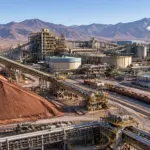
Lithium brine evaporation ponds beside processing infrastructure in a high-altitude basin.

By Penny Langford
Chinese battery-grade lithium carbonate prices have retreated toward 130,000–143,000 yuan per tonne after a major revision to reported inventories changed the market’s view of available supply. The adjustment, which lifted estimated stocks from about 78,800 tonnes to roughly 175,000 tonnes, has weakened the immediate shortage narrative.
But the inventory shock does not settle the lithium price forecast for 2026. Supply cuts, slower project restarts and a fast-growing utility-scale storage market are reshaping the balance underneath the headline price. The result is a market that may be better supplied than previously reported, but still vulnerable to sharp swings if idled capacity remains offline or demand continues to broaden beyond electric vehicles.
The central question for operators, battery makers and investors is whether the inventory revision represents previously hidden material that can quickly reach consumers: or stocks tied up in the wrong location, specification or ownership.
More Read

Inventory has changed the starting point
The revised inventory estimate is significant because lithium markets are highly sensitive to visible and near-visible stocks. A reported inventory pool of 78,800 tonnes suggested that supply was already tight. The revised estimate of approximately 175,000 tonnes points to a larger buffer and gives converters more room to delay purchases.

That helps explain why Chinese battery-grade carbonate prices moved back toward the 130,000–143,000 yuan-per-tonne range. Buyers no longer need to compete as aggressively for every available shipment, while producers face greater pressure to defend volumes and margins.
The revision should not be read as proof that all 175,000 tonnes are immediately available to the market. Inventory data can include material held by producers, converters, traders and downstream manufacturers. It can also include different grades, locations and forms of lithium products. A tonne stored at a converter is not necessarily equivalent to a tonne available for spot delivery to a battery producer.

That distinction matters because the market is now balancing two opposing signals: higher reported stocks on one side and a meaningful reduction in expected supply capacity on the other.
Supply discipline is becoming more important
Lithium producers have responded to weak prices by cutting output, slowing expansions and placing higher-cost operations on care and maintenance. In aggregate, those decisions have removed or delayed roughly 500,000 tonnes of capacity against earlier operating plans.
The figure is best understood as a measure of capacity at risk or removed from previous expectations. It should not automatically be treated as a 500,000-tonne reduction in lithium carbonate equivalent, nor as a direct market deficit. Conversion yields, concentrate grades, ramp-up schedules and the distinction between spodumene capacity and refined carbonate output all affect the final impact.
Even so, supply discipline changes the market’s response function. When prices fall, idled mines may not restart immediately. Producers need confidence that prices will cover mining, processing, freight, working capital and restart costs. Some operations also face permitting, environmental or technical constraints that make a return to production slower than a simple price signal would suggest.
Skillings’ earlier analysis of hard-rock lithium curtailments highlighted the gap between planned capacity and realized output. That gap is now central to the 2026 outlook. If supply returns quickly, the larger inventory estimate could cap prices. If restarts remain selective, the market may tighten again even after the data revision.

Crushing and concentration equipment shows how hard-rock supply must move through multiple processing stages before reaching the battery market.
Storage demand is the main swing factor
Electric vehicles remain the largest structural source of lithium demand, but utility-scale storage is becoming the most important marginal driver.
Stationary storage projects use lithium-ion batteries to manage renewable power, stabilize grids, shift electricity into peak-demand periods and support new loads such as data centers. Much of this demand is linked to lithium iron phosphate, or LFP, chemistry, which relies primarily on lithium carbonate rather than lithium hydroxide.
SMM reported that global energy-storage cell shipments reached approximately 486 gigawatt-hours in the first half of 2026, with second-quarter shipments rising 17.9% from the previous quarter. The same analysis projected China’s storage-cell output at about 94.47 GWh in September, while lithium carbonate demand linked to LFP cathode production was expected to rise from around 139,100 tonnes in August to 158,600 tonnes in November.
These figures illustrate why the lithium market cannot be assessed only through passenger EV sales. Even if vehicle demand grows more slowly, storage installations can keep cathode and cell production running at high rates.
The risk for the market is timing. Storage demand may be strong over the year but uneven month to month. Project approvals, grid connections, financing and battery procurement can create sudden changes in purchasing. That can produce sharp spot-price movements even when the annual supply-demand balance appears close to equilibrium.
The Ganfeng-Lithium Argentina deal adds a longer-term supply signal
Ganfeng Lithium’s $180 million strategic investment in Lithium Argentina reinforces the industry’s longer-term push to secure brine supply in South America.
The transaction is linked to the consolidation of the Pozuelos-Pastos Grandes, Pastos Grandes and Sal de la Puna projects in Argentina’s Salta province. Ganfeng is expected to hold a controlling interest in the combined venture, which has a targeted nameplate capacity of approximately 150,000 tonnes per year of lithium carbonate equivalent once fully developed.
For the 2026 price outlook, the deal matters more for expectations than immediate production. New Argentine brine capacity will not materially relieve near-term Chinese carbonate tightness unless development, construction and commissioning progress faster than expected. The transaction does, however, strengthen the argument that additional supply could limit sustained extreme prices later in the decade.
It also highlights the difference between financing supply and delivering supply. A well-funded project may be better positioned to advance, but permits, infrastructure, evaporation performance, direct lithium extraction technology and ramp-up quality will determine when production reaches the market.
Lithium price scenarios
Published analyst expectations span a wide range, from roughly 110,000 yuan per tonne to 250,000 yuan per tonne, depending on assumptions about inventory availability, supply restarts and storage demand.
The following framework treats the 130,000–143,000 yuan-per-tonne range as a conservative near-term reference rather than a full-year ceiling.
| Scenario | Battery-grade carbonate range | Supply assumption | Demand assumption | Market implication |
|---|---|---|---|---|
| Bear case | 110,000–130,000 yuan/t | Idled capacity restarts quickly; new brine and hard-rock projects ramp close to plan | EV growth softens and storage demand slows | Inventory remains comfortable and prices drift toward the lower end |
| Base case | 130,000–170,000 yuan/t | Supply cuts persist, but selected producers restart; inventory is available but unevenly distributed | EV demand remains steady and utility-scale storage continues expanding | Market stays volatile, with prices supported by supply discipline |
| Bull case | 180,000–250,000 yuan/t | The 500,000-tonne capacity reduction persists; permitting delays and project shortfalls continue | Storage demand accelerates and LFP production outpaces supply recovery | Stocks draw down and buyers compete for qualified carbonate |
Key balance indicators
| Indicator | Current signal | Why it matters |
|---|---|---|
| Reported lithium inventories | Revised from 78,800 to about 175,000 tonnes | Increases the apparent buffer but may overstate immediately deliverable supply |
| Supply capacity removed or delayed | Roughly 500,000 tonnes | Reduces the speed and scale of potential supply recovery |
| Chinese battery-grade carbonate reference | About 130,000–143,000 yuan/t | Indicates that the inventory revision has cooled spot-market urgency |
| September Chinese storage-cell output forecast | About 94.47 GWh | Shows the scale of stationary-storage demand entering the lithium chain |
| LFP-linked carbonate demand | About 139,100 tonnes in August, rising toward 158,600 tonnes in November | Demonstrates the importance of storage and LFP cathode production |
| Ganfeng-Lithium Argentina investment | $180 million | Strengthens medium-term brine development but has limited immediate supply impact |
This table provides a linkable framework for tracking the market as new inventory, production and storage data become available. The most important variable is not the size of announced capacity, but the amount of material that can be converted and delivered within the relevant month.

Hard-rock lithium economics depend on grade, recovery rates, processing availability and conversion costs.
What would move prices toward the bull case?
Prices would need several supply-side problems to occur at the same time. These could include prolonged outages at higher-cost hard-rock mines, delayed restarts in China, slower-than-expected brine expansions and additional permitting restrictions.
A sustained drawdown in inventories would be an important confirmation. So would tighter spot availability for battery-grade material, stronger LFP production and evidence that storage developers are accepting higher input costs to secure deliveries.
China’s permitting environment will also remain important. Skillings’ coverage of China’s lithium mine suspension risks showed how a single major operation can affect domestic supply expectations even when its share of global output is relatively modest. Multiple disruptions would have a larger effect because they would reduce the market’s ability to compensate with nearby supply.
What would push prices toward the bear case?
The bear case depends on the revised inventory data proving more actionable than the market initially assumed. If producers and converters can release material quickly, the additional stocks could absorb strong demand for several months.
A rapid return of idled Australian and Chinese operations would add further pressure. New brine projects in South America, Africa or China could also weigh on prices if they reach commercial output ahead of schedule.
Demand would need to disappoint as well. Slower EV sales, weaker LFP production or delayed utility-scale storage installations could leave the market with more material than buyers require. Under those conditions, the 110,000–130,000 yuan-per-tonne range becomes more plausible.
The 2026 outlook: lower inventory risk, higher supply sensitivity
The lithium market has not moved from shortage to surplus simply because inventory estimates were revised upward. Instead, the revision has changed the market’s starting point.
At around 175,000 tonnes, reported inventories provide a larger cushion than previously understood. But supply cuts of roughly 500,000 tonnes of capacity, uneven project restarts and strong utility-scale storage demand limit how comfortable that cushion may become.
The base case is therefore a volatile market centered broadly around 130,000–170,000 yuan per tonne, with the lower end supported by the inventory revision and the upper end supported by supply discipline and storage growth. The bull case remains possible if idled capacity stays offline while LFP demand accelerates. The bear case would require faster supply normalization and weaker-than-expected demand.
For decision-makers, the key indicators are clear: inventory quality and location, restart announcements, Chinese carbonate production, LFP cathode output, storage-cell shipments and the pace of new Argentine brine development. The lithium price forecast for 2026 will be determined by how quickly those signals converge: not by any single headline number.
LinkedIn snippet
Lithium carbonate prices have retreated toward 130,000–143,000 yuan per tonne after reported inventories were revised from 78,800 to roughly 175,000 tonnes. But supply cuts of about 500,000 tonnes of capacity and strong utility-scale storage demand are keeping the 2026 balance fragile. Our analysis sets out the 110,000–250,000 yuan scenario range and the indicators that could move prices between bear, base and bull cases.
X snippet
Lithium’s 2026 outlook now turns on three variables: revised inventories near 175,000 tonnes, roughly 500,000 tonnes of idled or delayed capacity, and rising utility-scale storage demand. Prices have eased toward 130,000–143,000 yuan/t, but the bull case still reaches 250,000 yuan/t if supply discipline holds.
Sources and further reading
- SMM: Lithium carbonate supply recovered, but the supply-demand deficit persists
- Lithium Argentina: PPG joint venture and $180 million strategic investment
- S&P Global: Energy storage to drive lithium demand growth
- Benchmark Mineral Intelligence: Lithium market and Jianxiawo supply risks
- Skillings: Critical minerals refining concentration
- Skillings Mining Intelligence