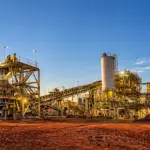
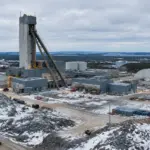
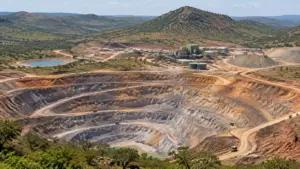
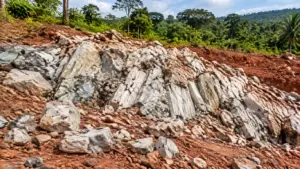
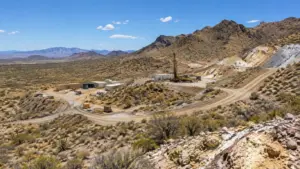
Atacama mining terrain illustrates the infrastructure and execution conditions relevant to the Ternera development option.

By Penny Langford
Tesoro Gold has added a defined development option to Chile’s gold pipeline with a maiden Ore Reserve at the Ternera deposit, shifting the El Zorro project from resource definition toward feasibility, permitting and execution planning.
According to Tesoro’s ASX release, Ternera contains 42.8 million tonnes at 0.93 grams per tonne gold for 1.28 million ounces. The reserve is contained within a single open pit and underpins a mine plan based on a proposed 3.0 million tonnes per annum processing operation.
The significance of the announcement is not only the size of the reserve. The milestone gives Tesoro a defined technical base from which to advance the next stages of the project: completing the Definitive Feasibility Study, finalising environmental documentation and progressing Chilean approvals.
The reserve does not constitute construction approval or a final investment decision. Those steps remain dependent on the company’s study work, permitting process, financing and execution planning.

Ternera moves into the development sequence
The reserve is located within Tesoro’s El Zorro Gold Project in Chile’s Atacama Region, an established mining district with access to roads, power and water infrastructure, according to company disclosures.
Tesoro’s ASX release said the reserve supports a project life of more than 13 years at the planned 3.0Mtpa processing rate. Mine scheduling also indicated an average processed grade of 1.16 g/t gold over the first 10 years.

Those figures provide a framework for the next stage of engineering. The company must now convert the reserve-based concept into a detailed project design covering mine sequencing, processing plant configuration, waste and water management, power supply, construction logistics and operating requirements.
Ternera development milestones
| Development stage | Current position or target |
|---|---|
| Maiden Ore Reserve | 42.8Mt at 0.93 g/t gold for 1.28Moz |
| Mining concept | Single conventional open pit |
| Planned processing rate | 3.0Mtpa |
| Mine-plan horizon | More than 13 years |
| Definitive Feasibility Study | Targeted for completion during 2026 |
| Environmental and sectorial applications | About 75% complete, according to the ASX release |
| EIA, sectorial permits and closure plan | Targeted for submission in the first quarter of 2027 |
The table highlights the distinction between geological definition and project delivery. Ternera has reached a reserve milestone, but the critical path now runs through technical verification and regulatory review.
Permitting becomes the next critical path
For a project at this stage, permitting is likely to be as important to the schedule as the mine plan itself.
Tesoro said environmental and sectorial permit applications were approximately 75% complete. The company is targeting submission of the full Environmental Impact Assessment, sectorial permits and closure plan in the first quarter of 2027.
The EIA process will establish the environmental baseline and assess the potential impacts of construction and operations. It will also require Tesoro to demonstrate how the proposed mine would manage water, waste rock, tailings, land disturbance, biodiversity and closure obligations.
Chile’s approval structure also involves sector-specific permits beyond the main environmental review. These can cover areas such as water, infrastructure, waste handling, power and mine operations. The timing and sequencing of those approvals will influence when construction can begin and how early procurement decisions can be made.
Tesoro began preparing environmental impact documentation for El Zorro with Chilean engineering firm Pares & Alvarez, according to earlier company disclosures. The work has included baseline studies intended to support the project’s environmental submission.
The company’s permitting timetable therefore places the current focus on completing technical documentation and ensuring that the mine design is sufficiently advanced to withstand regulatory review. Any material changes to the pit, process plant, water system or waste facilities after submission could affect the approval timetable.
Skillings has previously examined the growing importance of tailings, permits and ESG disclosure in mining, issues that are increasingly integrated into project development rather than treated as separate compliance workstreams.

Technical planning and environmental documentation are central to the next phase of project execution.
Definitive Feasibility Study must test the concept
Tesoro is targeting completion of a Definitive Feasibility Study during 2026. The study is expected to translate the reserve and mine schedule into a more detailed assessment of capital requirements, operating costs, plant design, construction sequencing and project risks.
The 3.0Mtpa concept gives the study a defined throughput basis. It also creates several execution questions for the engineering team.
A processing plant designed for 3.0Mtpa must be matched with sufficient mining capacity, stockpile management, crushing and grinding equipment, water supply, power infrastructure and maintenance facilities. The mine plan must also account for the relationship between waste movement and mill feed, particularly during the early years of operation.
The single-open-pit design may simplify some aspects of project planning compared with a multi-deposit development. It can allow infrastructure and mining equipment to be concentrated around one operating centre. However, the design still needs to be tested against pit geotechnical conditions, haulage distances, waste placement requirements and water management.
The reserve comprises 2.8Mt of Proved Reserves at 1.05 g/t gold for 93,000 ounces and 40.1Mt of Probable Reserves at 0.92 g/t gold for 1.19Moz, according to the ASX release. No Inferred Mineral Resources were included in the reserve.
That composition matters for the feasibility process because the reserve is based on Measured and Indicated material rather than relying on Inferred resources. It gives Tesoro a more defined base for mine scheduling and infrastructure design, while leaving additional resource upside outside the current reserve plan.
Execution will determine how much of the option is realised
The reserve establishes a development option, but the project’s value will increasingly depend on execution milestones.
The first is the completion of the Definitive Feasibility Study. Investors and potential project partners will look for evidence that the 3.0Mtpa concept can be built and operated within a realistic capital and schedule framework.
The second is the quality of the environmental submission. A complete EIA package can reduce uncertainty during the review process, while unresolved baseline data or design changes can extend the timetable.
The third is infrastructure readiness. Tesoro’s disclosures have pointed to the importance of grid power, water access, transport and other existing regional infrastructure. Those advantages may reduce the need for entirely new systems, but the company must still confirm capacity, connection arrangements and construction requirements.

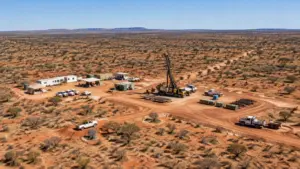
Arid terrain and infrastructure access will be important considerations as Ternera advances toward permitting and construction studies.
The fourth is financing. A reserve and completed feasibility study can improve the basis for financing discussions, but funding will depend on the final capital estimate, gold-price assumptions, permitting status and broader market conditions.
Tesoro’s reserve pit was selected using a US$3,000-per-ounce gold price assumption, according to the release. That assumption is a planning input rather than a guarantee of future prices. The completed feasibility study will need to show how the project performs under different cost, recovery, schedule and gold-price conditions.
A new option in Chile’s gold pipeline
Ternera does not yet represent a producing mine. It is a reserve-backed development opportunity that has entered a more demanding stage of technical and regulatory scrutiny.
The immediate sequence is clear: complete the Definitive Feasibility Study, finish environmental and sectorial permit documentation, submit the EIA and closure plan in the targeted first-quarter 2027 window, and continue advancing the mine and processing design.
For Chile’s gold development pipeline, the announcement adds a project with a defined open-pit reserve, a proposed 3.0Mtpa operating concept and a stated path toward permitting. For Tesoro, the next test will be whether the company can maintain momentum from resource and reserve definition through approvals, financing and construction readiness.
The Ternera reserve therefore changes the discussion around El Zorro. The project is no longer only an exploration and resource-growth story. It is now being assessed against the practical requirements of building and permitting a mine.
Source: Tesoro Gold ASX disclosures, including the company’s ASX issuer page; supporting coverage from Small Caps.