Brazil’s new policy improves the financing toolkit for domestic processing, but project bankability will depend on qualification rules, infrastructure and credible offtake structures.

By Penny Langford
Brazil’s new critical-minerals law changes the financing conversation more than it changes the immediate supply of capital.
Law 15.506/2026 authorizes the federal government to participate in the Fundo Garantidor da Atividade Mineral, or FGAM, with up to R$2 billion. It also establishes a federal tax-credit programme worth up to R$5 billion between 2030 and 2034, capped at 20% of eligible industrial expenditure.
For developers of lithium, nickel, graphite, rare earths, niobium and other critical-minerals projects, the distinction is important. The guarantee fund can address a financing constraint at financial close. The tax credit is a future operating and investment benefit that depends on eligible spending, project qualification and the company’s ability to use the credit.
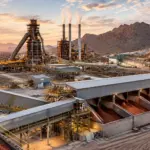
That makes the policy potentially material for bankability, but not automatically transformational. The critical question is whether the instruments convert into signed debt, equity commitments and construction activity rather than remaining headline allocations.

What the R$2 billion guarantee changes
Mining and processing projects often struggle to secure debt before revenue begins. The problem is particularly acute for domestic beneficiation facilities, which require large investments in power systems, water treatment, separation circuits, chemical processing and logistics before producing a marketable product.
A guarantee can reduce the amount of risk that commercial lenders must carry. In practical terms, it may:

- improve the debt-to-equity ratio available to a qualifying project;
- reduce the collateral gap for companies without an operating balance sheet;
- extend loan tenor for construction and ramp-up periods;
- lower risk premiums where technical and market risks are otherwise acceptable; and
- help lenders recognize contracted offtake or government-priority status in their credit analysis.
The Câmara dos Deputados described the FGAM as a mechanism for supporting projects linked to the production, processing and transformation of critical and strategic minerals. The Ministry of Finance said the fund will be private in nature and open to other public and private participants.
That structure matters. The R$2 billion is a ceiling for the Union’s participation as a fund quota-holder, not a R$2 billion pool of direct project loans. The fund’s eventual capacity, governance, guarantee coverage and risk-sharing rules will determine how much private credit it can mobilize.
The Union’s contribution will also depend on an act by the finance minister, as well as budgetary and financial availability. Until those steps are completed, developers should treat the fund as an important prospective credit enhancement rather than committed project finance.
Guarantees can reduce financing friction, but they cannot substitute for an economic project or stable permitting.
That is the central underwriting principle for the new policy.
The tax-credit programme changes timing, not just returns
The second instrument is the Programa Federal de Beneficiamento e Transformação de Minerais Críticos e Estratégicos, or PFMCE.
Under the framework described by the Ministry of Finance and reported by Valor, eligible projects may receive tax credits of up to 20% of qualifying industrial expenditure. The programme is scheduled to operate from 2030 through 2034, with an annual ceiling of R$1 billion, producing a potential five-year total of R$5 billion.
For lenders, the timing creates both value and uncertainty.
A tax credit received after eligible spending can improve project economics, but it does not necessarily fund early construction. Developers may still need equity, equipment finance, export credit or bridge debt to build the plant before the benefit is realized.
The programme is also expected to use a competitive process and prioritize projects according to the value added in Brazil. That means a mine exporting concentrate may be treated differently from a facility producing separated rare-earth oxides, battery-grade chemicals or advanced materials.
A bank underwriting a project should therefore separate three questions:
- Does the project qualify for the programme?
- When will the tax credit be recognized and monetized?
- Will the project generate enough taxable activity to use the benefit?
A company with limited tax liability may need a structure that allows the credit to be transferred, monetized or otherwise recognized within the rules. Until the implementing regulations are published, those mechanics remain a material diligence item.
Brazil’s critical-minerals financing stack
| Incentive or policy tool | Timing | Likely beneficiary | Financing effect | Main risk |
|---|---|---|---|---|
| FGAM; up to R$2 billion from the Union | Following fund creation, capitalization and operating rules | Priority mining, processing and transformation projects | Can reduce lender exposure, improve collateral coverage and support longer-tenor debt | Fund governance, coverage ratios and eligible-project rules are not yet fully tested |
| PFMCE tax credits; up to 20% of eligible industrial expenditure | 2030–2034; annual ceiling of R$1 billion | Brazilian beneficiation, transformation and urban-mining projects | Improves after-tax returns and may support debt-service capacity | Timing, qualification, budget availability and tax-credit utilization |
| CIMCE project prioritization | As the council establishes the national plan and criteria | Projects aligned with the critical-minerals list and domestic value addition | May provide a clearer route into public financing and incentives | Mineral list and selection criteria may change over time |
| Mandatory contributions to research and the FGAM | During the initial regulatory period | Sector-wide research and eligible financing ecosystem | Creates a recurring funding source for innovation and risk mitigation | Additional operating cost for producers before benefits are visible |
| BNDES and Fundo Clima financing | Subject to programme rules and project eligibility | Processing, transformation and urban-mining projects | Can complement guarantees and tax credits with direct lending | Availability, pricing and competition for public funding |
The broader financing ecosystem is already developing. Agência Gov has reported on a separate BNDES and Finep funding effort for strategic-minerals transformation. That makes coordination important: a project may need to combine commercial debt, public credit, guarantees, tax benefits and offtake support rather than rely on one instrument.
Three bottlenecks that will decide bankability
1. The mineral list and Cimce criteria
The Conselho Nacional para Industrialização de Minerais Críticos e Estratégicos, or CIMCE, will define and update the list of critical and strategic minerals. It will also indicate priority projects and establish guidance for access to incentives.
That creates a policy gateway between geological potential and financial eligibility.
A deposit may be commercially attractive but still fail to qualify if its mineral is outside the applicable list, if the project does not meet domestic-processing requirements or if its value-addition profile is considered insufficient. Conversely, a project with modest scale may gain an advantage if it addresses a strategic supply-chain gap and offers credible Brazilian industrial participation.
Developers should expect lenders to require a documented qualification pathway before assigning full value to the incentives. That documentation may include the mineral classification, processing stage, local-content assumptions, technology provider, emissions profile and projected contribution to domestic supply.
The more frequently the list or criteria change, the greater the policy discount applied in project models.
2. Power, water and logistics
Beneficiation is not simply mining with an additional building. It creates a second infrastructure problem.
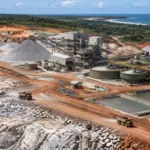
Processing facilities need reliable electricity, process water, reagents, waste-management systems and transport links. A remote mine may have a strong resource but lack the grid capacity, water security or road and rail access needed for domestic transformation.

Power, water and logistics can determine whether domestic beneficiation is financeable at commercial scale.
This is particularly important for projects that plan to move from concentrate into chemical or separated products. The capital cost rises, the operating process becomes more complex and the consequences of utility interruptions become more severe.
For lenders, infrastructure diligence should sit alongside the orebody study. A bankable feasibility study should identify:
- contracted power capacity and tariff exposure;
- water source, licensing and recycling requirements;
- transport routes from mine to plant and plant to port;
- reagent supply and storage;
- waste and residue-management capacity; and
- contingency plans for disruptions.
A guarantee may reduce credit risk, but it cannot resolve a transmission bottleneck or make an inadequate water source reliable.
3. Traceability and export controls
Domestic processing will only create value if buyers trust the product and the chain of custody.
The new policy includes a stronger strategic role for the government in determining which minerals and projects matter to national industrial and geopolitical objectives. Valor’s reporting also highlighted uncertainty around criteria for reviewing sensitive transactions.
For project finance, this means traceability is not only an ESG function. It is part of revenue security.
Processors may need to demonstrate:
- the origin and composition of feedstock;
- ownership and control of mineral rights;
- environmental and labor compliance;
- carbon intensity and production methods;
- destination of intermediate and final products; and
- compliance with potential export or strategic-transaction controls.
A project that cannot prove product origin or secure permission to export its output may face weaker offtake terms, higher insurance costs and more conservative debt sizing. The same applies to foreign investors whose ownership, technology agreements or long-term contracts could trigger additional scrutiny.
Base, bull and bear cases for capital formation
The policy headline combines a guarantee ceiling and a future tax-credit envelope. Those are not equivalent to direct public spending. The real test is how much private capital is committed to eligible projects.
| Scenario | Policy execution | Capital-formation outcome | What decision-makers should watch |
|---|---|---|---|
| Base case | FGAM is capitalized gradually; CIMCE criteria become usable but remain selective; tax credits support a limited group of projects | Partial conversion of headline commitments into feasibility work, equity raises and first construction decisions | Published regulations, first guarantees, competitive tax-credit rules and signed offtake agreements |
| Bull case | Clear mineral list, fast project selection, reliable infrastructure partnerships and coordinated BNDES support | The policy crowds in private debt and strategic equity, with multiple processing projects reaching final investment decision | Guarantee leverage, power contracts, tax-credit monetization and commercial product qualification |
| Bear case | Delayed regulation, narrow eligibility, uncertain export controls and unresolved permitting or utilities | The R$2 billion and R$5 billion figures remain largely headline commitments, while projects continue to depend on sponsors and foreign buyers | Delayed fund capitalization, changing criteria, weak offtake and rising construction costs |
The base case is not failure. A staged programme that moves projects from exploration into bankable feasibility studies could still create meaningful industrial capacity. But investors should avoid treating the maximum policy envelope as proof that R$7 billion will flow directly into plant construction.
The first evidence of success will be less dramatic: published eligibility rules, a functioning CIMCE process, a funded FGAM, completed power and water agreements, and financing packages that survive lender due diligence.
What project sponsors should do now
Sponsors considering Brazil’s critical-minerals incentives should build their financing strategy around qualification and execution rather than the headline amounts.
The immediate priorities are to map the project against the likely CIMCE criteria, separate eligible processing expenditure from mine-development costs, model the timing of tax-credit recognition and secure independent evidence for power, water and logistics assumptions.
They should also prepare traceability systems early. Product certification, low-carbon documentation and chain-of-custody records may influence both eligibility and offtake negotiations.
Brazil has created a more credible bridge between mineral policy and industrial finance. Whether that bridge carries significant traffic will depend on the details beneath the law: who qualifies, when guarantees become available, how tax credits are monetized and whether domestic processing can compete on cost and reliability.
For operators and investors, the R$2 billion is best understood as a potential risk-sharing mechanism. The R$5 billion tax-credit programme is a possible return enhancer. Neither one removes the need for a competitive project, stable permits, dependable infrastructure and buyers willing to pay for processed Brazilian minerals.
Shareable snippets
LinkedIn:
Brazil’s critical-minerals law creates a potentially important financing bridge: up to R$2 billion of federal participation in a guarantee fund and R$5 billion in tax credits for processing between 2030 and 2034. But guarantees can reduce financing friction; they cannot replace stable permitting, infrastructure or a viable offtake strategy.
X:
Brazil’s R$2B critical-minerals guarantee fund could improve bankability for processing projects. The harder test is execution: Cimce eligibility, power and water, logistics, traceability and tax-credit timing will determine whether headline commitments become real capital formation.
Sources and related analysis
- Law 15.506/2026, Planalto
- Câmara dos Deputados: New law creates Brazil’s critical-minerals policy
- Ministry of Finance: Legal framework aligned with Brazil’s ecological transformation
- Valor: Brazil’s new policy and industrialization council
- Skillings: Brazil’s critical-minerals law and foreign deals
- Skillings: Zambia’s restrictions on raw copper exports