By Charles Pitts

Global Atomic Corp. has secured conditional approval for up to US$414.2 million in U.S. government-backed debt financing to develop its Dasa uranium project in Niger, reviving a funding process delayed by the country’s political upheaval and changing relationship with Western mining companies.
The loan was approved by the board of the U.S. International Development Finance Corporation, or DFC. It is not yet a disbursed loan or a completed project-finance package. Global Atomic and the Nigerien government must still satisfy several material conditions before the facility can close.
The decision nevertheless marks a significant step for the Toronto-listed uranium developer and a strategic move by Washington to support African uranium supply outside the direct influence of Russia and China.
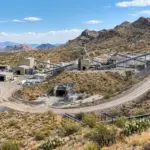
The Dasa project is located in Niger’s Agadez region, approximately 770 kilometres northeast of the capital, Niamey. Global Atomic expects commercial production to begin in the second half of 2028, subject to financing and construction progress.
Key point: The DFC approval is a financing milestone, but the project’s next test is execution, securing an export route, preserving mining rights and completing the government agreements required for debt repayment.
What the DFC financing includes
The approved facility is approximately 40% larger than the US$295 million financing package previously proposed by the DFC in 2024. The increase reflects higher project costs and the extended review period following Niger’s 2023 military takeover.

| Project-finance item | Current position |
|---|---|
| DFC facility | Up to US$414.2 million |
| Approximate Canadian-dollar value | C$580 million |
| Previous DFC proposal | US$295 million |
| Dasa ownership | 80% Global Atomic, 20% Niger government |
| Probable reserve | 73 million lb. U₃O₈ |
| Planned mine life | 23 years |
| Expected commercial production | Second half of 2028 |
| Current offtake coverage | About 11% of the mine plan |
The facility is expected to include a term loan and a cost-overrun component. Final terms will also include common share purchase warrants issued to the DFC, creating a potential source of dilution for existing shareholders.
Global Atomic said in a company financing announcement that no assurance could be given that the facility would close on a particular timetable, or at all.
The conditions include:
- Identifying a viable route to export uranium oxide, commonly known as yellowcake or U₃O₈, from the project site.
- Extending the Dasa mining convention and mining permit so they match the tenor of the DFC facility.
- Securing satisfactory government assurances for loan repayments.
- Negotiating a direct agreement between Global Atomic, the DFC and the government of Niger.
- Completing definitive loan documentation and satisfying all closing conditions.
That list highlights why the approval is important but not conclusive. The DFC has signalled that it is prepared to support Dasa. It has not removed the logistical, legal and political risks attached to operating a uranium mine in a landlocked country governed by a military administration.
Dasa’s project economics
Dasa is considered one of Africa’s highest-grade undeveloped uranium deposits. According to the Northern Miner’s report, a 2024 feasibility study outlined probable reserves of 73 million lb. of U₃O₈ contained in 8 million tonnes grading 4,113 parts per million uranium oxide.
The study forecasts total production of approximately 68.1 million lb. of U₃O₈ over 23 years, based on processing throughput of 1,000 tonnes per day.
At a base-case uranium price of US$75 per pound, the feasibility study estimated:
- Post-tax net present value of approximately US$917 million, discounted at 8%.
- Internal rate of return of 57%.
- Initial capital costs of approximately US$208 million.
- Payback of approximately 2.2 years.
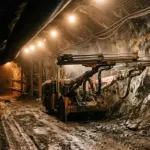
Global Atomic has already completed underground development down to the ore zone and has signed offtake agreements covering roughly 1.3 million lb. of uranium annually, or about 11% of the current mine plan.

Those figures explain the project’s appeal to lenders and strategic investors. Dasa combines high grades, existing underground development and a projected production profile that could make it a meaningful new source of uranium.
They also remain feasibility-study estimates rather than operating results. The project still requires construction, financing closure, transport arrangements, security planning and a stable regulatory framework.
Why Niger matters to the uranium market
Niger has been a significant uranium producer for decades, although production has fallen sharply since the 2023 coup and the subsequent deterioration in relations with France and other Western partners.
The country accounted for about 1.6% of global uranium mine production in 2024, according to the World Nuclear Association’s Niger profile. Its historic uranium-export route through Benin has been unavailable since the Niger-Benin border closed in July 2023.
That makes the DFC’s export-route condition especially important. A mine can be fully permitted and financed, but it cannot generate revenue unless yellowcake can be moved safely and consistently from the site to international conversion and fuel markets.
Niger’s uranium sector has also become a test case for resource nationalism. The military government has withdrawn or challenged several foreign mining rights, while the state has nationalized the Somair uranium operation previously controlled by France’s Orano.
The World Nuclear Association reports that Orano lost operational control of Somair in 2024 and that the Nigerien government nationalized the mine in 2025. The country has also explored new relationships with Russian and Chinese-linked entities.
Against that backdrop, Dasa represents a different model: a Nigerien state partner retaining a 20% interest while a Canadian developer works with a U.S. government financing agency. For Washington, the project could provide a new source of uranium linked to Western capital and offtake networks. For Niger, it offers the prospect of new mine investment and government revenue without returning to the older French-dominated structure.
A market looking for new uranium supply
The financing arrives as the uranium market is moving from post-Fukushima oversupply toward a supply-development race.
The Northern Miner reported that global uranium exploration and development spending exceeded US$1.78 billion in 2023 and 2024, up approximately 46% from the preceding two years. Production also increased by about 20% over the same period, reaching 61,924 tonnes of uranium in 2024.
That growth has not eliminated the market’s structural concerns. Benchmark Mineral Intelligence expects a marginal deficit in 2026 and forecasts the shortfall could reach 18% of demand by 2027.
The challenge is timing. New uranium mines commonly require a decade or more to move from discovery through permitting and construction. Existing production increases, restarts and expansions can help in the near term, but they may not match demand from reactor construction, life extensions, data centres and emerging small modular reactor projects.
The OECD Nuclear Energy Agency and International Atomic Energy Agency’s uranium outlook has emphasized that the world has substantial uranium resources. The constraint is the industry’s ability to finance, permit and build mines quickly enough.
Dasa is therefore strategically relevant even before production begins. It is one of a relatively small number of advanced greenfield projects that could add new primary supply during a period of rising contracting activity.

The shareholder takeaway
Global Atomic shares rose as much as 45% following the DFC announcement before settling at approximately C$0.62, according to the Northern Miner. The company’s market capitalization was reported at about C$301.5 million, with the stock trading between C$0.44 and C$1.03 over the previous 12 months.
The market reaction reflects a straightforward repricing of financing risk. Before the announcement, Dasa faced a large funding gap and uncertainty over whether a U.S. development bank would remain involved after the Niger coup. Conditional DFC approval reduces that uncertainty, but it does not eliminate it.
The immediate shareholder positives are clear:
- A cornerstone lender has re-engaged. The DFC’s approval provides external validation of Dasa’s strategic importance and potential project economics.
- The financing is larger than the previous proposal. That may improve the company’s ability to fund construction if the remaining conditions are met.
- The project is advanced. Underground development has reached the ore zone, and offtake agreements are already in place.
- Uranium-market conditions are supportive. Utilities and governments are seeking new supply as nuclear demand expands.
The risks are equally material:
- The loan remains conditional. No funds have been disbursed.
- Export logistics are unresolved. Niger is landlocked and its traditional Benin route remains disrupted.
- Political risk is not theoretical. Niger has revoked permits, nationalized uranium assets and revised its approach to foreign mining companies.
- Shareholder dilution is possible. DFC warrants will form part of the final financing terms.
- Equity funding is still required. Global Atomic has indicated that a remaining equity requirement must be spent before the DFC term loan becomes available.
For Global Atomic, the practical market takeaway is that the company has moved from a financing-risk story to a financing-execution story. That is a meaningful improvement, but the valuation will ultimately depend on whether the company can convert board approval into signed documents, a secure transport corridor and construction funding.
The broader uranium developer peer group faces a similar divide. Companies with advanced, high-grade projects and credible financing partners are likely to attract the most attention. Projects in politically stable jurisdictions may command a premium, while developers operating in high-risk regions may offer greater resource potential but face higher discounts for permitting, security and capital access.
A Cramer-style shorthand would call Dasa a major catalyst. The more useful investor conclusion is narrower: the DFC approval materially improves Global Atomic’s funding outlook, but the project remains exposed to Niger’s political and logistical risks until the loan closes and uranium can move to market.

What to watch next
The next milestones are more important than the headline loan amount.
Investors, operators and policymakers will be watching for:
- A formally agreed export corridor for Dasa’s yellowcake.
- Extension of the mining convention and permit.
- A direct agreement with the Nigerien government.
- Final DFC loan documentation.
- Details of the warrant package and any additional equity financing.
- Construction spending and the path toward second-half 2028 commissioning.
- Evidence that Niger’s government continues to support Dasa while maintaining its broader resource-nationalist policies.
If those conditions are resolved, Dasa could become one of the most closely watched new uranium mines in Africa. Until then, the US$414.2 million facility should be viewed as a conditional bridge between strategic intent and a producing operation, not as completed project finance.