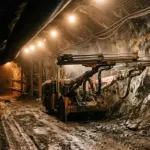
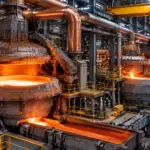
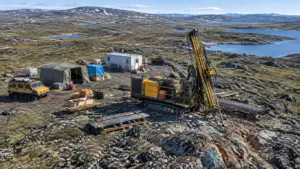
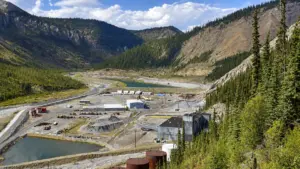
Illustrative rare-earth leach circuit representing the processing challenge behind scandium recovery.

By Sonny Rollins
Mount Ridley Mines’ latest metallurgical result has moved scandium recovery closer to the center of the critical-minerals conversation. The company’s proprietary Selectro leach process recovered 91.8% of scandium from unbeneficiated ore at its Grass Patch project in Western Australia, up from 80% in earlier testing, while using half the previous reagent dose.
The result matters because scandium is both strategically important and commercially difficult. The market remains tiny, production is largely a by-product of other mining operations, and China has imposed export controls on scandium metal, alloys, oxides and compounds. A process that can recover scandium efficiently from a large, low-grade resource could help address those constraints, but the technical result remains an early-stage milestone rather than a completed mine plan.
A stronger recovery result with less reagent
Mount Ridley’s third Selectro test achieved the program’s highest recoveries under relatively mild conditions. The test was conducted on unbeneficiated Grass Patch ore at low temperature and atmospheric pressure, with maximum recoveries reached in less than four hours.

| Metric | Earlier result | Selectro Test 3 | Change |
|---|---|---|---|
| Scandium recovery | 80.0% | 91.8% | +11.8 percentage points |
| Heavy rare earth recovery | Not disclosed at the same level | 84% | High recovery across HREEs |
| Light rare earth recovery | Not disclosed at the same level | 77% | Broadens product potential |
| Reagent dose | 100% baseline | 50% of prior dose | 50% reduction |
| Operating conditions | Leach testing | Atmospheric pressure, low temperature | Lower process intensity |
| Time to maximum recovery | Not disclosed | Less than four hours | Faster extraction |
The company says Selectro is designed to recover scandium, heavy rare earths and gallium through a single hydrometallurgical circuit. That multi-element approach is important because scandium grades are generally low, and a flowsheet that produces more than one critical-mineral stream may improve project economics.

The result was reported through a research note commissioned and paid for by Mount Ridley. That disclosure does not invalidate the testwork, but it is relevant when assessing how the result should be weighed. Independent validation, larger-scale testing, impurity management and downstream product specifications remain necessary steps.
Grass Patch provides scale, but grade is only part of the equation
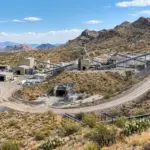
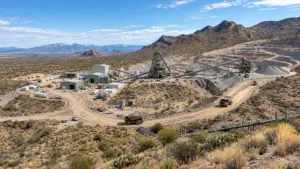
Mount Ridley’s Grass Patch project holds an inferred scandium resource of 946 million tonnes at 50.1 parts per million, containing approximately 47,357 tonnes of scandium. The company describes it as the world’s largest publicly reported scandium JORC resource.
The project also includes a 122.5 million-tonne heavy rare earth resource grading 889 parts per million TREO. Its location, about 25 kilometres from the port of Esperance, could offer logistical advantages if a viable processing route is established.
Large tonnage does not automatically translate into economic production. The central questions are whether scandium can be selectively recovered at commercial scale, how the process handles impurities, what proportion of the resource can be converted from inferred to higher-confidence categories, and whether the resulting products meet the specifications required by alloy and fuel-cell customers.
Those questions are particularly important for low-grade deposits. A high recovery rate can be offset by mining, comminution, reagent, waste-management and separation costs. Conversely, the combination of high recovery, lower reagent consumption and co-product recovery could improve the potential operating profile.
Skillings has tracked the wider issue in its analysis of critical-minerals processing bottlenecks and rare-earth supply-chain risk.

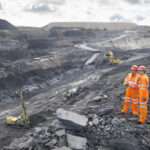
Illustrative aircore drilling scene representing the next phase of resource definition across Australian critical-minerals projects.
Why scandium supply is attracting policy attention
The scandium market is small, but its strategic applications are expanding. The U.S. Geological Survey estimated global scandium oxide consumption at about 60 tonnes in 2025, compared with production of roughly 80 tonnes and capacity above 90 tonnes a year.
The main uses include aerospace alloys and solid oxide fuel cells. Scandium can improve the strength and weldability of aluminium alloys, while scandium-stabilised ceramics are used in some solid oxide fuel-cell technologies.
Australian demand estimates point to a much larger possible market. NSW Resources has cited global demand of approximately 30–40 tonnes in 2024, with forecasts of 300 tonnes by 2030 and 600 tonnes by 2035. Those projections depend on adoption in aerospace, defence, fuel cells and other advanced applications, so they should be treated as scenarios rather than established demand.
Government support is also becoming more visible. The U.S. Department of War’s Office of Strategic Capital granted Sunrise Energy Metals a US$400 million loan for its Syerston project in New South Wales. Syerston is expected to be one of the key Western projects seeking to build an integrated scandium supply chain.
The policy backdrop is reinforced by China’s position in rare-earth processing. The International Energy Agency says demand for magnet rare earths has roughly doubled since 2015. China accounts for about 91% of refined output and approximately 94% of sintered permanent-magnet production, according to IEA-based data. Although scandium is not a principal magnet rare earth, the concentration demonstrates how limited non-China separation and processing capacity remains across the broader critical-minerals system.
A wider Australian and international project pipeline
Mount Ridley’s result is part of a wider series of exploration and processing developments.
West Cobar Metals’ Salazar project includes an inferred resource of 15 million tonnes at 153 parts per million scandium trioxide. The company is preparing a closer-spaced aircore program for the fourth quarter of 2026, targeting higher-grade zones and better defining mineralisation geometry. Existing intercepts include 13 metres at 318 parts per million scandium trioxide, including three metres at 649 parts per million.
The Salazar program will be important because the project’s current resource was based on broad drilling designed primarily to assess rare earths and titanium. More detailed drilling may clarify whether higher-grade scandium zones have sufficient continuity to influence mine and process design.
Other results show that non-China supply-chain development is advancing across different stages of the value chain:
- Barkly Rare Earths: Phase-one drilling produced significant rare-earth intersections in all 28 holes, a 28-for-28 result across a 23-kilometre strike length. About 80% of samples exceeded a 500ppm TREO threshold, and magnet rare earths represented roughly 31%–40% of TREO in 27 of 28 intercepts.
- Critica: The Jupiter project produced a repeat mixed rare earth carbonate grading approximately 57.9% TREO. Unlike a drill result, this figure refers to a processed product and therefore provides information about metallurgical performance rather than in-ground grade.
- AuKing Mining: Drilling at Tundulu in Malawi returned 91 metres at 1.51% TREO, including higher-grade internal zones. The result is notable for its thickness and shallow position, although continuity and a formal resource remain the next tests.

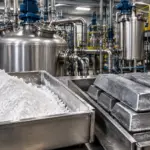
Illustrative separation facility showing the processing infrastructure required to move from ore to refined critical-mineral products.
Base, bull and bear scenarios
The most useful way to assess scandium’s outlook is through project and market milestones rather than a single price forecast. Scandium is traded through limited and often direct transactions, making transparent benchmark pricing difficult.
| Scenario | Key assumptions | Likely industry outcome | Main risks |
|---|---|---|---|
| Base case | Selectro continues to perform in larger batches; Grass Patch advances resource definition; demand grows gradually from aerospace, fuel cells and defence | More Western pilot-scale supply projects emerge, but scandium remains a small, specialist market | Scale-up, product qualification and customer concentration |
| Bull case | Selectro maintains high recovery with lower reagent use; co-products improve project economics; Syerston and other projects secure funding and offtake | New integrated supply chains reduce reliance on China and support demand approaching the higher forecasts | Faster supply growth may pressure prices or delay investment returns |
| Bear case | Laboratory results do not translate to continuous operation; demand forecasts fail to materialise; incumbent by-product supply remains adequate | Projects remain at demonstration or exploration stage, with limited new scandium production | Metallurgical variability, high capital costs and substitution by aluminium, titanium or carbon-fibre materials |
The immediate test for Mount Ridley is not whether 91.8% is a strong laboratory recovery. It is whether that performance can be reproduced across representative samples, maintained through a continuous circuit and converted into a consistent scandium product alongside rare earth and gallium streams.
What decision-makers should watch next
For operators and investors, five indicators will determine whether the recovery result becomes commercially meaningful:
- Independent validation of Selectro on third-party or bulk Grass Patch material.
- Mass balance and impurity data showing how much scandium reaches a saleable product.
- Reagent and energy consumption at larger scale, rather than only at bench scale.
- Resource confidence, including conversion of inferred material into indicated or measured categories.
- Customer qualification and offtake evidence for scandium oxide, alloy feedstock and rare-earth products.
The broader conclusion is measured but significant. Scandium’s market is too small to support many inefficient projects, yet its strategic value is rising as governments seek alternatives to concentrated critical-mineral supply chains. Mount Ridley’s 91.8% recovery result strengthens the case for continued work at Grass Patch, particularly because it combines higher recovery with a halved reagent dose.
It does not, on its own, establish commercial viability. But alongside the Syerston funding, West Cobar’s planned drilling and emerging rare-earth processing results from Barkly, Critica and AuKing, it shows that the non-China critical-minerals chain is moving from exploration headlines toward the more demanding questions of recovery, product quality and scale.
LinkedIn snippet
Mount Ridley Mines’ Selectro process lifted scandium recovery to 91.8% at Grass Patch while halving reagent use. The result comes as governments and developers seek alternatives to concentrated critical-minerals supply chains. Our analysis examines the resource scale, market constraints, peer developments and the milestones that will determine whether laboratory performance can become commercial production.
X snippet
Mount Ridley reports 91.8% scandium recovery from Grass Patch ore using half the prior reagent dose. With China controlling key rare-earth processing links, the next test is scale-up: repeatability, product quality, resource confidence and offtake. Analysis: what the result means for the non-China supply chain.

Illustrative mineral-processing laboratory scene showing the sample and assay work behind critical-minerals development.