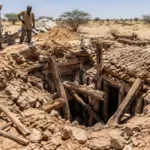
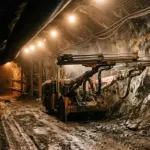
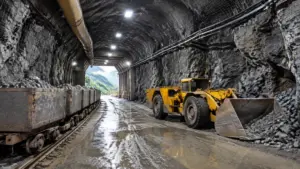
Strategic-minerals processing infrastructure in Brazil.

By Charles Pitts
Brazil has enacted a new framework for screening foreign investment and strategic transactions involving critical minerals, adding a review layer to deals that could affect national control over resources and supply chains.
Law No. 15,506, published in an extra edition of the Diário Oficial da União on Sept. 16, establishes Brazil’s National Policy for Critical and Strategic Minerals and creates a government council responsible for coordinating industrial policy, identifying priority projects and reviewing certain transactions.
The law comes as Brazil seeks to attract Western capital into rare earths, niobium, graphite and nickel while retaining greater influence over how those resources are developed, processed and supplied. It also follows a broader increase in government intervention across strategic-minerals markets, from Canada’s national-security reviews to Indonesia’s controls on nickel production.
The measure does not prohibit foreign ownership. Instead, it gives the government additional tools to examine changes of control, significant foreign stakes and some supply arrangements involving strategic mineral assets.

What Law No. 15,506 changes
The law creates the National Council for Industrialization of Critical and Strategic Minerals, known by its Portuguese acronym CIMCE. The council will be linked to the presidency and will coordinate policy covering exploration, mining, processing and industrial transformation.
According to the law and government statements, the framework is intended to:

- Expand domestic research and geological knowledge;
- Support extraction and processing of critical and strategic minerals;
- Encourage industrialization and value-added production in Brazil;
- Protect national sovereignty and economic security;
- Coordinate public financing and priority projects; and
- Review transactions that could affect strategic supply chains.
The screening system is expected to cover direct or indirect changes of control in companies holding rights to designated minerals. It may also apply to foreign acquisitions of relevant stakes, transactions that provide significant influence, access to sensitive geological information and certain international supply, offtake or export agreements.
The exact procedures and thresholds will depend in part on implementing rules. However, the law gives CIMCE and other government bodies a basis to impose conditions, require monitoring, refuse approval or begin reviews on their own initiative where a transaction is considered contrary to the public interest.
For mining companies and investors, the practical effect is that strategic-minerals deals may require more than standard merger, antitrust or mining-title approvals. Ownership, offtake, processing location and access to geological data could all become relevant to transaction planning.
Incentives accompany tighter scrutiny
Brazil has paired the new review regime with a significant package of financial incentives.
The law provides for up to R$7 billion in support for projects involving research, extraction, processing and transformation of critical and strategic minerals. The package is designed to cover both upstream development and downstream industrial capacity.
A central element is the Mineral Activity Guarantee Fund, or FGAM, which will receive a R$2 billion contribution from the federal government. The fund is intended to provide guarantees for qualifying projects and activities related to the production of strategic minerals.
The remaining support is expected to focus on processing and transformation, including tax incentives and financing mechanisms for projects that add value inside Brazil rather than exporting minerals in an unprocessed form.
Brazilian officials have framed the policy as an effort to use the country’s resource base to build domestic production chains. Agência Brasil reported that Mines and Energy Minister Alexandre Silveira said the policy would improve the country’s knowledge of its resources while preserving its authority over mineral production chains.
The government also said the Geological Service of Brazil would receive a substantial budget increase for geological research. That investment could improve the quality of resource estimates and help identify additional deposits in a country where large areas remain incompletely mapped.
| Measure | Amount or scope | Potential effect |
|---|---|---|
| Critical-minerals incentives | Up to R$7 billion | Supports research, extraction, processing and transformation |
| Mineral Activity Guarantee Fund | R$2 billion | Provides financing guarantees for priority projects |
| National policy | PNMCE | Coordinates critical and strategic minerals policy |
| Industrialization council | CIMCE | Identifies projects and coordinates reviews |
| Screening regime | Deal- and contract-specific | Adds sovereign-interest review to certain transactions |
Serra Verde highlights the timing
The law was enacted shortly after USA Rare Earth completed its acquisition of the Serra Verde rare earth project in Goiás.
The transaction was supported by a U.S.-backed financing and procurement structure valued at approximately US$1.55 billion, combining acquisition funding, development finance and long-term supply support. Serra Verde is one of Brazil’s most important rare earth projects and is expected to produce magnet-related rare earth elements used in electric vehicles, wind turbines, electronics and defense applications.
The acquisition was completed before Law No. 15,506 took effect. The new framework therefore does not unwind the transaction. It does, however, establish a regime that could apply to comparable future deals, follow-on investments or strategic supply contracts.
That distinction will be important for investors. Brazil is not closing the door to foreign capital, but it is signaling that access to strategic mineral resources may come with additional conditions relating to local processing, supply security, governance and information sharing.
Brazil has some of the world’s largest known resources of niobium and rare earths, as well as significant graphite and nickel potential. The country has also sought partnerships with the United States, Europe and other Western economies as governments attempt to reduce dependence on concentrated supply chains.

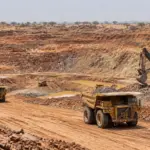
Mining and processing infrastructure associated with Brazil’s strategic-minerals base.
A wider shift toward resource sovereignty
Brazil’s move is part of a wider shift in how governments approach critical minerals. The policy tools differ by jurisdiction, but the direction is similar: strategic resources are increasingly being treated as matters of national security, industrial policy and geopolitical leverage.
Canada already subjects foreign investment in critical minerals to a broad national-security review under the Investment Canada Act. The review can apply to controlling acquisitions, minority investments and some greenfield projects, including transactions involving foreign state-owned or state-influenced investors.
Canada has also signaled that major acquisitions of important critical-minerals businesses will face a particularly high bar under its net-benefit review process. New pre-closing notification requirements for prescribed sectors, including critical minerals, are expected to add further compliance requirements.
In Europe, the European Commission’s investigation of MMG’s proposed US$500 million acquisition of Anglo American’s Brazilian nickel business illustrates another form of strategic scrutiny. The commission has warned that the deal could restrict competition in low-carbon ferronickel and increase supply risks for European stainless steel producers.
The European case is an antitrust review rather than a sovereignty screening process. But the underlying concern is similar: who controls a strategically important mineral supply chain, where material is sold and whether downstream industrial users can rely on continued access.
Indonesia has taken a more direct production approach. Its government has maintained a national nickel ore quota framework, with 2026 production limits officially placed in the range of 260 million to 270 million tonnes, compared with about 379 million tonnes in 2025. The system links quotas to domestic smelting capacity and gives priority to integrated mining and processing operations.
Together, these measures show how governments are using different levers to influence strategic-minerals markets:
| Jurisdiction | Policy tool | Primary concern |
|---|---|---|
| Brazil | Foreign investment and strategic-contract screening | Sovereignty, local industrialization and supply control |
| Canada | National-security and net-benefit review | Foreign influence over critical-minerals assets |
| European Union | Merger and antitrust review | Supply diversion and downstream competition |
| Indonesia | Production quotas and domestic processing rules | Resource control, smelter supply and market balance |
Implications for mining investors
Law No. 15,506 is likely to affect transaction timelines and due diligence for projects involving rare earths, niobium, nickel, graphite and other minerals designated as critical or strategic.
Investors may need to assess several issues earlier in the deal process:
- Control and influence: A transaction may attract scrutiny even if it does not involve a full acquisition, particularly where an investor receives significant governance or supply-chain rights.
- Domestic processing: Projects proposing local separation, refining or downstream manufacturing may receive stronger policy support than operations focused primarily on exporting raw or semi-processed material.
- Offtake structures: Long-term supply agreements could face review if they materially affect Brazil’s ability to direct production or preserve domestic supply.
- Geological information: Access to resource data and exploration information could become a regulatory consideration in sensitive projects.
- Financing eligibility: Access to the FGAM and other incentives will likely depend on whether a project is designated as a priority under the national policy.
- Regulatory timing: Companies may need to build additional approval periods and potential conditions into transaction documents and development schedules.
For Brazilian mining companies, the incentives could improve access to capital, particularly for projects that have struggled to secure financing for processing infrastructure. For foreign investors, the same framework introduces a more structured but potentially more demanding path into the market.
The balance between attracting capital and preserving control will determine how the law operates in practice. Brazil’s resource base gives it leverage, but developing mines and processing facilities requires long-term financing, technical expertise and reliable customers.
Law No. 15,506 reflects that tension. It seeks to make Brazil a more important producer and processor of critical minerals while ensuring that the government retains a stronger voice over ownership, supply and industrial development. For companies assessing Brazil’s next wave of rare earth, nickel, graphite or niobium opportunities, strategic alignment may now be as important as geology and project economics.
Sources: Brazilian Law No. 15,506; Agência Brasil report on the critical-minerals policy; Skillings coverage of rare earth supply-chain risk; Skillings coverage of resource sovereignty.