Illegal mining is often treated as a problem at the mine gate. Its consequences, however, can travel much further.

Gold, cobalt, tin and other minerals can pass through traders, aggregators, transporters, processors and exporters before reaching international markets. At each stage, weak controls can make it harder to establish where material originated, who produced it and whether it was extracted legally.
That creates a problem for more than governments. Miners operating within the law can face unfair competition. Buyers may struggle to verify the origin of their feedstock. Refiners and manufacturers face questions about the reliability of their supply-chain records. Investors must assess whether a project’s mineral flows expose it to legal, operational or reputational risk.
The challenge is not artisanal mining itself. Artisanal and small-scale mining supports livelihoods and contributes to mineral production in many countries. The risk arises when mining or trading takes place outside the law, when production is misreported, or when material from unlawful operations enters formal markets.
The distinction matters. Treating all artisanal and small-scale mining (ASM) as illegal obscures the role of legitimate miners and can undermine efforts to bring production into regulated supply chains.
More Read

The scale of illegal mineral production remains difficult to measure. Estimates of artisanal output are not equivalent to estimates of illegal output. Nor does evidence of smuggling in one region establish that all material from that region is illicit.

For mining companies and mineral buyers, the central question is therefore not simply how much illegal mining occurs. It is whether their supply-chain controls can identify, prevent and respond to material whose origin or legal status cannot be verified.
The Scale Problem: ASM Is Not a Proxy for Illegal Mining
Artisanal and small-scale mining accounts for a significant share of production in several mineral sectors. The World Gold Council has estimated that ASM represents around one-fifth of global annual gold production and supports millions of livelihoods. These figures describe the sector as a whole; they do not mean that one-fifth of gold production is illegal.
More Read

Research estimates of global artisanal gold output also vary because the sector includes formal, informal and illegal activity, while production data are incomplete in many jurisdictions. Such estimates are useful for understanding the sector’s economic importance, but they cannot be used as a direct measure of criminal supply.
This data gap has practical consequences. Governments may struggle to calculate royalties and taxes. Formal buyers may find it difficult to distinguish legally produced material from gold that has been smuggled or misrepresented. Researchers and regulators may also use different definitions of informal, unlicensed and illegal mining.
A credible assessment must keep those categories separate.
Illegal mining involves extraction that breaches applicable law, such as operating without required authorisation or mining in prohibited areas. Illegal trading can include the purchase, transport, export or sale of minerals in violation of legal requirements. Informal mining describes activity outside some formal systems, but the term does not by itself establish that a specific operation is criminal.
These categories can overlap. They are not interchangeable.
Ghana: Formalisation Depends on More Than Buying Gold
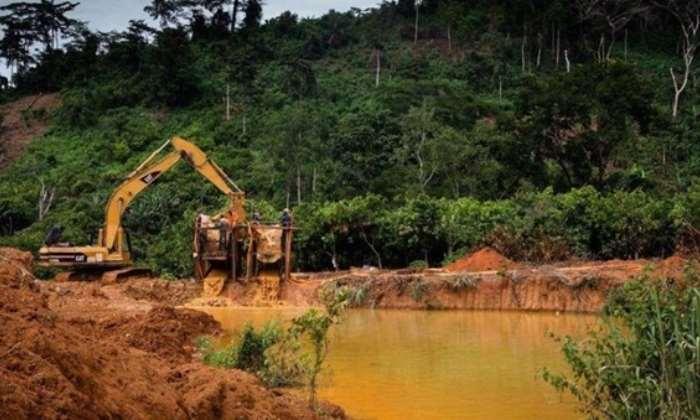
Ghana illustrates both the potential and the limits of formalising artisanal gold supply.
The Ghana Gold Board, known as GoldBod, was established to regulate the domestic gold trade and channel locally produced gold through authorised purchasing and export arrangements. The system is intended to improve oversight of the gold trade and strengthen the link between domestic production and foreign-exchange earnings.
GoldBod reported that it generated US$1.315 billion in foreign exchange in August 2026 under a new financing model. The board said the proceeds were split between sales to commercial banks and funds made available to the Bank of Ghana for reserve accumulation. These are official GoldBod figures, rather than an independent measure of how much gold was produced or how much illegal trade was displaced.
The export position also changed during the year. In September, Ghana’s central bank governor referred to a pause in GoldBod exports since August. But a subsequent clarification said shipments had resumed after a slowdown and had become less regular, rather than having stopped altogether.
That distinction is important. An interruption or irregularity in exports is not, by itself, evidence of an increase in smuggling. Nor does the existence of an official buying system prove that all gold entering it has a verified legal origin.
For formalisation to work, controls must extend beyond the point of purchase. Buyers need reliable records of suppliers, production locations, transactions and movement through the chain. Regulators must be able to test those records against actual mining activity and investigate discrepancies.
A formal channel can improve visibility. Its effectiveness depends on the quality of the material entering it and the strength of the checks applied.
Zimbabwe: When Production and Recorded Exports Diverge
Zimbabwe shows why artisanal gold matters to both national revenue and supply-chain integrity.
Research published in Mineral Economics in July 2026 describes artisanal and small-scale gold mining as a major part of the country’s gold economy. The study reports that smuggling and under-reporting remain concerns, with informal flows directed towards regional and international trading hubs. It also discusses how undocumented sales can leave miners without the records needed to access formal credit, insurance and investment.
The figures cited in the study should be treated as estimates, not as an audited accounting of every illicit shipment. The underlying difficulty is that unrecorded production and cross-border flows are, by definition, hard to measure directly.
The economic effects can run in two directions. Governments may lose tax and royalty revenue when production bypasses official channels. At the same time, miners who sell outside formal systems may receive immediate payment but sacrifice access to financial services that require documented sales.
Formalisation therefore needs to do more than impose restrictions. It must provide a workable route for legitimate producers to sell their output, while enforcing the rules against operators and traders who evade them.
For buyers, Zimbabwe’s case reinforces a basic due-diligence question: can the volume of gold presented by a supplier be reconciled with its documented production, purchases and transport records?
Democratic Republic of the Congo: Traceability Is Part of the Market-Access Question

The Democratic Republic of the Congo is central to global cobalt supply. Its artisanal cobalt sector presents a particular challenge: the need to improve working conditions and traceability without treating all artisanal production as illicit.
The state-backed Entreprise Générale du Cobalt (EGC) has sought to establish a controlled route for artisanal cobalt. Reported figures for the first half of 2026 show that EGC exported cobalt hydroxide containing 3,531 tonnes of cobalt metal. The company also handled approximately 2,820 tonnes of traceable artisanal cobalt during the period.
Those measures describe EGC’s reported export and traceable-material activity. They are not estimates of total artisanal production in the DRC, and they do not quantify the country’s illegal cobalt output.
The distinction matters because traceability is not simply a documentation exercise. Buyers need confidence that the records correspond to the material being delivered and that controls remain effective as material moves through the supply chain.
A controlled buying channel can help create that evidence. It does not remove the need for independent checks, credible site-level records and oversight of intermediaries.
Market acceptance is another test. Material may be described as traceable, but buyers still need to assess whether the system behind that claim meets their own requirements. Formal channels must demonstrate that their controls work in practice, not merely that a process exists on paper.
Peru: Mining Can Return When Enforcement Loses Ground
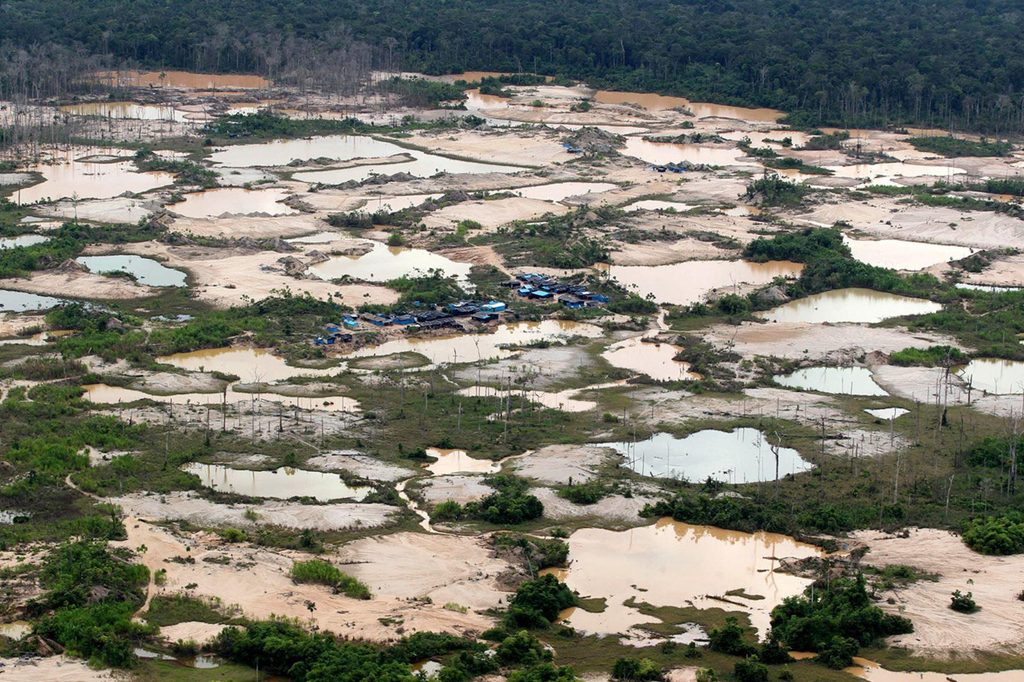
In Peru, illegal gold mining has caused extensive environmental damage in parts of the Amazon. The Tambopata region provides a measurable example of how mining activity can spread across forested areas.
A report by the Monitoring of the Andean Amazon Project identified 500 hectares of mining-related deforestation in northern Tambopata during the second half of 2025 and the beginning of 2026. The report recorded 431 hectares in the second half of 2025 and a further 69 hectares through February 2026.
The findings show the physical footprint that mining can leave in a sensitive landscape. They do not, on their own, quantify the gold produced from the affected area or establish the route that any such gold took to market.
That is the supply-chain challenge. Satellite imagery can identify disturbance and help authorities target inspections. It cannot independently establish the legal origin of a shipment arriving at a trader or refinery.
Effective oversight must connect site-level monitoring with production records, transport documentation and purchasing controls. Without that connection, enforcement may identify damage while leaving the downstream movement of minerals difficult to trace.
Brazil: Permits Can Become a Weak Point in the Chain
Brazil’s gold trade illustrates a different vulnerability: the gap between paperwork and verifiable production.
An investigation by Greenpeace examined 187 mining sites with permits near protected areas. The investigation found no visible mining activity at 98 of those sites. It also reported that permits associated with the sites had been used to justify the sale of 26.8 tonnes of gold, valued at an estimated US$3.88 billion, between 2018 and March 2026.
These are findings from an investigation, not a court ruling that every transaction or every tonne was illegal. The distinction should remain explicit.
Even with that qualification, the case highlights a significant control problem. A permit is evidence of authorisation under specified conditions; it is not proof that a particular quantity of mineral was produced at the permitted location.
When buyers rely heavily on documents without checking whether declared output is plausible, permits can become a weak point in due diligence. Production volumes, site activity, transport records and sales data need to be consistent with one another.
For regulators, the challenge is to identify discrepancies and establish responsibility. For buyers, the lesson is to test the substance behind a document rather than treating the document itself as conclusive proof of origin.
Indonesia: Tin Shows How Illegal Flows Can Cross Borders

Indonesia is a major producer of tin, and the movement of tin-bearing material across borders creates another traceability challenge.
In February 2026, Indonesian police reported seizing a vessel carrying 319 sacks of tin sand without the required documentation. Authorities alleged that the material was being transported from Bangka Belitung towards Malaysia.
The seizure provides a specific example of a suspected illegal shipment. The number of sacks does not establish the shipment’s weight, its value or the scale of the wider trade. Nor does one seizure quantify the volume of tin entering international markets through unlawful channels.
The case nevertheless demonstrates why enforcement cannot stop at the mine. Minerals may change hands several times between extraction and export. If documentation is missing or unreliable at an early stage, downstream buyers may struggle to establish the material’s origin.
For tin buyers and processors, supplier checks must therefore cover the chain of custody, including the legality of transport and the consistency of shipment records.
How Illegal Material Can Enter Legitimate Supply Chains
Illegal minerals do not necessarily move directly from an unauthorised mine to an international buyer. They can pass through several layers of trade, making origin harder to establish.
Three vulnerabilities recur across mineral supply chains.
1. Aggregation Obscures the Source
Traders and aggregators combine material from multiple producers. This can make commercial sense, particularly where individual miners produce small volumes. But aggregation can also weaken traceability if records do not preserve the identity and origin of each contributing batch.
A buyer may receive a shipment with complete paperwork while lacking reliable evidence about the individual sources behind it.
2. Documents Can Be Incomplete, Misused or Inconsistent
Licences, receipts, transport permits and export documents serve different purposes. A valid document does not automatically establish that the material in a shipment was extracted at an authorised site.
Controls must test whether the documents agree with one another and whether the reported production is plausible for the location and operation involved.
3. Processing Can Make Physical Origin Harder to Identify
Once ore or concentrate is processed, blended or converted into an intermediate product, visual inspection may no longer reveal its source. Traceability must therefore be maintained through records and controls before material loses its physical identity.
The earlier the chain loses reliable source information, the harder it becomes for a downstream buyer to reconstruct it.
Environmental and Social Risks Are Also Supply-Chain Risks
Illegal mining can cause deforestation, damage waterways, undermine worker protections and create conflict with nearby communities. The severity and nature of these impacts vary by site and mineral.
The risks do not end when the material leaves the mine. Companies sourcing from affected regions may face questions about whether their due-diligence systems identified the source, assessed the risk and responded appropriately.
The legal position depends on the jurisdiction, the company’s role and the facts of the case. It would be inaccurate to suggest that every buyer is automatically liable for every upstream violation. But weak traceability can make it harder for a company to demonstrate that it applied effective controls.
The London Bullion Market Association has also faced legal scrutiny over its handling of responsible-sourcing issues. The proceedings and the parties’ positions must be described accurately; allegations are not findings of liability.
For companies, the practical question is whether their controls can identify a problem early enough to prevent questionable material from entering their supply chains, or to respond credibly when concerns emerge.
Crackdowns Matter—but Outcomes Need to Be Measured
Governments have several tools to address illegal mining and trading:
- Site enforcement: Inspections, closures and action against operations working without required authorisation.
- Trade controls: Licensing, shipment checks, customs enforcement and action against undocumented exports.
- Formal buying channels: Systems that give legitimate producers a regulated route to market.
- Traceability: Records that connect mineral volumes to producers, sites, traders and shipments.
- Environmental monitoring: Satellite imagery and field inspections to identify activity in restricted or sensitive areas.
No single measure is sufficient. Site closures may reduce activity in one location, but they do not automatically establish that production has stopped elsewhere. A seizure demonstrates that authorities intercepted a shipment; it does not measure the total volume that escaped detection.
Formal buying channels can improve oversight, but only if they offer workable access to legitimate producers and verify the material they accept. Traceability systems can strengthen due diligence, but their value depends on the reliability of the data and the quality of enforcement.
The test is not the number of raids, seizures or new rules announced. It is whether illegal activity declines, legitimate production becomes easier to document, and mineral flows can be reconciled with credible records.
What Mining Companies, Traders and Investors Should Watch
Illegal mining creates several points of exposure for capital. The risks are not identical for every company, and their financial effects should not be assumed without evidence.
| Risk area | What to examine |
|---|---|
| Supply continuity | Whether sourcing depends on regions where enforcement, access or trading arrangements are changing. |
| Origin verification | Whether suppliers can link shipment volumes to credible production and purchase records. |
| Permits and documentation | Whether licences match the site, activity, volume and legal requirements involved. |
| Environmental and social controls | Whether site-level risks are identified, monitored and addressed. |
| Third-party exposure | Whether traders, aggregators and processors maintain records that can be independently checked. |
| Regulatory response | Whether new rules change buying, export, refining or reporting requirements. |
| Market acceptance | Whether customers and financiers accept the traceability evidence provided. |
For investors, the key distinction is between a company that operates in a high-risk region and a company that can demonstrate how it manages the specific risks in its supply chain. Geography alone does not establish misconduct. Equally, a formal licence or supplier declaration should not substitute for meaningful verification.
The Intelligence Gap: From Seizure Reports to Mineral-Flow Evidence
Public reporting often provides snapshots: a mine closure, a shipment seizure, a new licensing rule or an export restriction. These events are useful, but they do not by themselves explain how much material moves through illegal channels or how enforcement changes the market.
A stronger assessment links several types of evidence:
- Site-level activity: Imagery, inspections and documented operating status.
- Production plausibility: Whether declared volumes fit the mine’s capacity and observed activity.
- Trade records: Purchases, transport, processing and export documentation.
- Enforcement outcomes: Whether investigations result in confirmed violations, sanctions or changes in operating practice.
- Market response: Whether buyers alter sourcing, require additional verification or reject material.
This approach also exposes the limits of available data. Where reliable figures do not exist, the gap should be stated rather than filled with an estimate that appears more precise than the evidence allows.
Conclusion: Traceability Must Follow the Mineral
Illegal mining is not a single, uniform activity. It spans different minerals, jurisdictions and operating models. Some cases involve unauthorised extraction; others involve the movement or sale of material through channels that conceal its origin or evade legal requirements.
The evidence from Ghana, Zimbabwe, the DRC, Peru, Brazil and Indonesia points to a shared challenge: controlling the mine site is only one part of controlling the mineral.
A credible response must connect legal production, purchasing, transport, processing and export. It must also distinguish legitimate artisanal mining from illegal activity, measure enforcement outcomes carefully and avoid treating seizures or new regulations as proof that the underlying problem has been solved.
For mining companies and mineral buyers, the decisive question is whether they can establish a credible chain of custody for the material they purchase. In supply chains where origin is uncertain, the risk does not disappear when the mineral enters a formal transaction. It becomes harder to see—and potentially harder to manage.