WASHINGTON — U.S. Senator Steve Daines has urged Washington and Beijing to keep talking over rare earth supply chains, saying unresolved differences between the two countries require continued engagement rather than a retreat from dialogue.

Daines, a Republican from Montana, made the comments to the South China Morning Post after Chinese President Xi Jinping’s state visit to Washington last week. Daines played a backchannel role in the run-up to the summit and has maintained contacts with officials in both countries.
“Both sides admit we’ve got some serious differences,” Daines told the newspaper. “But the answer is not to retreat. The answer is to stay engaged.”
Rare earths remain one of the unresolved issues in the U.S.-China trade relationship. The White House said after the September 24–25 state visit that the two countries would continue working on U.S. concerns over supply shortages involving rare earths and other critical minerals. The stated goal is to bring shipment levels back to appropriate levels.
The Real Vulnerability Sits Downstream
The dispute is about more than shipments of mined rare earths. The bigger vulnerability sits further down the supply chain.
More Read

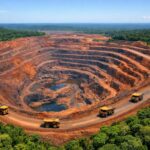
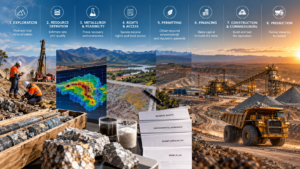
Rare earth production involves several stages. Miners first extract and concentrate the ore. Processors then separate individual rare earth elements and convert them into oxides. Further refining produces metals and alloys, which feed into permanent-magnet manufacturing.

China has a much larger position in these downstream stages than it does in mining alone.
The International Energy Agency estimates that China accounted for 60% of global mined production of magnet rare earths in 2024. Its share reached 91% of global refined output and 94% of global sintered permanent-magnet production.
More Read

That concentration matters because a new mine does not automatically create a secure supply chain. A producer can extract rare earths and still depend on overseas facilities for separation, refining, alloying or magnet production.
For the United States, that gap remains a central challenge.
U.S.-Bound Magnet Shipments Remain Under Pressure
Recent trade data show that the supply relationship has not returned fully to normal.
China exported 512 tonnes of rare earth magnets to the United States in August, according to Chinese customs data reported by the Financial Times. The volume fell 13% from August 2025 and 20% from July 2026.
The figure refers specifically to rare earth magnets, not total rare earth shipments. That distinction is important because different stages of the supply chain can move in different directions.
China’s overall rare-earth magnet exports have recovered from the sharp disruption that followed its 2025 export controls. U.S.-bound shipments, however, have remained a point of concern for Washington. The South China Morning Post reported that Washington had repeatedly pressed Beijing to accelerate approvals for rare earth exports ahead of the September summit.
The two governments also extended the trade arrangement reached in South Korea in 2025. Under the Busan arrangement, additional U.S. restrictions and certain Chinese rare-earth controls were paused. The September summit extended the broader trade agreement for another two months.
That arrangement has eased some immediate pressure, but it has not removed the structural supply-chain concentration.
Mining Alone Will Not Solve the Problem
For rare-earth developers, the lesson is straightforward. More mine supply is necessary, but it is not enough.
The IEA identifies extraction, separation, refining, alloying and magnet manufacturing as separate stages of the value chain. China holds its strongest positions in the stages that turn mined material into products used by manufacturers.
That creates a difficult task for countries trying to diversify supply. They must build processing capacity alongside new mines.
The challenge also extends beyond the United States. Rare earth magnets are used in electric vehicles, wind turbines, industrial motors, defence systems and other technologies. Rare earth supply chains remain among the most geographically concentrated of all critical-mineral supply chains.
Daines’ call for continued engagement therefore comes as Washington faces two separate tasks: managing near-term access to Chinese supply while building alternatives at home and with other trading partners.
Diplomatic agreements can influence the flow of material in the short term. They cannot, by themselves, build a separation plant, refinery or magnet factory.
For the mining industry, that is the longer-term issue. The strength of a rare-earth supply chain will depend not only on how much ore a country can produce, but also on how much of the value chain it can operate from mine to finished magnet.