Key Developments
- Germany geothermal energy law fast-tracks permitting
- “Overriding public interest” status granted to geothermal
- Fraunhofer study: geothermal can supply 25% of national heat
- Law aims to meet 2045 fossil-free heating target
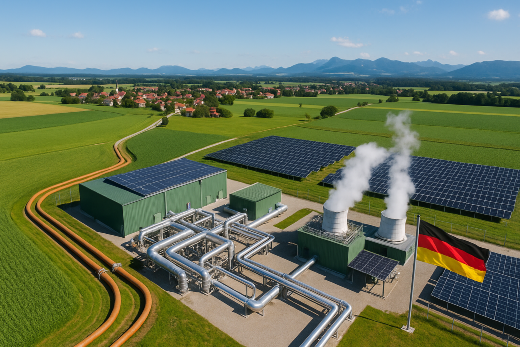
Germany geothermal energy policy is entering a new phase of urgency and scale as the federal cabinet on Wednesday approved sweeping legislation designed to fast-track development and permitting. The draft law, part of Berlin’s broader climate strategy, would streamline geothermal project approvals and enshrine their legal priority in the national energy framework.
The reform marks the country’s most aggressive intervention yet to decarbonize the building sector, which remains one of the largest contributors to greenhouse gas emissions. By designating geothermal energy as being of “overriding public interest”—the same status granted to solar and wind—the legislation aims to address the bureaucratic drag that has long stifled the sector’s expansion.
More Read

Government officials say the move signals a shift from “experimentation or isolated pilots” to positioning Germany geothermal energy as a “cornerstone of national energy security and emissions reduction,” according to a policy briefing accompanying the bill.

Germany Geothermal Energy: From Untapped Resource to Policy Priority
Despite its vast underground reserves, Germany geothermal energy has historically remained a niche contributor to the national energy mix. According to a 2023 study by the Fraunhofer Institute for Energy Infrastructure and Geothermal Systems, geothermal heat could supply up to 26% of the country’s annual heating demand. Yet actual utilization lags far behind that potential, hindered by permitting delays, drilling restrictions, and public resistance over environmental concerns.
The new law aims to reverse that stagnation. It sets legally binding timelines for regulatory agencies to respond to permit applications, introduces a unified framework across mining and water laws, and simplifies subsurface mapping requirements for energy developers.
More Read

“We are making geothermal competitive—not just technologically, but administratively,” said Dr. Heike Möller, a senior researcher at the University of Stuttgart. “Germany geothermal energy can only scale if we eliminate the legal friction and give developers certainty.”
Municipalities, which operate many local utility grids, are particularly poised to benefit. Several have already begun drafting geothermal district heating plans in anticipation of the law’s passage.
Germany Geothermal Energy as a Pillar of Energy Security
Germany geothermal energy is also being framed as a hedge against external shocks. The 2022 invasion of Ukraine by Russia triggered a dramatic shift in Europe’s energy calculus. Gas prices surged, and the reliance on imported fossil fuels exposed the vulnerability of heating infrastructure across the continent.
Berlin’s geothermal acceleration is partly a response to that crisis. Unlike solar or wind, geothermal energy offers a constant, weather-independent supply of heat—making it ideal for replacing fossil-powered boilers and ensuring base-load thermal delivery.
“This is not just about climate targets—it’s about strategic autonomy,” said Cécile Duflot, an energy transition analyst at France’s Institut Montaigne. “Germany geothermal energy offers a path to resilient infrastructure that doesn’t depend on foreign gas or volatile markets.”
The law also includes provisions to encourage investment in thermal storage systems and hybrid networks that integrate geothermal heat with solar thermal and biomass solutions. Such modularity is expected to lower capital risk and improve uptake, especially in mid-sized cities and industrial zones.
Germany Geothermal Energy and the Environmental Trade-Off
Yet not everyone is convinced the geothermal fast-track is without risk. Environmental groups have raised concerns that accelerated permitting could dilute safeguards for groundwater, ecosystems, and communities near drill sites. Past projects in Bavaria and Baden-Württemberg faced legal battles over seismic safety and water use.
“Streamlining should never come at the expense of public accountability,” said Jakob Greif, legal advisor with BUND, Germany’s leading environmental NGO. “We support geothermal in principle, but not under weakened oversight.”
The government contends that the new rules preserve key protections, but critics warn that defining geothermal projects as being of “public interest” may limit legal recourse for citizens. Some municipalities have already expressed concern about potential federal overreach, especially in rural regions with limited regulatory capacity.
Still, proponents argue that the cost of inaction is higher. With emissions from heating responsible for nearly 15% of Germany’s carbon footprint, delay in scaling geothermal solutions could derail the country’s Paris Agreement commitments.
Germany Geothermal Energy Leads the EU Policy Pack
Germany geothermal energy reform now places the country ahead of most EU states in legislative ambition. While France and the Netherlands have launched geothermal pilot zones, few have attempted a national permitting overhaul on this scale. Observers see the German model potentially shaping EU climate policy under the next round of Green Deal revisions.
“If Berlin succeeds in creating a predictable, investable geothermal landscape, it could unlock billions in private capital across Europe,” said Marcus von Weiler, managing director of a Munich-based renewable infrastructure fund. “Germany geothermal energy is suddenly being watched as a test case for what smart, aggressive policy can do.”
The law’s emphasis on cross-sectoral integration—tying together mining, energy, and construction codes—could also serve as a blueprint for future regulation of hydrogen and carbon capture infrastructure, areas similarly plagued by fragmented oversight.
Germany Geothermal Energy: Timeline and Next Steps
The draft law will now be debated in the Bundestag, where the ruling coalition holds a workable majority. The Bundesrat, Germany’s upper house representing the states, may push for amendments to preserve regional authority, particularly around land use and environmental jurisdiction.
Final passage is expected by year-end, with implementation beginning in early 2026. The government has signaled it will pair the law with new funding mechanisms, including low-interest loans for heat network operators and subsidies for early-phase exploration.
“Time is our most limited resource,” said the Economy Ministry official. “Germany geothermal energy can’t afford to wait five years for a permit if we want a fossil-free future by 2045.”
Germany Geothermal Energy: From Policy to Practice
Germany geothermal energy is no longer on the periphery of policy—it is now central to how the country plans to heat its homes, secure its energy independence, and meet its climate obligations. While legal and environmental challenges remain, the shift from marginal to mainstream is unmistakable.
As the rest of Europe watches, Germany is betting that the deepest energy reserves may lie not above ground, but far beneath its feet.