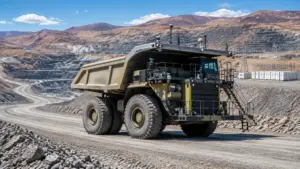
August 2025 delivered two clear signals for coal labor markets. In the United States, the Mine Safety and Health Administration (MSHA) paused enforcement of its new silica exposure limits until August 18, even as it launched $10.5 million in state training grants. The move effectively fuels compliance and training roles despite weak production. Meanwhile in Queensland, Bravus Mining & Resources announced a $50 million first-stage expansion at the Carmichael mine, unlocking a longer-term $500 million program and roughly 600 jobs. Yet most near-term roles are tied to workers’ villages, rail hubs, and water infrastructure—rather than the pit itself.

U.S. Coal: Safety and Compliance Drive Hiring
Appalachian coal remains under stress. Civil LLC’s 279 layoffs in southern West Virginia took effect at the start of August, and Wellmore Energy has filed to eliminate 72 jobs in Southwest Virginia through mid-October. National coal-mining employment slipped to around 40,600 in July, according to seasonally adjusted Bureau of Labor Statistics data.
Yet hiring persists in safety and compliance. MSHA’s FY25 grants program will channel $10.5 million to states and territories to support miner training, covering up to 80% of program costs. These grants sustain demand for ventilation and occupational hygiene (VOHE) technicians, respirator fit-testers, industrial hygiene labs, and health-and-safety trainers—even when enforcement is temporarily on hold.
A second regulatory shift could further reshape job demand underground. MSHA’s July proposals would codify the use of electronic surveying equipment in gassy coal mines, replacing many one-off petitions with standardized approvals. If finalized, the rule would create consistent demand for surveyors and GIS technicians trained on intrinsically safe instruments.
Queensland: Jobs Move Off-Pit
In Australia, Bravus’ Carmichael expansion has been pitched as a $50 million “stage one” investment designed to unlock nearly $500 million in total capital expenditure and roughly 600 construction-phase jobs. But government development filings and Bravus’ own statements show where the first wave of work is heading: an expanded workers’ village, a new water storage dam, and a rail maintenance hub, alongside site infrastructure.
More Read

That means most near-term hiring sits in civil works, electrical trades, camp services, and rail maintenance—not in pit operations. Contractors in Queensland are already pre-qualifying for packages tied to village expansion and rail hubs, while heavy equipment operators remain in a holding pattern until later stages of Carmichael’s development.

Royalty Risks and Junior Mining Distress
The backdrop in Queensland remains fragile. BHP has warned it could pause or reduce output at some Bowen Basin mines if Queensland’s royalty regime and weak coking coal prices persist. Such signals put thousands of jobs at risk across the basin.
Smaller operators face even sharper pressure. Bowen Coking Coal entered voluntary administration on July 30, placing nearly 500 jobs around the Burton complex under review. Suppliers and contractors remain wary, with capital structures and pricing dictating confidence in the project pipeline.
More Read

Why This Matters for Employers and Candidates
United States (near term): Even as production crews shrink, compliance spending is protected and often subsidized. Expect steady hiring demand in VOHE and industrial hygiene, respirator programs, sampling labs, and training providers. The proposed electronics rule could steadily grow the need for survey/GIS roles.
Queensland (near term): Jobs are rotating to off-pit infrastructure packages. Contractors in civil, rail, and camp services should prioritize Carmichael tenders. For workers, electricians, fitters, civil supervisors, and rail technicians will see the earliest opportunities.
Skillings Analysis
- Follow the money, not the headlines. Grants and rulemaking in the U.S., and government-backed infrastructure in Queensland, point directly to the resilient job categories.
- A barbell labor market. Expect cyclical cuts in operator and plant roles, but more durable hiring in safety/compliance and off-pit services through at least H1 2026.
- Supplier playbook. In the U.S., bid for training and compliance bundles. In Queensland, chase rail, water, and camp-service contracts first, then reassess pit-side exposure once royalty debates and junior restructurings stabilize.
Looking Ahead
Coal employment will remain uneven in the months ahead. In the U.S., compliance-related roles will act as a buffer against production softness, particularly as MSHA training grants roll out through 2026. In Queensland, Carmichael’s staged expansion offers opportunities—but mainly outside the pit until broader market and royalty pressures clear. For employers and candidates alike, the lesson is clear: durable coal-sector jobs in 2025 are increasingly defined by regulation and infrastructure, not tonnage.