Australian mining giant Fortescue has confirmed plans to cut jobs at its UK clean-energy arm, Fortescue Zero, as the company moves battery and electric-truck manufacturing to China. The decision marks a major strategic reversal from its original goal of making the UK a cornerstone of its decarbonization manufacturing base.

Fortescue Job Cuts Affect Oxfordshire Workforce
In an internal email to staff at Fortescue Zero’s facilities in Kidlington and Banbury, executives said the company was “moving away from in-house manufacturing,” a change that would “regrettably impact some roles.”
Although Fortescue has not released a headcount, Australian media reports suggest that hundreds of employees from its 1,000-strong UK workforce could be affected. Chief Executive Officer for Growth and Energy Gus Pichot confirmed that the “exact impact on staff” will be determined through a formal consultation process.
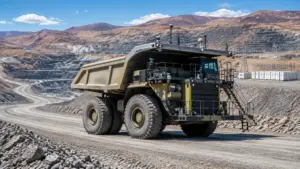
The move comes less than three years after Fortescue acquired Williams Advanced Engineering (WAE) in 2022 for $222 million (£166 million). The company rebranded it as Fortescue Zero, intending to use the Oxfordshire operation to produce electric drivetrains and battery systems for Fortescue’s zero-emission mining trucks in Australia.
Manufacturing Moves East Amid Global Cost Pressures
Founder and Executive Chairman Andrew Forrest announced over the weekend that Fortescue will now manufacture its heavy-vehicle battery systems and powertrains in China. The company has invested approximately $1 billion (£750 million) in its Zero division but said shifting production was essential for global efficiency.
More Read

In a statement, Pichot said the change reflected Fortescue’s evolution “as every innovative organisation must.” He noted that the company will now focus the UK sites primarily on research and development (R&D) to accelerate innovation.

“Regrettably, the changes are likely to impact some of our workforce, with the majority of those potentially affected in the United Kingdom,” Pichot said.
“This is never an easy decision, and Fortescue is dedicated to guiding the transition with compassion, respect, and support.”
This pivot underscores the growing challenge faced by Western economies trying to localize clean-tech supply chains. Despite government incentives, the scale and cost advantages in China remain hard to match, especially for high-volume EV and battery production.
More Read

UK Government and Industry Reaction
A UK government spokesperson said it was “a difficult time for affected workers and their families” and confirmed discussions were underway with Fortescue regarding the decision’s implications.
The Oxfordshire operations had previously been promoted as part of the UK’s “levelling up” agenda, with then-Business Secretary Kemi Badenoch calling the plant “proof that Britain was open for business” during a 2023 visit.
Industry analysts warn the job cuts could dampen confidence in the UK’s green-manufacturing sector at a time when competition from Europe, the US, and China is intensifying.
Skillings Analysis
Fortescue’s job cuts highlight a pivotal tension within the mining industry’s decarbonization drive: ambition versus economics.
- Cost Pressure vs. Localization: The decision reflects the difficulty of scaling low-carbon technology manufacturing in high-cost markets without sustained subsidies.
- Impact on Supply Ecosystem: Engineering and component suppliers tied to Fortescue Zero’s UK manufacturing program could face reduced contracts or closure risk.
- Strategic Lesson for Miners: Even the most sustainability-focused miners must reconcile environmental commitments with global competitiveness.
Earlier Skillings Mining Review coverage has explored similar industry dynamics — see Battery Metals Race: Why Western Supply Chains Still Trail Asia and The Hidden Costs of Mining Electrification.
Looking Ahead
Fortescue is expected to strengthen its Fortescue Future Industries (FFI) program, including green hydrogen development and electric-fleet deployment across Australia and Africa. With R&D remaining in the UK and manufacturing consolidating in China, the company is signaling a pragmatic balance between innovation and execution.
As the mining industry accelerates toward 2026, Fortescue’s shift will likely serve as a reference case for global miners confronting the realities of cost, speed, and sustainability in the clean-energy transition.