When Coal India Limited announced in its FY2024 outlook that underground production must rise to meet long-term domestic demand, the spotlight shifted to the machines increasingly defining the future of underground mining safety—bolter miners. As deeper deposits force miners into high-stress environments, Asia Pacific has emerged as the fastest-growing market for bolter miners, reshaping how underground mines are operated, regulated, and protected.

New research published in October indicates a strong upward cycle for bolter miner demand. Yet the most significant impact is cultural: fewer roof collapses, less manual exposure, and a workforce now supported by machines purpose-built for underground mining safety.
How Bolter Miners Are Transforming Underground Mining Safety
Roof-control failures remain one of the leading causes of fatal incidents underground, according to regulators such as India’s DGMS and China’s National Mine Safety Administration. Manual bolting places crews directly beneath unsupported roofs—an unacceptable risk in modern operations.
Bolter miners fundamentally change this workflow.
By cutting, loading, and installing roof bolts in a continuous cycle, bolter miners dramatically reduce the time workers spend in hazardous zones. Remote operation cabins and protection systems further minimise human exposure.
A senior underground operations manager in Jharkhand told Skillings:
More Read

“Every bolt installed by a machine is one less moment when a worker faces a falling roof. Bolter miners are now central to underground mining safety.”
Skillings’ previous coverage on autonomous haulage and battery-electric underground equipment has shown similar progress where technology directly reduces human risk in confined environments.

Asia Pacific Leads the Global Boom in Bolter Miners
Deeper Mines Increase Safety Pressure
Surface reserves in India and China are diminishing, forcing a rapid shift to deeper seams. Geological stress increases significantly with depth, making mechanised bolting essential for both output and underground mining safety. According to the Geological Survey of India, several deep expansions now require continuous bolter miner deployments for stability and compliance.
Regulators Are Tightening Rules
- India’s DGMS has issued stricter mandates on mechanised bolting cycles and unsupported-roof exposure.
- China expanded its deep-mine automation requirements in 2023–24 to prevent roof collapses and increase underground mining safety standards.
A state-owned coal executive noted:
More Read

“Manual bolting is effectively obsolete. To expand production underground, bolter miners are mandatory.”
Industrial Demand Strengthens Mechanisation
Asia’s manufacturing economy relies heavily on underground extraction of copper, zinc, potash, coal, and rare minerals. Even as renewables expand, coal remains critical for grid stability in India and China, driving further mechanisation and upgrades in underground mining safety.
Fleet Modernisation Across Major Miners
Coal India, Singareni Collieries, China Shenhua, Glencore’s Australian assets, and private operators across Indonesia are adopting bolter miners at unprecedented scale. Many formerly labour-intensive mines are now pairing continuous miners with advanced bolting units to meet safety and productivity targets simultaneously.
Human Impact: Bolter Miners Changing Underground Work Culture
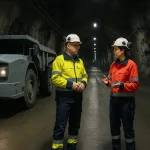
In India’s Dhanbad coal belt, miners recall crawling into low-roof seams, drilling overhead in darkness. Now bolter miners enter first, creating controlled workspaces.
A miner named Kumar shared:
“I have lost friends to roof falls. With bolter miners doing the critical work, underground mining safety is finally improving.”
In Australia’s Bowen Basin, remote-operation bolter miners keep workers out of dust and vibration zones. Chinese mining schools are introducing automation modules to train a new generation of underground technicians.
This transformation mirrors Skillings’ earlier reporting on digital strata monitoring systems in Canada and automated ground support in Peru.
Technology Push: Smarter Bolter Miners Boost Safety and Efficiency
The newest bolter miners include:
- automated drilling algorithms
- roof-scan stability sensors
- rock-stress vibration monitoring
- IoT-based predictive maintenance
- semi-autonomous bolting cycles
- hybrid-electric or battery-electric powerpacks for ventilation-restricted mines
A 2024 METS Ignited case study found a 20–30% reduction in hazardous-zone exposure events in mines deploying digitally monitored bolter miners.
For India and China—where ventilation, heat load, and diesel particulates constrain underground mining safety—electric bolter miners are rapidly gaining interest.
Skillings Analysis
1. Safety as Strategy
Bolter miners directly reduce accident downtime, insurance exposure, and regulatory penalties. Underground mining safety is becoming a core economic driver, not just a compliance item.
2. Asia Pacific Will Dictate Global Equipment Design
High-volume markets like India and China will shape the next generation of bolter miners—particularly around automation, hybrid power, and real-time stability diagnostics.
3. A New Skillset Is Emerging
As bolter miners expand, underground mining will require more technicians, automation specialists, and data-driven operators. Workforce shortages may become a major bottleneck.
Looking Ahead: The 2025–26 Bolter Miner Expansion Cycle
With deeper deposits, stronger regulations, and rising safety mandates, the next 18 months will likely be the most significant modernisation wave Asia Pacific’s underground sector has seen in a decade. Procurement cycles through mid-2025 will determine how widely bolter miners are adopted as standard equipment.
If current momentum holds, bolter miners are set to become the backbone of underground mining safety—not only in Asia Pacific but across all global deep-mine expansions heading into 2026 and beyond.