Rio Tinto has executed one of the most consequential shifts in its decarbonisation roadmap, shelving its A$215 million BioIron research hub and redirecting capital toward a smaller but more commercially advanced Rio Tinto green steel pilot with Calix. The world’s largest iron ore miner will now invest A$35 million in Calix’s hydrogen-based reduction technology, underlining how quickly the competitive landscape is evolving for Rio Tinto green steel ambitions in the Pilbara.

Why Rio Tinto Green Steel Strategy Abandoned BioIron
BioIron—once promoted as a 95% emissions-cut alternative using biomass and microwave reduction—has been under development for more than a decade. But Rio Tinto confirmed its furnace design requires “additional development” to achieve industrial reliability, delaying commercial readiness.
The retreat reflects a broader recalibration inside the company: rather than push an immature proprietary pathway, the miner is choosing a Rio Tinto green steel technology with clearer scalability and global investor backing.
Matthew Holcz, chief executive of Rio Tinto Iron Ore, reiterated that BioIron remains part of the portfolio, but the near-term priority has shifted:
“Both projects support our long-term Rio Tinto green steel goals and the future of iron ore in Australia,” he said.
Skillings has previously reported on Rio’s difficulties accelerating novel furnace designs—see our coverage of Pilbara hydrogen DRI trials and Western Australia’s renewable constraints.
More Read

Calix Technology Becomes the New Rio Tinto Green Steel Flagship
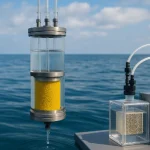
Calix’s Zesty process—an electrically heated, hydrogen-reduction method—has quickly become central to the Rio Tinto green steel roadmap. Supported by A$45 million in ARENA grants, the system reduces fine ore inside a heated steel reactor, producing water vapour instead of carbon dioxide.

Calix CEO Phil Hodgson said the partnership validates years of technology development:
“For a small company seeking to decarbonise steel, having Rio Tinto behind our Rio Tinto green steel ambitions is enormously significant.”
Although the Kwinana pilot will draw power from the main grid—meaning early batches will not be entirely zero-emissions—the demonstration scale is critical for future expansion.
More Read

This aligns with prior Skillings reporting on major hydrogen-iron initiatives across Europe and India, where similar pilots are proceeding toward commercial modules.
Why the Pilbara is Central to the Rio Tinto Green Steel Pivot
Rio Tinto will supply up to 10,000 tonnes of Pilbara ore to Calix for the Kwinana demonstration unit, targeting an annual output of 30,000 tonnes of iron. If successful, Rio Tinto will expand modules toward the Pilbara, anchoring a fully renewable Rio Tinto green steel ecosystem.
Why the region matters:
- Strong wind–solar complementarity
- Short supply chain between mine and reduction
- Integration opportunities with future hydrogen/ammonia hubs
- Export potential for green iron rather than raw ore
Curtin University’s Dr Tejas Bhatelia said the pivot indicates BioIron was harder to scale than initially expected, but emphasised that both technologies may coexist in a diversified Rio Tinto green steel portfolio.
“These are complementary approaches. They suit different parts of the value chain,” he noted.
Remaining challenges—water, renewables, permitting, and workforce—will shape how soon Pilbara-based Rio Tinto green steel processing can begin.
For context, see Skillings’ earlier analysis of WA hydrogen infrastructure bottlenecks.
Skillings Analysis
- Rio Tinto green steel strategy is moving from R&D ambition to commercial discipline, prioritizing technologies closest to industrial scale.
- The Pilbara is now competing globally to host next-generation green iron hubs, but needs a major uplift in renewables and water infrastructure.
- The 2026 Final Investment Decision is now a pivotal marker for investors, OEMs, steelmakers, and policymakers watching the green steel race.
What’s Next for Rio Tinto Green Steel Development
Calix now transitions into a detailed engineering phase, with Rio Tinto set to make a final investment decision in 2026. If performance benchmarks are met, the Kwinana unit could be replicated at scale, potentially redefining the Pilbara’s export profile—from raw ore to green iron.
As Rio Tinto finalises its FY2026 capital allocations and the Christmas quarter approaches, the success or failure of the Calix pilot will determine the next evolution of the Rio Tinto green steel strategy—and Australia’s broader role in the global decarbonisation of ironmaking.