As 2025 closes, the mining workforce 2026 is emerging as one of the defining variables affecting project pipelines, investment flows and operational models across the sector. The OECD estimates that more than 43% of current mining roles are at high risk of automation, while McKinsey forecasts that tech-enabled and ESG-focused jobs will grow 2.5x faster than traditional extraction roles beginning in the mining workforce 2026 cycle. Companies that treat this transition as strategy — not compliance — are likely to lead the market in talent retention, cost control and investor confidence.

Automation Will Restructure the Mining Workforce 2026
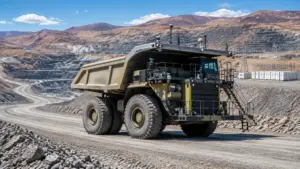
The rise of autonomous haulage systems, predictive maintenance tools and remote asset management has already begun to shape the mining workforce 2026. TPD Workforce Solutions reports a 42% increase in automation-linked roles in 2025, with demand expected to accelerate next year.
Remote operation centres (ROCs) are becoming central hubs for the mining workforce 2026, enabling companies such as Rio Tinto, BHP and Vale to operate mines from urban command centres rather than on-site teams. Analysts expect over half of Tier-1 mines to run hybrid oversight models by mid-2026, making digital and analytical skills essential to workforce stability.
ESG Competencies Move to the Core of Mining Workforce 2026
ESG roles are no longer peripheral — they now determine access to capital, permitting success and stakeholder acceptance. McKinsey’s 2025 investor survey found 87% of mining financiers assess ESG workforce capability before project approval, reinforcing the idea that the mining workforce 2026 requires far stronger ESG literacy than any previous cycle.
Farmonaut’s land-use analytics indicate that by late 2026, environmental scientists, community engagement specialists and biodiversity analysts will be among the top five growth roles in the mining workforce 2026, ahead of drill operators in some jurisdictions.
More Read

Geography and Talent Concentration in the Mining Workforce 2026
Regions still rich in mineral resources — Australia, Canada, Chile, Peru — remain strong employers, but the mining workforce 2026 could gradually shift from mine towns to urban innovation clusters. Jobs and Skills Australia reports mining salaries still average AUD 2,649 per week, yet fly-in fly-out roles face higher attrition rates in 2026 due to lifestyle constraints.

Remote operations and centralised command centres may decentralise location-based employment. The mining workforce 2026 may no longer depend on physical proximity — but on connectivity, technical training and access to digital infrastructure.
H2: Skills Transformation Will Define the Mining Workforce 2026
McKinsey predicts that more than 30% of current roles in mining could be reclassified or redefined by 2028, beginning with the mining workforce 2026 cycle. Enrolment in mining engineering degrees has already fallen 63% since 2014 in Australia, pushing companies to recruit from adjacent sectors — IT, logistics, aviation and telecom.
More Read

Key emerging job titles for the mining workforce 2026 include:
- Predictive Asset Specialist
- Remote Operations Controller
- Digital-Twin Analyst
- ESG Workforce Coordinator
- Data-Driven Geologist
Some operators are removing degree requirements altogether for these roles, prioritising skill competency over academic credentials.
Skillings Analysis — The Mining Workforce 2026 Will Decide Competitiveness
“The mining workforce 2026 won’t be defined by headcount — but by adaptability.”
“Investors will evaluate workforce strategy as closely as grade quality.”
“The companies that lead workforce transition will shape the next commodity supercycle.”
Mining Workforce 2026 Is Not a Trend. It’s a Threshold.
As budget planning for 2026 enters its final phase, one industry-wide conclusion is clear: mining’s next strategic battleground is talent. The mining workforce 2026 will determine cost structures, permitting risks, digital maturity and ESG credibility. It will also decide which companies attract capital — and which face operational strain.
The strongest miners next year will not simply mine efficiently. They will hire and train intelligently. The mining workforce 2026 is not a forecast — it is the new operating reality.