Hydrogen mining technology works, but hydrogen haul trucks must overcome cost, risk and supply-chain challenges before full fleet-scale adoption becomes viable.

Hydrogen Mining Moves Beyond the Prototype Stage
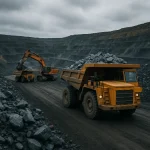
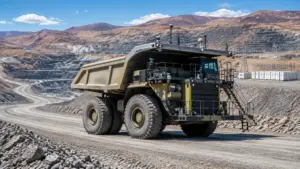
Hydrogen mining is no longer limited to conceptual engineering models. In 2022, Anglo American deployed a two-megawatt hydrogen haul truck at the Mogalakwena platinum mine in South Africa — the largest zero-emission mining vehicle ever used in a commercial environment. The breakthrough signalled that hydrogen haul trucks could function under real-world operating conditions and that hydrogen mining may soon move from trial phase to industry planning.
But the industry mood is shifting. A mining executive who has worked on hydrogen mining feasibility studies told Skillings that “the engineering challenge is largely solved — hydrogen haul trucks work. But the cost case, the insurance case and the supply-chain case are still open.” This reflects a growing view that hydrogen mining is no longer judged on feasibility, but on commercial realism.
A recent peer-reviewed review in Mining, Metallurgy & Exploration reinforced that hydrogen haul trucks can match diesel drive cycles when combined with hybrid energy systems. Yet the same analysis pointed to significant questions around long-term durability, operational safety and end-of-life economics. As hydrogen mining advances, the conversation has moved from “can it run?” to “should it scale?”
Can Hydrogen Haul Trucks Achieve Cost Parity With Diesel?
For hydrogen mining to transition from pilot projects to an operational fleet model, costs must fall dramatically. According to IEA and BloombergNEF data, green hydrogen is currently priced between $4 and $6 per kilogram — nearly three times higher than diesel on an energy-equivalent basis. Industry analysts estimate that hydrogen haul trucks would require a sustained fuel cost below $2 per kilogram to match diesel economics.
More Read

Australia, Chile and the European Union are actively developing subsidy-backed hydrogen mining corridors, positioning themselves as early adopters of fuel-switching strategies. Governments have begun exploring PPA structures, carbon-credit-based incentives and ESG-linked debt financing to support hydrogen mining. However, most major miners remain cautious until credible CAPEX projections and procurement frameworks emerge.

Insurance and Risk — The Hidden Test for Hydrogen Mining
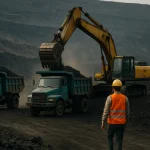
The most urgent barrier to hydrogen mining may not be technology but insurability. Hydrogen haul trucks require high-pressure fuel storage, controlled refuelling areas and specialist training protocols. Their use near explosives introduces further complexity for sites already governed by strict safety regulations. Several hydrogen mining consultants have warned that without standardized risk models, insurance premiums could make fleet transition financially prohibitive.
Companies exploring hydrogen mining report increasing pressure to define fire suppression zones, fuelling-area separation standards, hydrogen-compatible maintenance procedures and emergency audit criteria. The mining sector has accepted that hydrogen haul trucks are technically viable — but without scalable insurance frameworks, widespread adoption may remain out of reach.
More Read

Hydrogen Mining Pilots Show Promise — But Not Scale
There are signs of progress in hydrogen mining, though still far from commercial deployment. Anglo American continues running its hydrogen haul truck in South Africa. Fortescue Metals is testing fuel cell systems in Western Australia. Caterpillar is advancing several hydrogen mining initiatives across North America and Asia. Komatsu, in collaboration with General Motors, has begun joint development efforts. The EU Horizon program is funding early-stage spatial integration research.
These programs confirm that hydrogen haul trucks work, but none yet operate as part of full-scale fleets. Mining companies now face a more strategic question: will hydrogen mining become an industry standard — or remain a showcase technology for Tier-1 operators?
Battery vs. Hydrogen Haul Trucks — Two Different Futures for Mine Decarbonization
Battery-electric systems are widely viewed as the most viable near-term alternative to diesel in mining haulage. They require no combustion process and benefit from existing electrification infrastructure in certain regions. However, hydrogen haul trucks offer superior torque and distance under heavy load, more closely replicating diesel performance in remote high-tonnage operations.
Executives evaluating hydrogen mining say the competition is no longer technological — it is infrastructural. Battery haulage depends on grid strength. Hydrogen haul trucks depend on supply chains and local hydrogen production. The winning system may vary by geography rather than engineering advantage.
Skillings Analysis — The Three Forces That Will Decide Hydrogen Mining
The future of hydrogen mining will be determined less by technology than by capital decisions. Fleet-scale deployment of hydrogen haul trucks requires underwriters willing to absorb risk, governments willing to subsidize infrastructure and OEMs willing to build hydrogen-ready mining supply chains. Technical feasibility is no longer the debate. Commercial viability is.
Across the next 12 to 18 months, the key indicators will be whether hydrogen mining appears in annual reports as CAPEX rather than R&D, whether insurers publish risk models for hydrogen haul trucks and whether carbon-credit-backed bond mechanisms emerge as financing tools. If these frameworks align, hydrogen mining could move from feasibility study to long-term planning before the decade ends.
For now, the industry has proved hydrogen haul trucks can run. The challenge is proving they can run every shift, through every season, across the lifespan of a mine.