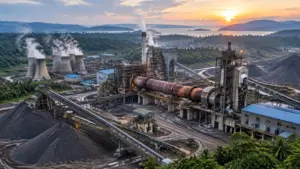
Critical mineral refinery initiatives are gaining momentum as the United States government and South Korea’s Korea Zinc advance plans to strengthen domestic and allied mineral processing capacity, signalling a strategic shift in global supply chains.

The White House recently confirmed that it is preparing additional “historic” agreements with the mining sector to expand the production and processing of critical minerals. These include lithium, copper, nickel, zinc, and rare earth elements, which are essential for electric vehicles, renewable energy systems, grid infrastructure, and defence applications. US officials stressed that the agreements are part of a broader effort to reduce reliance on China-dominated supply chains and accelerate the development of domestic and allied processing infrastructure.
At the same time, Korea Zinc disclosed that its board is discussing plans to build a major mineral processing facility in the United States through a joint venture, supported by US policy incentives. Together, the two developments highlight how critical mineral refinery capacity is becoming a central pillar of energy transition and industrial security strategies.
Critical Mineral Refinery as a Strategic Supply Chain Priority
The critical mineral refinery concept has emerged as a focal point for policymakers and industry leaders, reflecting a growing consensus that mineral extraction alone is insufficient to secure supply chains. Refining and smelting facilities convert raw ores into battery-grade and industrial materials, a step that has historically been concentrated in Asia, particularly China.
White House officials indicated that future agreements with mining companies will increasingly support end-to-end development, encompassing exploration, extraction, processing, and refining. By encouraging vertically integrated projects, the US aims to ensure that critical minerals are not only mined domestically or by allies, but also processed into usable forms within secure jurisdictions.
More Read

Analysts note that this policy approach mirrors a broader industry shift, with mining companies investing downstream to capture more value and reduce exposure to geopolitical risk.

Korea Zinc’s Proposed US Refinery Plan
Korea Zinc’s proposed US-based facility represents a concrete example of this strategy in action. While still under board review, the project would establish domestic smelting and processing capacity in the United States through a joint venture structure aligned with US industrial policy.
The move reflects growing confidence among foreign producers that the US policy environment—shaped by incentives under laws such as the Inflation Reduction Act—now actively supports domestic refining and processing investments. For Korea Zinc, a US presence would help diversify its operational footprint, reduce geopolitical exposure, and position the company closer to end markets for batteries, galvanised steel, and clean energy technologies.
More Read
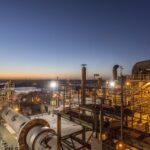
For the US, attracting a major global processor strengthens downstream capacity and complements efforts to expand upstream mining.
US Policy Push and Mining Sector Implications
The White House’s renewed engagement with the mining sector underscores a recognition that critical mineral refinery capacity is essential to national security and economic resilience. Officials have signalled that government support may include faster permitting, financing tools, and public–private partnerships aimed at accelerating project development.
Importantly, US policymakers have stressed that these agreements will require alignment with environmental standards, community engagement, and long-term industrial planning, reflecting a more structured and strategic approach to mining development.
For the mining industry, the implications are significant. Projects that incorporate refining and processing are increasingly viewed as more attractive to investors and policymakers alike. Downstream integration is becoming a differentiator for securing funding, regulatory support, and long-term relevance in energy transition supply chains.
Outlook for Critical Mineral Refinery Development
Looking ahead, critical mineral refinery development is expected to accelerate as governments and companies respond to rising demand for energy transition materials and growing geopolitical competition over supply chains.
Analysts expect a new wave of investment in domestic and allied processing capacity, with refined products increasingly produced closer to end users in North America and other strategic regions. The combination of US government support and foreign private investment—illustrated by Korea Zinc’s proposed facility—offers a blueprint for how the sector may evolve over the coming decade.
The growing emphasis on refining underscores a fundamental shift in mining strategy: value creation is moving beyond extraction to include processing and manufacturing. Companies and countries that invest early in critical mineral refinery capacity are likely to gain a competitive advantage in a world increasingly dependent on secure, sustainable, and politically resilient mineral supply chains.