By Salini Krishnan

That gorgeous golden shimmer in your pan might not be treasure. It might be trying to kill you.
Every year, prospectors: both greenhorns and grizzled veterans: handle minerals that can wreck their health in ways they won’t notice for years. We’re not talking about cave-ins or equipment mishaps here. We’re talking about the slow, silent stuff. The rocks that look innocent, even beautiful, but carry nasty surprises your lungs, skin, and nervous system will remember for decades.
Modern mine safety technology has come a long way, but it means nothing if you don’t know what you’re protecting yourself from in the first place. So let’s get into it. Here are five toxic rocks that every 2026 prospector absolutely needs on their radar.
1. Arsenopyrite: The Gold Prospector’s Curse
You’re hunting for gold. You find this brilliant, metallic, silvery-white mineral with a gorgeous crystal structure. Your heart races. But hold up: that’s arsenopyrite, and it’s basically arsenic wrapped in a pretty package.
More Read

Arsenopyrite (FeAsS) is one of the most common arsenic-bearing minerals on the planet, and it loves hanging out in the same geological neighborhoods as gold deposits. The kicker? When you disturb it: crush it, grind it, let it sit in water and air: it starts releasing arsenic compounds.


Chronic arsenic exposure doesn’t announce itself. It accumulates. Skin lesions, numbness in extremities, cardiovascular problems, and a significantly elevated cancer risk are all on the menu. According to environmental health studies, arsenic and heavy metals from waste rock piles and tailings have contaminated countless waterways around mining sites.
More Read

The move: If you’re working gold-bearing sulfide deposits, assume arsenopyrite is present until proven otherwise. Wet drilling, proper ventilation, and never: ever: eating or drinking near your worksite. Basic stuff, but people forget.
2. Galena: Heavy Metal in Every Sense
Galena is lead sulfide (PbS), and it’s drop-dead gorgeous. Those perfect cubic crystals with that mirror-like metallic luster? Stunning. Also extremely toxic.
Lead doesn’t play around. It’s a cumulative neurotoxin that damages the brain, kidneys, and reproductive system. Kids are especially vulnerable, but adults who handle galena regularly without protection are rolling the dice every single time.
The real danger with galena isn’t usually acute poisoning: it’s the slow buildup from handling specimens, breathing dust during processing, or contaminating your food and water without realizing it. Lead absorption through skin contact is a thing. Lead dust inhalation is a bigger thing.
The move: Gloves. Always. Wash hands obsessively. If you’re crushing or processing galena-bearing ore, respiratory protection is non-negotiable. Modern mine safety technology includes real-time dust monitoring: use it if you’ve got access.
3. Crystalline Silica: The Invisible Shredder
Here’s the one that gets more miners than probably anything else on this list, and it’s not even a “toxic rock” in the traditional sense. It’s just… rock. Specifically, quartz, and a few other common minerals containing crystalline silica.
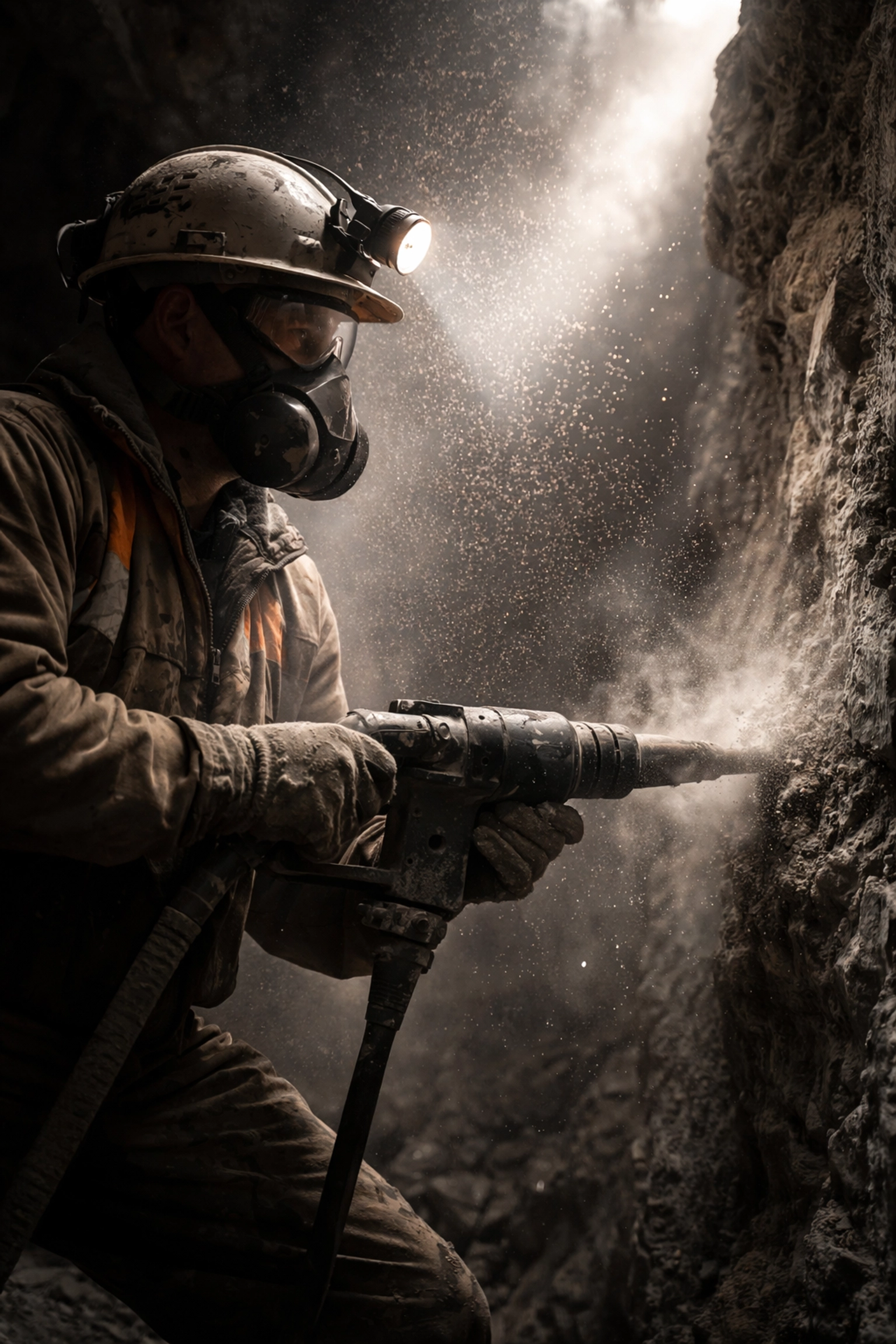
When you drill, blast, cut, or crush silica-bearing rock, you generate microscopic particles. We’re talking about respirable crystalline silica: dust so fine you can’t see it, can’t feel it, and definitely can’t cough it out once it’s in your lungs.
The result? Silicosis. It’s progressive. It’s incurable. Your lungs essentially scar themselves into dysfunction over years of exposure. And according to occupational health research, it also dramatically increases your susceptibility to tuberculosis and lung cancer.
Modern mining machinery actually makes this worse in some ways: equipment generates fine respirable particles around 500 nanometers in size that can disrupt cellular metabolism and trigger inflammatory responses. Smaller particles, bigger problems.
The move: This is where mine safety technology earns its keep. Dust suppression systems, continuous air monitoring, properly fitted N95 or P100 respirators (at minimum), and regular medical surveillance. If you’re a solo prospector working with hand tools, wet your cutting surfaces and wear a mask. Every. Single. Time.
4. Cinnabar: The Crimson Deceiver
Cinnabar is mercury sulfide (HgS), and it’s been prized for millennia for its vivid red color. Ancient civilizations used it for pigments and medicines. They also died from it with alarming regularity.
Mercury is one of the most dangerous heavy metals you can encounter. It’s a potent neurotoxin that causes tremors, mood swings, memory problems, and kidney damage. The phrase “mad as a hatter” comes from mercury poisoning in hat-making industries: that should tell you something.

Cinnabar itself is relatively stable, but heating it or letting it weather releases mercury vapor. And here’s the fun part: mercury vapor is invisible and odorless. You won’t know you’re breathing it until the symptoms show up weeks or months later.
The move: Know your geology. Cinnabar shows up in specific hydrothermal environments, often alongside gold and silver deposits. If you spot that distinctive red color, treat it with extreme caution. No heating, no grinding without proper containment and ventilation. If you’re operating in mercury-prone regions, vapor monitoring equipment is worth every penny.
5. Sulfide Ore Dumps: The Acid Factory
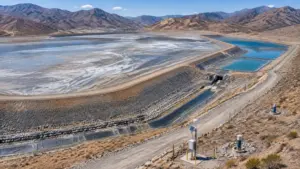
This one’s less about a specific mineral and more about what happens when you pile a bunch of sulfide minerals together and leave them exposed to rain and air. You get acid mine drainage, and it turns everything it touches into a toxic soup.
Sulfide minerals: pyrite, chalcopyrite, sphalerite, and our old friend arsenopyrite: produce sulfuric acid when they oxidize. That acid then leaches heavy metals from surrounding rock and carries them into groundwater, streams, and soil. We’re talking lead, cadmium, zinc, copper, and arsenic, all mobilized and bioavailable.
For prospectors working old mine sites or creating their own waste rock piles, this is a slow-motion disaster that can contaminate a site for centuries. It’s also a legal liability nightmare if you’re operating anywhere with environmental regulations (which is basically everywhere worth mining in 2026).
The move: Proper waste rock management from day one. Segregate sulfide-bearing materials. Consider lime treatment to neutralize acidity. Don’t just dump your tailings downhill and hope for the best: that approach has poisoned watersheds across four continents, and regulators are watching.
The Bottom Line
None of this is meant to scare you out of prospecting. It’s meant to keep you prospecting longer: with functioning lungs, a working nervous system, and a clean conscience about what you’re leaving behind.
The 2026 prospector has access to better mine safety technology than any generation before. Portable air quality monitors. Real-time dust detection. Affordable PPE that actually works. The information is out there. The tools exist.
The question is whether you’ll use them.
Because those toxic rocks? They’re patient. They don’t care if you’re a weekend hobbyist or a full-time operator. They’ll wait years to collect on your mistakes.
Don’t give them the chance.
For more on mining safety and industry developments, visit Skillings Mining Review.